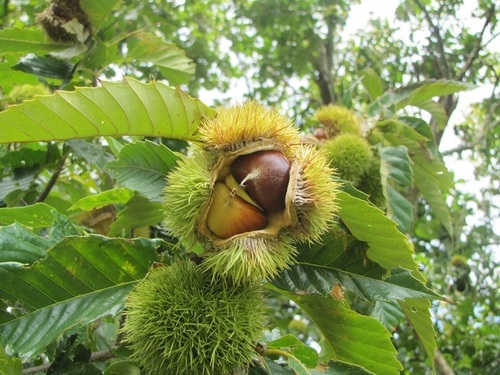
Quercus incana
Roxb.
Ban oak, Grey oak
(c) Reid Hardin, some rights reserved (CC BY)
(c) Reid Hardin, some rights reserved (CC BY)
(c) Jeff Garner, some rights reserved (CC BY-NC)
What to Eat
Edible parts: Seeds, Nuts
The nuts are edible and can be eaten as seeds. The tree yields manna used for confectionery.
Where to Find It
It is a temperate plant. Garhwal Himalayas. In Pakistan it grows between 1,000-2,700 m altitude. Arboretum Tasmania.
Asia, Australia, Himalayas, India, Myanmar, Nepal, North America, Pakistan, SE Asia, Tasmania, USA,
How to Identify
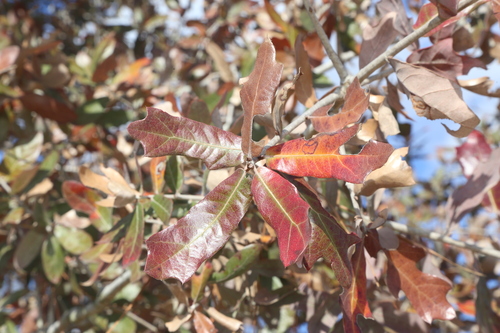
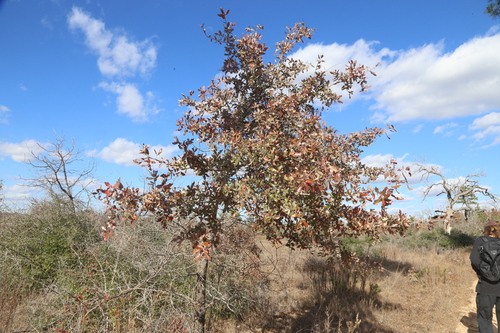
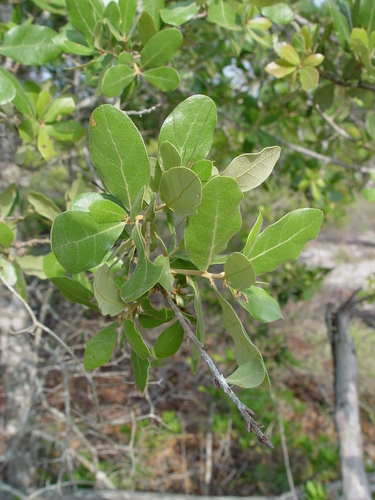
A tree. It grows 6-18 m tall. The young shoots are hairy or have a soft covering. The leaves are sword shaped and 6-15 cm long by 2-5 cm wide. They have coarse teeth. The upper surface is dark green and the lower surface has a white covering. The male flowers are in catkins 6-14 cm long. The nut is 1-2 cm long. It has a covering over half of it.
Wikipedia
Source ↗Quercus incana is a species of oak known by the common names bluejack oak, upland willow oak, sandjack oak, and cinnamon oak. It is native to the Atlantic Plain and Gulf Coastal Plain of the United States, from Virginia around Florida to Texas and inland to Oklahoma and Arkansas.
Notes
There are about 600 Quercus species.
Names & Synonyms
Ban, Bang, Bani, Ghora serray, Htal-ting, Inai, Iri, Masikai, Phanat, Rin, Rinj, Shiddar, Shindar, Sila supari, Vari
References (7)
- Ambasta S.P. (Ed.), 2000, The Useful Plants of India. CSIR India. p 509
- Fl. ind. ed. 1832, 3:642. 1832 (non Bartram 1791) - an illegitimate later homonym (ICBN Art. 53) that is unavailable for use
- Flora of Pakistan. www.eFloras.org
- GUPTA,
- Kannan, M., et al, 2015, Ethnobotanical survey on wild edible plants of Kalrayan Hills, Salem District, Tamil Nadu, India. Global J. Res. Med Plants & Indigen. med. 4(12): 236-246
- Khalid, N., et al, 2023, Wild food plants gathered by four cultural groups in North Waziristan, Pakistan. Genet Resour Crop Evol. 70:1243–1276
- Little, E.L., 1980, National Audubon Society Field Guide to North American Trees. Alfred A. Knopf. p 392 (Quercus incana Bartr.)
More from Fagaceae