Lithocarpus pachyphyllus
(Kurz.) Rehd.
Thick-leaved oak
(c) Kevin Metcalf, some rights reserved (CC BY-NC), uploaded by Kevin Metcalf

no rights reserved

no rights reserved
What to Eat
Edible parts: Seeds
The seeds (nuts) are eaten.
Where to Find It
It is a temperate plant. It grows in broad-leaved evergreen forests between 800-2,000 m above sea level in Tibet and southern China. In Yunnan.
Asia, Bhutan, Britain, China, Europe, Himalayas, India, Myanmar, Nepal, Northeastern India, SE Asia, Sikkim, Tibet,
How to Identify
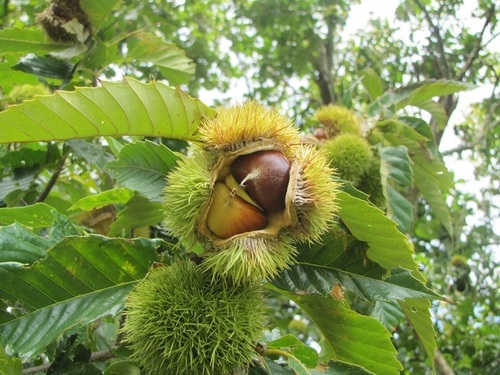
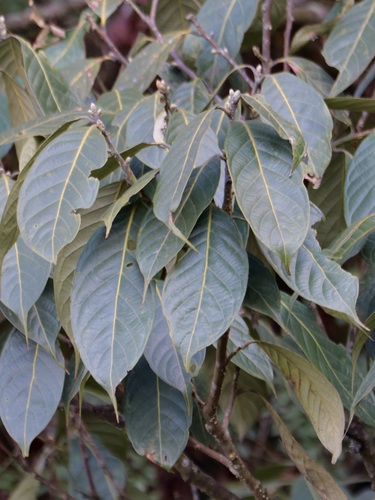
A tree. It grows 25 m tall. The young branches have rusty scales. The leaf blade is narrowly oval and 10-20 cm long and 4-7 cm wide. It is dark red underneath when young. Male and female flowers are separate. Male flowers occur singly in the axils of leaves. Female flowers are in groups of 2 or 3 and 15 cm long. The seed is in a cup shaped structure up to 2.5 cm long by 5 cm wide. The nut is a flattened round shape and 2 cm long by 3 cm wide.
Notes
There are about 600 Quercus species.
Names & Synonyms
Bante, Bantey, Gante, Srikung, Sungure katus, Thil
References (3)
- Ambasta S.P. (Ed.), 2000, The Useful Plants of India. CSIR India. p 333
- Plants for a Future database, The Field, Penpol, Lostwithiel, Cornwall, PL22 0NG, UK. http://www.scs.leeds.ac.uk/pfaf/ (As Quercus pachyphylla)
- Sharma, G., et al, 2016, Agrobiodiversity in the Sikkim Himalaya. International Centre for Integrated Mountain Development, ICIMOD Working Paper 2016/5 (As Quercus pachyphylla)
More from Fagaceae