Quercus petraea
(Mattuschka) Liebl.
Sessile oak, Durmast oak

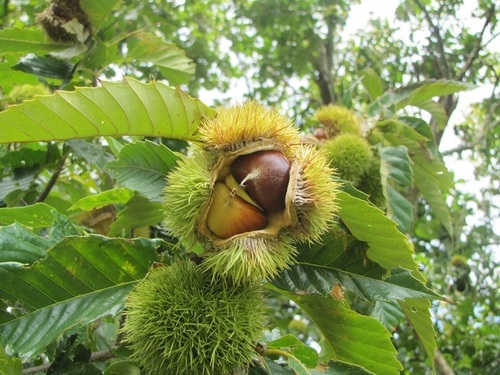
(c) Gleb Berloff, some rights reserved (CC BY-NC)
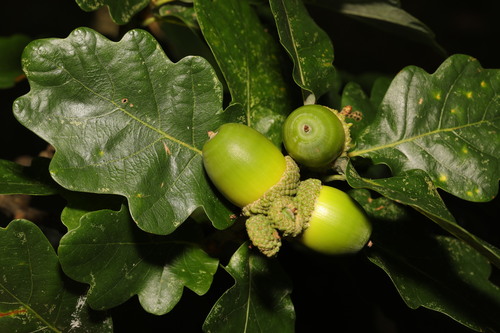
no rights reserved, uploaded by Stephen James McWilliam
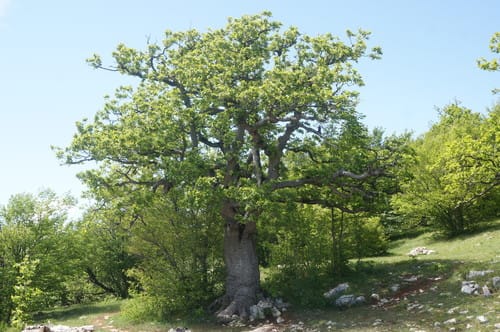
(c) Сергей, some rights reserved (CC BY-NC)
What to Eat
Edible parts: Nuts, Acorns, Drink
The seed must be cooked before eating. It can be dried and ground into a powder to thicken stews or mixed with cereals for bread-making. Bitter tannins in the seed can be leached out by thoroughly washing in running water, though minerals are lost in the process. Whole seeds or ground powder can both be leached — whole seeds may take several days or weeks, and wrapping them in a cloth bag in a stream was a traditional approach. Ground powder leaches faster. A simple taste test confirms when tannins have been sufficiently removed. Traditionally, seeds were buried in boggy ground over winter and dug up in spring when most astringency had faded. The roasted seed makes a coffee substitute. An edible gum is also obtained from the bark.
Where to Find It
It is a temperate plant. It is native to Europe. It grows in less fertile and wetter places. It is damaged by late frosts. It is sensitive to humidity. It suits hardiness zones 5-9. Arboretum Tasmania. Hobart Botanical Gardens.
Australia, Balkans, Bosnia, Britain, Europe, Georgia, Greece, Hungary, Luxembourg, Mediterranean, Romania, Slovakia, Slovenia, Spain, Switzerland, Tasmania,
How to Identify
A tree with a long trunk. The branches form a fan shape. The tree grows to 40 m high. The bark is finely cracked and ridged. The tree loses its leaves during the winter. The leaves are lobed and wedge shaped near the base. They are 12 cm long and 7.5 cm wide. The leaves have distinct stalks. The male flowers are in long stalks and the female flowers are bud shaped and stalkless. The acorns are in stalkless cups. The acorns are 3 cm long.
How to Grow
Plants are grown from seed. The seed are planted where the tree is to grow.
Propagation: Seed loses viability quickly if allowed to dry out. It can be stored moist and cool over winter, but is best sown as soon as it is ripe in an outdoor seed bed with protection from mice and squirrels. Small quantities can be sown in deep pots in a cold frame. Because plants develop a deep taproot early, they should be moved to permanent positions as soon as possible — seeds sown in situ produce the best trees. Trees left in a nursery bed for more than 2 growing seasons transplant very badly.
Medicinal Uses
The oak has a long history of medicinal use, being anti-inflammatory, antiseptic, astringent, decongestant, haemostatic, and tonic. The bark is the most commonly used part, though galls, seeds, and seed cups are also employed. A decoction of the bark treats chronic diarrhoea, dysentery, intermittent fevers, and haemorrhages. Externally it is applied to wounds, skin eruptions, sweaty feet, and piles, and used as a vaginal douche for genital inflammations and discharge, and as a wash for throat and mouth infections. Bark is harvested from branches 5–12 years old and dried for later use. Galls produced on the tree are strongly astringent and used to treat haemorrhages, chronic diarrhoea, and dysentery. The plant is used in Bach flower remedies, prescribed for the states of 'Despondency' and 'Despair, but never ceasing effort'. A homeopathic remedy made from the bark is used for disorders of the spleen and gall bladder.
Other Uses
A mulch of leaves repels slugs and grubs, though fresh leaves should not be used as they can inhibit plant growth. Oak galls produced by insect larvae are a rich source of tannin once the insects have left, and can also serve as a dyestuff. An ink is made from the galls mixed with salts of iron. The bark is an ingredient of 'Quick Return' herbal compost activator — a dried and powdered herbal mixture added to compost heaps to stimulate bacterial activity and shorten composting time. The bark is also very rich in calcium. Tannin is extracted commercially from the bark and is also present in the leaves. The wood yields tar, quaiacol, acetic acid, creosote, and tannin. The wood itself is hard, tough, and durable even under water, and is highly valued for furniture and construction. It also makes good fuel and charcoal. Trees can be coppiced for basket making, fuel, and construction materials.
Wikipedia
Source ↗Quercus petraea, commonly known as the sessile oak, Welsh oak, Cornish oak, Irish oak or durmast oak, is a species of deciduous oak tree native to most of Europe and into Anatolia and Iran. The sessile oak is the national tree of Ireland, and an unofficial emblem in Wales and Cornwall.
Production
It is a slow growing tree.
Notes
There are about 600 Quercus species.
Names & Synonyms
Graden, Hrast kitnjak, Roble, Zalude
References (19)
- Abbet, C., et al, 2014, Ethnobotanical survey on wild alpine food plants in Lower and Central Valais (Switzerland). Journal of Ethnopharmacology 151 (2014) 624–634
- Brouk, B., 1975, Plants Consumed by Man. Academic Press, London. p 208
- Cundall, P., (ed.), 2004, Gardening Australia: flora: the gardener's bible. ABC Books. p 1126
- Denes, A., et al, 2012, Wild plants used for food by Hungarian ethnic groups living in the Carpathian Basin. Acta Societatis Botanicorum Poloniae 81 (4): 381-396
- Facciola, S., 1998, Cornucopia 2: a Source Book of Edible Plants. Kampong Publications, p 116
- Fl. fuld. 403. 1784
- Harris, E & J., 1983, Field Guide to the Trees and Shrubs of Britain. Reader's Digest. p 149
- http://www.botanic-gardens-ljubljana.com/en/plants
- Joyce, D., 1998, The Garden Plant Selector. Ryland, Peters and Small. p 117
- Lord, E.E., & Willis, J.H., 1999, Shrubs and Trees for Australian gardens. Lothian. p 70
- Luczaj, L., 2012, Ethnobotanical review of wild edible plants of Slovakia. Acta Societatis Botanicorum Poloniae 81(4):245-255
- Luczaj, L., et al, 2015, Wild food plants and fungi used by Ukrainians in the western part of the Maramureş region in Romania. Acta Soc Bot Pol 84(3):339–346
- Michael, P., 2007, Edible Wild Plants and Herbs. Grub Street. London. p 164
- Pardo-de-Santayana, M., et al, 2007, Traditional knowledge of wild edible plants used in the northwest of the Iberian Peninsula (Spain and Portugal): a comparative study. Journal of Ethnobiology and Ethnomedicine 2007, 3:27
- Plants for a Future database, The Field, Penpol, Lostwithiel, Cornwall, PL22 0NG, UK. http://www.scs.leeds.ac.uk/pfaf/
- Redzic, S. J., 2006, Wild Edible Plants and their Traditional Use in the Human Nutrition in Bosnia-Herzegovina. Ecology of Food and Nutrition, 45:189-232
- Sfikas, G., 1984, Trees and shrubs of Greece. Efstathiadis Group. Athens. p 144
- Tardio, J., et al, Ethnobotanical review of wild edible plants in Spain. Botanical J. Linnean Soc. 152 (2006), 27-71
- Wickens, G.E., 1995, Edible Nuts. FAO Non-wood forest products. FAO, Rome. p 129
More from Fagaceae