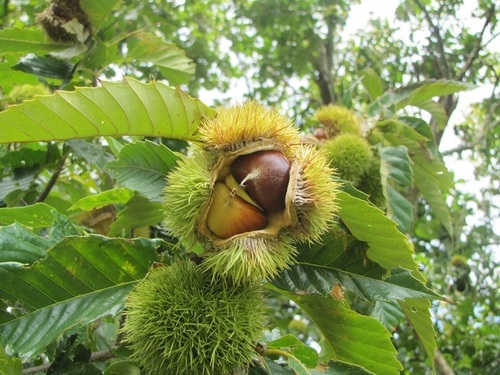
Quercus phellos
L.
Willow Oak, Willow-leafed oak, Peach oak
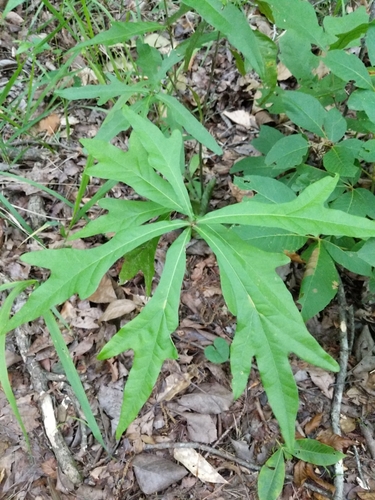
(c) Rob John, some rights reserved (CC BY), uploaded by Rob John
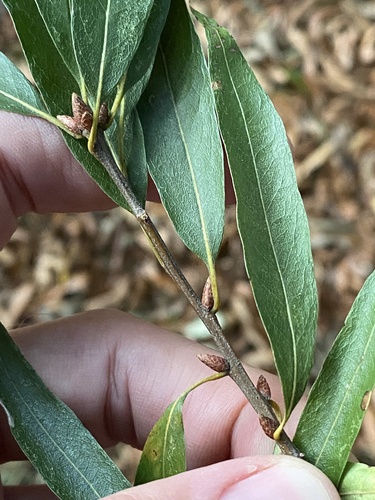
(c) Misha Zitser, some rights reserved (CC BY-NC), uploaded by Misha Zitser
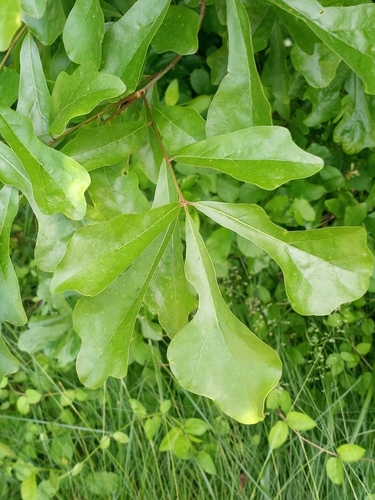
(c) Wayne Longbottom, some rights reserved (CC BY-NC), uploaded by Wayne Longbottom
What to Eat
Edible parts: Seeds, Nuts
The seed is rather small at only 1cm long and must be cooked before eating. It can be dried and ground into a powder for thickening stews or blending with cereals for bread. Bitter tannins in the seed can be leached out by washing thoroughly in running water, though this also removes minerals. Either whole seeds or ground powder can be leached — whole seeds may take several days to weeks, and a traditional method was to place them in a cloth bag in a running stream. Ground powder leaches more quickly. A simple taste test confirms when tannin levels are acceptable. Alternatively, seeds could be buried in boggy ground over winter and dug up in spring when most astringency had lessened. The roasted seed also functions as a coffee substitute.
Where to Find It
It is a temperate plant. It is native to the eastern United States. They grow in moist swampy soil. It suits hardiness zones 5-10. Arboretum Tasmania.
Australia, North America, Tasmania, USA,
How to Identify
A deciduous tree. It grows 30 m high. It is a broadly spreading oak tree. The bark is grey and smooth. It becomes ridged and cracks into plates with age. The leaves are narrow and long. They are 10 cm long by 2.5 cm wide. They end in a small fine point. They are bright green above and paler underneath. They are smooth on both sides. The male and female flowers are borne separately on the same plant. The male flowers are easier to see and are yellow-green in drooping catkins. The fruit are acorns 1.5 cm long. They are about one quarter enclosed in a shallow cup.
How to Grow
Prefers a good deep fertile loam which can be on the stiff side. Lime tolerant. Young plants tolerate reasonable levels of side shade. Tolerates moderate exposure, surviving well but being somewhat stunted. Although it prefers warmer summers than are usually experienced in Britain, this species thrives in this country, though it rarely sets seed here. Trees commence to bear seeds when about 20 years old in the wild and good crops are usually produced annually. The tree flowers on new growth produced in spring, the seed taking two summers to ripen. A very ornamental plant. Intolerant of root disturbance, trees should be planted in their permanent positions whilst young. Hybridizes freely with other members of the genus. This species is notably resistant to honey fungus.
Propagation: Seed loses viability quickly if allowed to dry out. It can be stored moist and cool over winter, but is best sown as soon as it is ripe in an outdoor seed bed with protection from mice and squirrels. Small quantities can be sown in deep pots in a cold frame. Because plants develop a deep taproot early, they should be moved to permanent positions as soon as possible — seeds sown in situ produce the best trees. Trees left in a nursery bed for more than 2 growing seasons transplant very badly.
Medicinal Uses
A decoction of the wood chips or bark can be applied externally as an analgesic and used as a bath for aches, pains, sores, cuts, and haemorrhoids. Galls produced on the tree are strongly astringent and have been used to treat haemorrhages, chronic diarrhoea, and dysentery.
Other Uses
A mulch of decomposed leaves placed around plants repels slugs and grubs; fresh leaves should not be used as they can inhibit plant growth. Oak galls, formed by insect larvae, are a rich source of tannin once the insects have pupated and left, and can also be used as a dyestuff. The bark contains about 10% tannin and is a commercial source of that material; tannin is also found in the leaves and wood. The seedcups are used as buttons. The wood is close-grained, strong, not hard, heavy, and not durable, weighing 46lb per cubic foot. Though of rather low quality for an oak, it is sufficiently abundant to be harvested commercially and is used for construction, fellies of wheels, and charcoal.
Wikipedia
Source ↗Quercus phellos, the willow oak, also peach oak, water oak, and swamp chestnut oak, is a North American species of a deciduous tree in the red oak group of oaks. It is native to the south-central and eastern United States.
Notes
There are about 600 Quercus species.
Names & Synonyms
References (12)
- Brickell, C. (Ed.), 1999, The Royal Horticultural Society A-Z Encyclopedia of Garden Plants. Convent Garden Books. p 855
- Coombes, A.J., 2000, Trees. Dorling Kindersley Handbooks. p 168
- Cundall, P., (ed.), 2004, Gardening Australia: flora: the gardener's bible. ABC Books. p 1126
- Hedrick, U.P., 1919, (Ed.), Sturtevant's edible plants of the world. p 546
- Hibbert, M., 2002, The Aussie Plant Finder 2002, Florilegium. p 244
- Little, E.L., 1980, National Audubon Society Field Guide to North American Trees. Alfred A. Knopf. p 404
- Menninger, E.A., 1977, Edible Nuts of the World. Horticultural Books. Florida p 19
- Moerman, D. F., 2010, Native American Ethnobotany. Timber Press. p 464
- Plants for a Future database, The Field, Penpol, Lostwithiel, Cornwall, PL22 0NG, UK. http://www.scs.leeds.ac.uk/pfaf/
- Ryan, S., 2008, Dicksonia. Rare Plants Manual. Hyland House. p 50
- Sp. pl. 2:994. 1753
- Wickens, G.E., 1995, Edible Nuts. FAO Non-wood forest products. FAO, Rome. p 130
More from Fagaceae