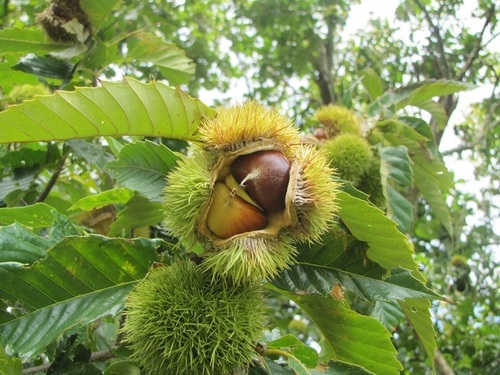
Quercus variabilis
Blume
Oriental Cork Oak, Chinese cork oak

(c) Kim, Hyun-tae, some rights reserved (CC BY), uploaded by Kim, Hyun-tae
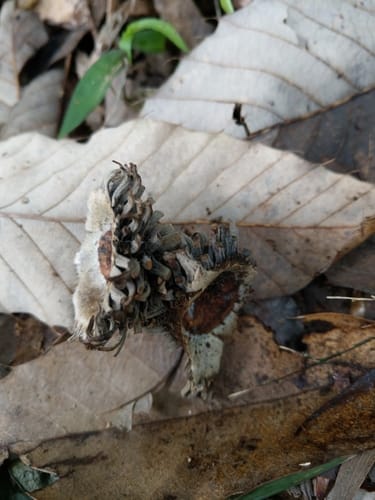
(c) 山羌, some rights reserved (CC BY-NC)

(c) 眼子菜, some rights reserved (CC BY-NC)
What to Eat
Edible parts: Seeds, Nuts
The seed, up to 2cm long, is very nutritious but must be cooked and requires leaching before eating. It can be dried and ground into a powder for use as a stew thickener or mixed with cereals for bread. Bitter tannins in the seed can be leached by washing thoroughly in running water, though this also removes many minerals. Either whole seeds or ground powder can be used — whole seeds may take several days or weeks to leach properly, with one method being to wrap them in a cloth bag and place in a stream. Leaching powder is quicker. A taste test indicates when tannins have been adequately reduced. The traditional preparation involved burying seeds in boggy ground over winter; the germinating seed dug up in spring would have shed most of its astringency. The roasted seed serves as a coffee substitute.
Where to Find It
A temperate plant. It is native to China, Japan and Korea. It grows in areas with a temperature range of 15.9-18.5°C and rainfall 1,400 to 1,500 mm per year. It can grow on a range of soils with pH from 4 to 8. It does best on fertile well drained soils. In Vietnam it grows about 800-1,000 m altitude. In China it grows in evergreen and deciduous forest below 3,000 m altitude. It suits hardiness zone 5. Arboretum Tasmania.
Asia, Australia, China, Indochina, Indonesia, Japan, Korea, SE Asia, Tasmania, Vietnam,
How to Identify
A large deciduous tree. It grows 15-25 m tall. The trunk can be 50-60 cm across or larger. The leaf stalk is 1-3 cm long. The leaf blade is oval or sword shaped and 8-15 cm long by 2-6 cm wide. The base is rounded and there are teeth along the edge. It tapers to the tip. There are 13-18 secondary veins on each side of the main vein. The cup encloses about 2/3 of the nut. The fruit is a nut 1.6-1.9 cm long by 1.3-1.5 cm wide.
How to Grow
Experimental Crop Industrial Crop: Cork Industrial Crop: Tannin Management: Standard. Prefers a good deep fertile loam which can be on the stiff side. Young plants tolerate reasonable levels of side shade. Tolerates moderate exposure, surviving well but being somewhat stunted. Prefers warmer summers than are usually experienced in Britain, trees often grow poorly in this country and fail to properly ripen their wood resulting in frost damage overwinter. A very ornamental tree. Closely related to Q. acutissima. Trees respond well to coppicing. The seed ripens in its second year. Intolerant of root disturbance, trees should be planted in their permanent positions whilst young. Hybridizes freely with other members of the genus. Plants in this genus are notably resistant to honey fungus.
Propagation: Seed loses viability rapidly if allowed to dry out. It can be stored moist and cool over winter but is best sown as soon as it is ripe in an outdoor seed bed, with protection from mice and squirrels. Small quantities can be sown in deep pots in a cold frame. Because plants develop a deep taproot, they should be moved to their permanent positions as soon as possible — seed sown in situ produces the best trees. Trees left in a nursery bed for more than 2 growing seasons transplant very poorly.
Medicinal Uses
Galls produced on the tree are strongly astringent and can be used in treating haemorrhages, chronic diarrhoea, and dysentery.
Other Uses
A mulch of leaves repels slugs and grubs, though fresh leaves should not be used as they can inhibit plant growth. Oak galls caused by insect larvae provide a useful source of tannin once the insect has left; the tannin can also be used as a dyestuff. The bark is a source of cork — a 10-metre tall tree at Kew has less than 4cm of cork thickness on it. A black dye is obtained from the seed cupules. The bark is used for roofing. The wood is used for boat building and construction.
Wikipedia
Source ↗Quercus variabilis, the Chinese cork oak, is a species of oak in the section Quercus sect. Cerris, native to a wide area of eastern Asia in southern, central, and eastern China, Taiwan, Japan, and Korea.
Production
Trees do not fruit well every year. Fruit occur most on trees 40-100 years old.
Notes
There are about 600 Quercus species.
Names & Synonyms
More from Fagaceae