Ravenea robustior
Jum. et Perr.
(c) David Rabehevitra, some rights reserved (CC BY-NC), uploaded by David Rabehevitra
(c) Louis Aureglia, some rights reserved (CC BY)
What to Eat
Edible parts: Terminal bud, Sago - starch, Vegetable
The palm heart is eaten as a vegetable. The terminal bud and starch (sago) from the plant are also edible portions.
Where to Find It
It is a tropical and subtropical plant. It grows in moist forests in Madagascar. It grows from sea level to almost 2000 m altitude. It can tolerate some cold.
Africa, East Africa, Madagascar,
How to Identify
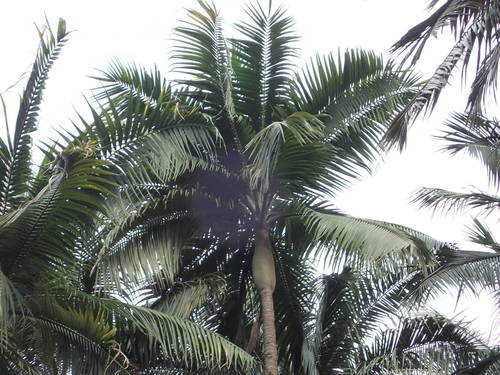
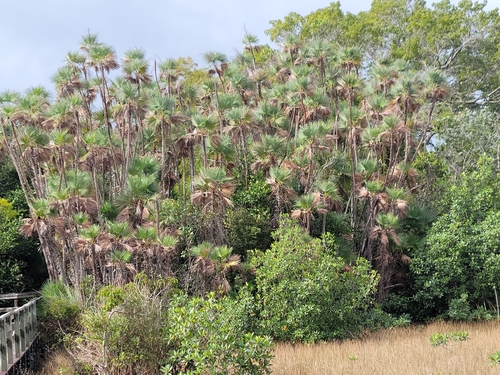
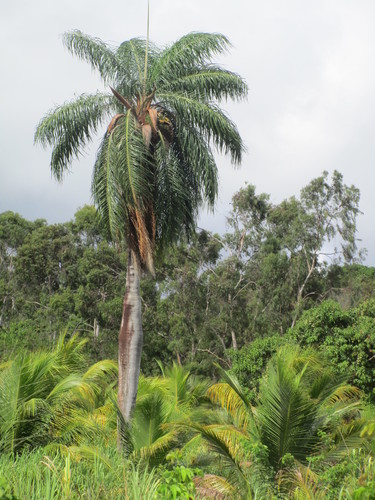
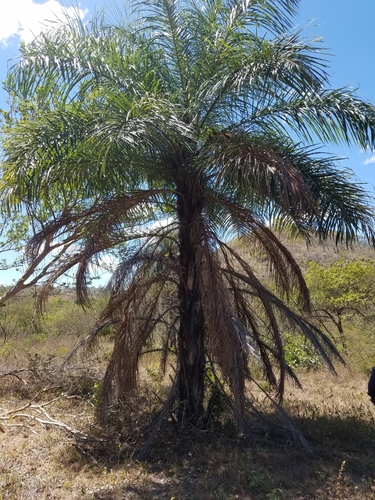
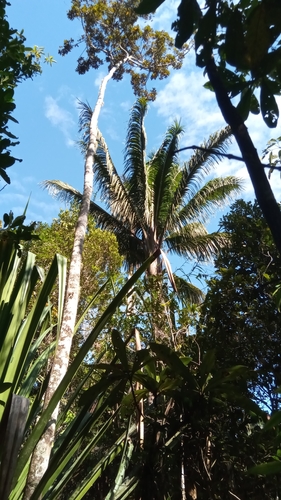
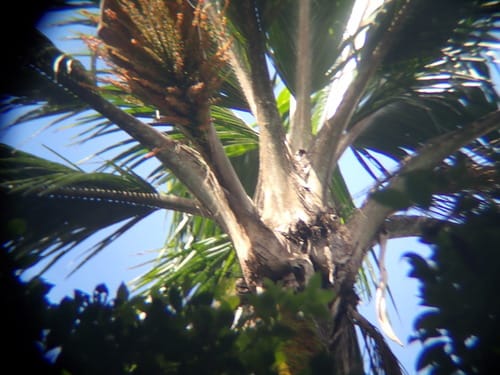
A solitary palm. It grows to 25-30 m tall. The trunk is grey to brown and stout. It is 60 cm across and with a swollen base. The crown is erect. There are 12-15 dark green leaves. They are 2-3 m long. The leaf stalks are 60-120 cm long. The leaflets are 60-120 cm long. They are dark green and regularly spaced. They form a single flat plane. The fruit are produced in large clusters. They are small and brilliant red.
How to Grow
Plants can be grown from seed. Seed take 1-3 months to germinate.
Propagation: Seed - Seeds, collected from the wild, are offered on the international market for ornamental purposes. The seeds do not seem to be recalcitrant. There are about 1700 seeds per kg and germination takes 1–3 months.
Other Uses
Young leaves are used for making brooms, and fully developed leaves are used for thatching. The wood is extremely hard on the outside, due to many black fibres. The heartwood is soft and white. The outer wood is used for making floorboards, tables, house walls; it is said to be termite resistant.
Wikipedia
Source ↗Ravenea robustior is a species of flowering plant in the family Arecaceae. It is found only in Madagascar. It is threatened by habitat loss.
Production
It is slow growing.
Names & Synonyms
Anivo, Anivona, Bobokoamby, Hovotravavy, Laafa, Lakabolavo, Loharanga, Manara, Momimony, Retanan, Tanave, Vakabe, Vakaboloka
References (9)
- Dransfield, J. & Beentje, H., 1995, The Palms of Madagascar. Royal Botanical Gardens, Kew and The International Palm Society. p 73
- Grubben, G. J. H. and Denton, O. A. (eds), 2004, Plant Resources of Tropical Africa 2. Vegetables. PROTA, Wageningen, Netherlands. p 446
- Jardin, C., 1970, List of Foods Used In Africa, FAO Nutrition Information Document Series No 2.p 19, 97
- Johnson, D.V., 1998, Tropical palms. Non-wood Forest products 10. FAO Rome. p 115
- Jones, D.L., 1994, Palms throughout the World. Smithtonian Institution, Washington. p 328
- Martin, F.W. & Ruberte, R.M., 1979, Edible Leaves of the Tropics. Antillian College Press, Mayaguez, Puerto Rico. p 217
- Riffle, R.L. & Craft, P., 2003, An Encyclopedia of Cultivated Palms. Timber Press. p 433
- van der Burg, W.J., 2004. Ravenea robustior Jum. & H.Perrier. [Internet] Record from Protabase. Grubben, G.J.H. & Denton, O.A. (Editors). PROTA (Plant Resources of Tropical Africa), Wageningen, Netherlands. < http://database.prota.org/search.htm>. Accessed 22 October 2009
- World Checklist of Useful Plant Species 2020. Royal Botanic Gardens, Kew