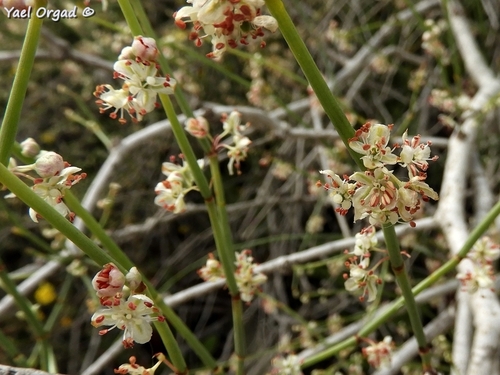
Rumex abyssinicus
Jacq.
Spanish Rhubarb, Dock

(c) Jean-Philippe BASUYAUX, some rights reserved (CC BY-NC), uploaded by Jean-Philippe BASUYAUX
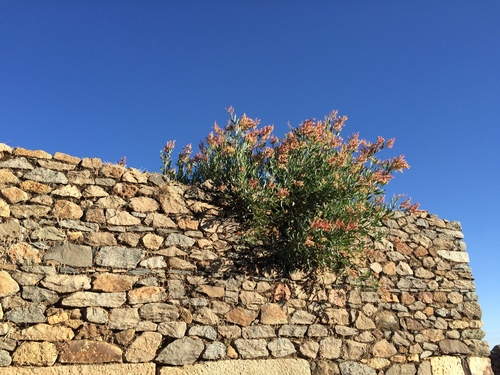
(c) Andy Jones, some rights reserved (CC BY-NC), uploaded by Andy Jones
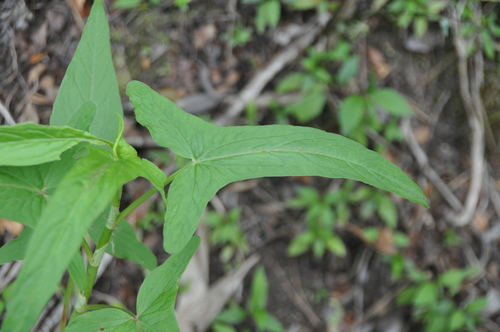
(c) CORDENOS Thierry, some rights reserved (CC BY-NC), uploaded by CORDENOS Thierry
What to Eat
Edible parts: Leaves, Stem, Roots - flavouring, Vegetable
Tender young shoots and leaves - raw or cooked. An acid flavour, they are widely used as a vegetable, either cooked alone or together with other vegetables. They are also eaten raw as a snack. The stem is chewed like sugar cane for its sweetness. A dye obtained from the rhizome is used in butter as a condiment, to give it a rich yellow colour and also as a protection against rancidity.
Known Hazards
Where to Find It
A tropical plant. It grows in tropical equatorial Africa. It is mostly in the highlands. It grows up to 3,300 m altitude. In Tanzania it grows in areas with a rainfall of 1,100-2,200 mm per year.
Africa, Cameroon, Central Africa, Congo DR, East Africa, Ethiopia, Gabon, Kenya, Madagascar, Mozambique, Nigeria, Rwanda, Tanzania, Uganda, West Africa, Zambia,
How to Identify
A stout herb. It keeps growing from year to year. It grows 4 m tall. The rhizome or underground stem is fleshy. The stem is red-green and grooved. It is 3 cm across. The leaf blade is triangle shape. The leaves at the base are 25 cm long by 20 cm wide. The leaves on the stem are smaller. The group of flowers are 50 cm long. The flowers are in small clusters. The fruit is a sharply triangle shaped nut. It is 2-4 mm long and shiny.
Nutrition Score: 11/100
| Part | Moisture | kJ | kcal | Protein | Vit A | Vit C | Iron | Zinc |
|---|---|---|---|---|---|---|---|---|
| Leaves | 93.8 | — | — | 1.5 | — | — | 0.5 | 0.3 |
How to Grow
We have very little information on this species and do not know if it will be hardy in Britain, though judging by its native range it could succeed outdoors at least in the milder parts of this country. The following notes are based on the general needs of the genus. Succeeds in most soils but prefers a deep fertile moderately heavy soil that is humus-rich, moisture-retentive but well-drained and a position in full-sun or part shade.
Propagation: Sow seed in spring in a cold frame. Prick seedlings out into individual pots when large enough to handle and plant out in summer. Division in spring.
Medicinal Uses
None known.
Other Uses
No specific mention has been made for this species, but dark green to brown and dark grey dyes can be obtained from the roots of many species in this genus without the need for a mordant.
Wikipedia
Source ↗Rumex abyssinicus is a species of flowering plant in the family Polygonaceae, native to tropical Africa, including Madagascar.
Production
Leaves are usually collected in the rainy season.
Other Information
It is a commercially cultivated vegetable. The shoots are eaten especially by children. It is a locally important vegetable.
Notes
There are about 200 Rumex species. There are about 20 in tropical America. All docks are said to be edible.
Names & Synonyms
Ambata, Hopho, Kilengelenge, Markash, Mekmeko, Mooqmoqii, Shishoone, Sholsholo, Umufuumbahuumba
References (36)
- Addis, G., et al, 2005, Ethnobotanical Study of Edible Wild Plants in Some Selected Districts of Ethiopia. Human Ecology, Vol. 33, No. 1, pp. 83-118
- Alemneh, D., 2020, Ethnobotany of wild edible plants in Yilmana Densa and Quarit Districts of West Gojjam Zone, Amhara Region, Ethiopia. Ethnobotany Research & Applications. 20:47
- Amin, M., et al, 2023, Edible wild plant species used by different linguistic groups of Kohistan Upper Khyber Pakhtunkhwa (KP), Pakistan. Journal of Ethnobiology and Ethnomedicine 19:6 p 13
- Asfaw, Z., Conservation and use of traditional vegetables in Ethiopia. FAO
- Asfaw, Z. and Tadesse, M., 2001, Prospects for Sustainable Use and Development of Wild Food Plants in Ethiopia. Economic Botany, Vol. 55, No. 1, pp. 47-62
- Ashagre, M., et al, 2016, Ethnobotanical study of wild edible plants in Burji District, Segan Area Zone of Southern Nations, Nationalities and Peoples Region (SNNPR), Ethiopia. Journal of Ethnobiology and Ethnomedicine (2016) 12:32
- Berihun, T. & Molla, E., 2017, Study on the Diversity and Use of Wild Edible Plants in Bullen District Northwest Ethiopia. Hindawi Journal of Botany. Article ID 8383468
- Burkill, H. M., 1985, The useful plants of west tropical Africa, Vol. 4. Kew.
- FAO, 1988, Traditional Food Plants, FAO Food and Nutrition Paper 42. FAO Rome p 429
- Food Composition Tables for use in Africa FAO http://www.fao.org/infoods/directory No. 616
- Fowler, D. G., 2007, Zambian Plants: Their Vernacular Names and Uses. Kew. p 83
- Glover et al, 1966b,
- Goode, P., 1989, Edible Plants of Uganda. FAO p 57
- Grivetti, L. E., 1980, Agricultural development: present and potential role of edible wild plants. Part 2: Sub-Saharan Africa, Report to the Department of State Agency for International Development. p 45
- Grubben, G. J. H. and Denton, O. A. (eds), 2004, Plant Resources of Tropical Africa 2. Vegetables. PROTA, Wageningen, Netherlands. p 450
- Hedrick, U.P., 1919, (Ed.), Sturtevant's edible plants of the world. p 582
- Hort. bot. vindob. 3:48, t. 93. 1777
- http://aflora.africa.kyoto-u.ac.jp
- Jansen, P.C.M., 2004. Rumex abyssinicus Jacq. [Internet] Record from Protabase. Grubben, G.J.H. & Denton, O.A. (Editors). PROTA (Plant Resources of Tropical Africa), Wageningen, Netherlands. < http://database.prota.org/search.htm>. Accessed 22 October 2009
- Jardin, C., 1970, List of Foods Used In Africa, FAO Nutrition Information Document Series No 2.p 98
- Kakeya, 1976,
- Karhagomba, I. B., et al, 2013, The cultivation of wild food and medicinal plants for improving community livelihood: The case of the Buhozi site, DR Congo. Nutrition Research and Practice (Nutr Res Pract) 2013;7(6):510-518
- Lulekal, E., et al, 2011, Wild edible plants in Ethiopia: a review on their potential to combat food insecurity. Afrika Focus - Vol. 24, No 2. pp 71-121
- Martin, F.W. & Ruberte, R.M., 1979, Edible Leaves of the Tropics. Antillian College Press, Mayaguez, Puerto Rico. p 214
- Maundu, P. et al, 1999, Traditional Food Plants of Kenya. National Museum of Kenya. 288p
- Molla, A., Ethiopian Plant Names. http://www.ethiopic.com/aplants.htm
- Mutie, F. M., et al, 2023, Important Medicinal and Food Taxa (Orders and Families) in Kenya, Based on Three Quantitative Approaches. Plants 2023, 12, 1145
- Peters, C. R., O'Brien, E. M., and Drummond, R.B., 1992, Edible Wild plants of Sub-saharan Africa. Kew. p 163
- Plants for a Future database, The Field, Penpol, Lostwithiel, Cornwall, PL22 0NG, UK. http://www.scs.leeds.ac.uk/pfaf/
- Regassa, T., et al, 2014, Ethnobotany of Wild and Semi-Wild Edible Plants of Chelia District, West-Central Ethiopia. Science, Technology and Arts Research Journal. 3(4): 122-134
- Ruffo, C. K., Birnie, A. & Tengnas, B., 2002, Edible Wild Plants of Tanzania. RELMA p 578
- Sina, B. & Degu, H. D., 2015, Knowledge and use of Wild Edible Plants in the Hula District of the Sidama Zone. International Journal of Bio-resource and Stress Management 6(3):352-365
- Terra, G.J.A., 1973, Tropical Vegetables. Communication 54e Royal Tropical Institute, Amsterdam, p 70
- World Checklist of Useful Plant Species 2020. Royal Botanic Gardens, Kew
- Yamada, T., 1999, A report of the Ethnobotany of the Nyindu in the Eastern part of the former Zaire. African Study Monographs 20(1):1-72
- Yimer, A., et al, 2021, Ethnobotanical study of wild edible plants used by Meinit Ethnic Community at Bench-Maji Zone, Southwest Ethiopia. Research Square. p 5