Rumex acetosa
L.
Garden sorrel, Dock, Supermarket sorrel, Sheep's sorrel
(c) Patrick Hacker, some rights reserved (CC BY), uploaded by Patrick Hacker
(c) clariemiles, some rights reserved (CC BY-NC), uploaded by clariemiles

(c) Aleksandr V. Lebedev, some rights reserved (CC BY-NC), uploaded by Aleksandr V. Lebedev
What to Eat
Edible parts: Leaves, Flowers, Seeds, Vegetable,Stems
Leaves can be eaten raw or cooked. They have a delicious lemon-like flavour appreciated by most people, though they can be overpowering in quantity and are generally best used as a flavouring in mixed salads. They can also be cooked as a potherb, pureed into soups, or dried for later use. Leaves are often available through winter, particularly in mild conditions or with light protection. They should be used sparingly in the diet. Flowers can be cooked as a vegetable or used as a garnish. The root is cooked, then dried, ground into a powder, and made into noodles. Seed can be eaten raw or cooked — ground into a powder and mixed with other flours to make bread. The seed is easy to harvest but small and fiddly to work with. Leaf juice can be used as a curdling agent for milk.
Known Hazards
Dangerous Lookalikes
This plant can be confused with the following toxic species. Always verify identification carefully before consuming any wild plant.


Lords-and-Ladies (Cuckoo Pint): Rounded lobes at leaf base, often dark-spotted leaves, distinctive hooded flower (spadix), bright red berries in autumn.
Garden sorrel: Sour lemony taste, pointed arrow-shaped leaves with backward-pointing lobes.
Where to Find It
It is a cold temperate plant. It is cultivated in Java. It grows in wetlands. In Pakistan it grows between 2,000-4,500 m altitude. It suits hardiness zones 6-7. It grows in Sichuan and Yunnan.
Africa, Albania, Argentina, Armenia, Asia, Australia, Azerbaijan, Balkans, Belarus, Belgium, Bosnia, Britain, Bulgaria, Canada, Caucasus, Central Asia, Chile, China, Czech Republic, Denmark, Estonia, Europe*, Falklands, Faroe Islands, Finland, France, Georgia, Greece, Greenland, Haiti, Himalayas, Hungary, Iceland, India, Indonesia, Ireland, Italy, Japan, Kazakhstan, Korea, Kosovo, Kyrgyzstan, Latvia, Libya, Lithuania, Macedonia, Mediterranean, Middle East, Moldova, Mongolia, Morocco, Nepal, Netherlands, New Zealand, North Africa, North America, Norway, NW India, Pakistan, Palestine, Poland, Portugal, Romania, Russia, Scandinavia, SE Asia, Serbia, Siberia, Sicily, Slovakia, Slovenia, South America, Spain, Sweden, Switzerland, Tajikistan, Tasmania, Turkey, Türkiye, Ukraine, USA, West Indies,
How to Identify
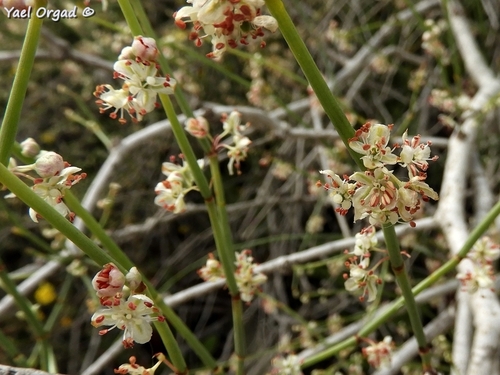
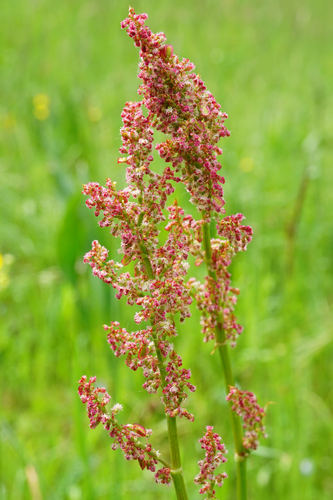
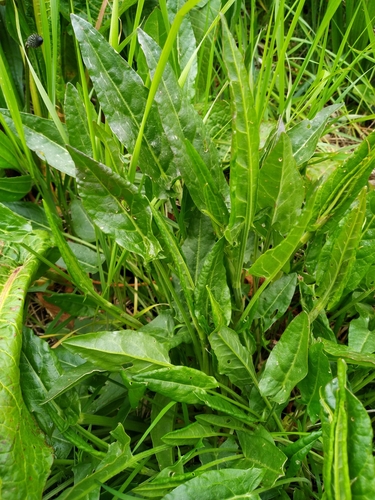
A small plant. It keeps growing from year to year. It grows 50-100 cm high and spreads 30-40 cm wide. It forms clumps. The leaves are broad and spear-shaped. The veins run from the midrib to the edge of the leaf. The ears at the base of the leaf are smaller. The leaves are 15 cm long. The flowers are small and red on long stalks. There are some named cultivated varieties.
Nutrition Score: 37/100
| Part | Moisture | kJ | kcal | Protein | Vit A | Vit C | Iron | Zinc |
|---|---|---|---|---|---|---|---|---|
| Leaves | 92 | 22 | 2 | 400 | 48 | 2.4 | — | — |
How to Grow
A very easily grown and tolerant plant, it succeeds in most soils, preferring a moist moderately fertile well-drained soil in a sunny position. Shade tolerant. Established plants are tolerant of considerable neglect, surviving even in dense weed growth. Sorrel has been used since ancient times as a food and medicinal plant. It is still occasionally cultivated for its edible leaves, there are some named varieties. The plant stops producing leaves when it flowers in the summer, regrowing after the seed has set. Plants also usually die down in the winter. Cutting down the flowering stem will encourage the growth of fresh young leaves. 'Blonde de Lyon' has large, only slightly acid leaves and is much less likely to flower than the type. This means that the leaves of this cultivar are often available all through the summer and are often also produced throughout the winter, especially if the winter is mild. A food plant for the caterpillars of many species of butterfly, it is a good plant to grow in the spring meadow. Dioecious. Male and female plants must be grown if seed is required.
Propagation: Sow seed in spring in situ; leaves can be harvested within 8 weeks of sowing. Division in spring is straightforward and can be done at almost any time of year, though plants establish more quickly when divided in spring. Use a sharp spade or knife to divide the rootstock, ensuring at least one growth bud per section. Larger divisions can go directly into permanent positions. Smaller divisions are best potted up and grown on in a lightly shaded cold frame, then planted out once well established in summer.
Medicinal Uses
The fresh or dried leaves are astringent, diuretic, laxative, and refrigerant. They are used to make a cooling drink for treating fevers and are particularly valued for treating scurvy. Leaf juice mixed with fumitory has been used as a remedy for itchy skin and ringworm. An infusion of the root is astringent, diuretic, and haemostatic, and has been used to treat jaundice, gravel, and kidney stones. Both roots and seeds have been used to stem haemorrhages. A paste of the root is applied to help set dislocated bones. The plant is also depurative and stomachic. A homeopathic remedy prepared from the plant is used in the treatment of spasms and skin ailments.
Other Uses
Dark green to brown and dark grey dyes can be obtained from the roots without a mordant. A grey-blue dye comes from the leaves and stems. An infusion of the stems serves as a polish for bamboo, wicker furniture, and silver. The juice removes stains from linen and ink stains (excluding ball-point ink) from white material, and is sometimes sold as 'essential salt of lemon'. The plant is a dynamic accumulator, gathering minerals and nutrients from the soil and storing them in a more bioavailable form for use as fertilizer or mulch improver.
Wikipedia
Source ↗A compact perennial growing 0.6 m tall by 0.3 m wide. Hardy to UK zone 3, not frost tender, with year-round foliage. Flowers May to June; seeds ripen June to August. Dioecious, wind-pollinated, and not self-fertile; attracts wildlife. Tolerates light, medium, or heavy soils including very acid pH ranges. Grows in semi-shade or full sun and prefers moist soil.
Other Information
It is a commercially cultivated vegetable. It is grown as a vegetable and sold in nurseries and supermarkets. It is sold in local markets,
Notes
There are about 200 Rumex species. Contains vitamins A, C, K, E, B, proteins, tannins, fiber, phenolic acids (gallic, ellagic acid, protocatechuic acid, ferulic acid, p-coumaric acid, rosmarinic, vanillic, synaptic). Pro anthocyanidins are epicatechin and epicatechin derivatives, oxalic acid
Names & Synonyms
Abjie, Acedera, Acetosa, Aceturia, Acitazzu, Agrietes, Amile ghans, Asetou, Auredduci, Chukel, Chuki, Eksi labada, Engsyre, Erba putta, Hapuoblikas, Hummaid, Khatta patta, Kiselets, Kiselica, Kishlek, Kozina, Kvasinka, Ljutika, Mzjauna, Navadna kislica, Oblikas, Oseille, Pane e vino, Podoi, Rugstynes, Sariplar, Saurampfer, Sghavel, Shchavyey, Stiav, Suan mo, Tarrago, Trtnjuk, Veldzuring, Vinagrera, Zezzora
References (119)
- Abbet, C., et al, 2014, Ethnobotanical survey on wild alpine food plants in Lower and Central Valais (Switzerland). Journal of Ethnopharmacology 151 (2014) 624–634
- Aipeisova S.A., et al, 2019, Wild useful herbs of Aktobe Region (Western Kazakhstan). Ukrainian Journal of Ecology, 9(3), 329-331
- Ali-Shtayeh, M. S., et al, 2008, Traditional knowledge of wild edible plants used in Palestine (Northern West Bank): A comparative study. J Ethnobiol Ethnomed. 4: 13
- Ambasta S.P. (Ed.), 2000, The Useful Plants of India. CSIR India. p 534
- Amin, M., et al, 2023, Edible wild plant species used by different linguistic groups of Kohistan Upper Khyber Pakhtunkhwa (KP), Pakistan. Journal of Ethnobiology and Ethnomedicine 19:6 p 13
- Arora, R. K., 2014, Diversity in Underutilized Plant Species - An Asia-Pacific Perspective. Bioversity International. p 45
- Beckstrom-Sternberg, Stephen M., and James A. Duke. "The Foodplant Database." http://probe.nalusda.gov:8300/cgi-bin/browse/foodplantdb.(ACEDB version 4.0 - data version July 1994)
- Biscotti, N. et al, 2018, The traditional food use of wild vegetables in Apulia (Italy) in the light of Italian ethnobotanical literature. Italian Botanist 5:1-24
- Bodkin, F., 1991, Encyclopedia Botanica. Cornstalk publishing, p 894
- Bonet, M. A. & Valles, J., 2002, Use of non-crop food vascular plants in Montseny biosphere reserve (Catalonia, Iberian Peninsula). International Journal of Food Sciences and Nutrition (2002) 53, 225–248
- Bremness, L., 1994, Herbs. Collins Eyewitness Handbooks. Harper Collins. p 212
- Burkill, I.H., 1966, A Dictionary of the Economic Products of the Malay Peninsula. Ministry of Agriculture and Cooperatives, Kuala Lumpur, Malaysia. Vol 2 (I-Z) p 1954
- Burnie, G & Fenton-Smith, J., 1999, A Grower's Guide to Herbs. Murdoch Books. p 66
- Bussman, R. W., et al, 2016, A comparative ethnobotany of Khevsureti, Samtskhe-Javakheti, Tusheti, Svaneti, and Racha-Lechkhumi, Republic of Georgia (Sakartvelo), Caucasus. Journal of Ethnobiology and Ethnomedicine.
- Bussman, R. W. et al, 2017, Ethnobotany of Samtskhe-Javakheti, Sakartvelo (Republic of Georgia), Caucasus. Indian Journal of Traditional Knowledge Vol. 16(1) pp 7-24
- Bussman, R. W., et al, 2021, Unity in diversity—food plants and fungi of Sakartvelo (Republic of Georgia), Caucasus. Journal of Ethnobiology and Ethnomedicine (2021) 17:72 p 13
- Cerne, M., 1992, Wild Plants from Slovenia used as Vegetables. Acta Horticulturae 318.
- Cheifetz, A., (ed), 1999, 500 popular vegetables, herbs, fruits and nuts for Australian Gardeners. Random House p 152
- Chen, B. & Qiu, Z., Consumer's Attitudes towards Edible Wild Plants, Ishikawa Prefecture, Japan. p 24 www.hindawi.com/journals/ijfr/aip/872413.pdf
- Crate, S. A., 2008, "Eating Hay": The Ecology, Economy and Culture of Viliui Sakha Smallholders of Northeastern Siberia. Human Ecology 36:161-174
- Cundall, P., (ed.), 2004, Gardening Australia: flora: the gardener's bible. ABC Books. p 1287
- DARLINGTON & AMMAL,
- Denes, A., et al, 2012, Wild plants used for food by Hungarian ethnic groups living in the Carpathian Basin. Acta Societatis Botanicorum Poloniae 81 (4): 381-396
- DILLINGHAM (1906),
- Dobriyal, M. J. R. & Dobriyal, R., 2014, Non Wood Forest Produce an Option for Ethnic Food and Nutritional Security in India. Int. J. of Usuf. Mngt. 15(1):17-37
- Dogan, Y., et al, 2015, Of the importance of a leaf: the ethnobotany of sarma in Turkey and the Balkans. Journal of Ethnobiology and Ethnomedicine, 11:56
- Esperanca, M. J., 1988. Surviving in the wild. A glance at the wild plants and their uses. Vol. 2. p 235
- Facciola, S., 1998, Cornucopia 2: a Source Book of Edible Plants. Kampong Publications, p 186
- Flora of China @ efloras.org Volume 5
- Flora of Pakistan. www.eFloras.org
- Geng, Y., et al, 2016, Traditional knowledge and its transmission of wild edibles used by the Naxi in Baidi Village, northwest Yunnan province. Journal of Ethnobiology and Ethnomedicine. 12:10
- Geraci, A., et al, 2018, The wild taxa utilized as vegetables in Sicily (Italy): a traditional component of the Mediterranean diet. Journal of Ethnobiology and Ethnomedicine (2018) 14:14
- Girard, N. J., 2020, Sustainable Foraging of Wild Edible Plants in Norway. A Biocultural Approach. M. Sc. thesis Norwegian University. p 133
- Gonzalez, J. A., et al, 2011, The consumption of wild and semi-domesticated edible plants in the Arribes del Duero (Salamanca-Zamora, Spain): an ananalysis of traditional knowledge. Genetic Resources and Crop Evolution 58:991-1006
- Hadjichambis, A. C., et al, 2007, Wild and semi-domesticated food plant consumption in seven circum-Mediterranean areas. International Journal of Food Sciences and Nutrition. 2007, 1-32.
- Hedrick, U.P., 1919, (Ed.), Sturtevant's edible plants of the world. p 582
- Heo, B., et al., 2009, Antiproliferative Activity of Korean Wild Vegetables on Different Human Tumor Cell Lines. Plant Foods for Human Nutrition. 64:257-263
- Heywood, V.H., Brummitt, R.K., Culham, A., and Seberg, O., 2007, Flowering Plant Families of the World. Royal Botanical Gardens, Kew. p 264
- Hibbert, M., 2002, The Aussie Plant Finder 2002, Florilegium. p 282
- Hinnawi, N. S. A., 2010, An ethnobotanical study of wild edible plants in the Northern West Bank "Palestine". An-Najah National University. p 95
- http://nordicfood lab/org/blog/2102/9/wild-edible-plants-an-overview
- https://en.wikipedia.org/wiki/List of wild edible plants in Mongolian cuisine
- http://www.botanic-gardens-ljubljana.com/en/plants
- Hu, Shiu-ying, 2005, Food Plants of China. The Chinese University Press. p 374
- Irving, M., 2009, The Forager Handbook, A Guide to the Edible Plants of Britain. Ebury Press p 176
- Jackes, D. A., 2007, Edible Forest Gardens
- Joshi, N., et al, 2007, Traditional neglected vegetables of Nepal: Their sustainable utilization for meeting human needs. Tropentag 2007. Conference on International Agricultural Research for Development.
- Kaliszewska, I & Kolodziejska-Degorska, I, 2015, The social context of wild leafy vegetables uses in Shiri, Daghestan. Journal of Ethnobiology and Ethnomedicine, 11:63
- Kalle, R. & Soukand, R., 2012, Historical ethnobotanical review of wild edible plants of Estonia (1770s-1960s) Acta Societatis Botanicorum Poloniae 81(4):271-281
- Kang, J. et al, 2016, Wild food plants and fungi used in the mycophilous Tibetan community of Zhagana (Tewo Country, Gansu, China) Journal of Ethnobiology and Ethnomedicine. 12:21
- Kays, S. J., and Dias, J. C. S., 1995, Common Names of Commercially Cultivated Vegetables of the World in 15 languages. Economic Botany, Vol. 49, No. 2, pp. 115-152
- Kew, Plants of the World on Line
- Kiple, K.F. & Ornelas, K.C., (eds), 2000, The Cambridge World History of Food. CUP p 1854
- Kolosova, V., et al, 2020, Foraging in Boreal Forest: Wild Food Plants of the Republic of Karelia, NW Russia. Foods 2020, 9, 1015; p 19
- Low, T., 1992, Bush Tucker. Australia’s Wild Food Harvest. Angus & Robertson. p 152
- Luczaj, L., 2012, Ethnobotanical review of wild edible plants of Slovakia. Acta Societatis Botanicorum Poloniae 81(4):245-255
- Luczaj, L. et al, 2012, Wild food plant use in 21st century Europe: the disappearance of old traditions and the search for new cuisines involving wild edibles. Acta Soc Bot Pol 81(4):359–370
- Łukasz Łuczaj and Wojciech M Szymański, 2007, Wild vascular plants gathered for consumption in the Polish countryside: a review. J Ethnobiol Ethnomedicine. 2007; 3: 17
- Luczaj, L. et al, 2013, Wild edible plants of Belarus: from Rostakinski's questionnaire of 1883 to the present. Journal of Ethnobiology and Ethnomedicine 9:21
- Luczaj, L., et al, 2015, Wild food plants and fungi used by Ukrainians in the western part of the Maramureş region in Romania. Acta Soc Bot Pol 84(3):339–346
- Luczaj, L. et al, 2017, Comfrey and Buttercup Eaters: Wild Vegetables of the Imereti Region in Western Georgia, Caucasus. Economic Botany, 71(2), 2017, pp. 188–193
- Mabey, R., 1973, Food for Free. A Guide to the edible wild plants of Britain, Collins. p 98
- Macmillan, H.F. (Revised Barlow, H.S., et al), 1991, Tropical Planting and Gardening. Sixth edition. Malayan Nature Society. Kuala Lumpur. p 370
- Mahklouf, M. H., 2019, Ethnobotanical Study of Edible Wild Plants in Libya. European Journal of Ecology. 5(2): 30-40
- Martin, F.W. & Ruberte, R.M., 1979, Edible Leaves of the Tropics. Antillian College Press, Mayaguez, Puerto Rico. p 214
- Mattalia, G., et al, 2012, Traditional uses of wild food and medicinal plants among Brigasc, Kye ́, and Provenc ̧al communities on the Western Italian Alps. Genet Resour Crop Evol. Springer
- Michael, P., 2007, Edible Wild Plants and Herbs. Grub Street. London. p 219
- Mir, M. Y., 2014, Documentation and ethnobotanical survey of wild edible plants used by the tribals of Kupwara, J & K, India. International Journal of Herbal Medicine. 2(4): 11-18
- Moerman, D. F., 2010, Native American Ethnobotany. Timber Press. p 495
- Nanagulyan, S., et al, 2020, Wild plants and fungi sold in the markets of Yerevan (Armenia). Journal of Ethnobiology and Ethnomedicine 16:26
- Nebel, S., Pieroni, A. & Heinrich, M., 2006, Ta cho`rta: Wild edible greens used in the Graecanic area in Calabria, Southern Italy. Appetite 47 (2006) 333–342
- Nedelcheva A., 2013, An ethnobotanical study of wild edible plants in Bulgaria. EurAsian Journal of BioSciences 7, 77-94
- Paoletti, M.G., Dreon, A.L., and Lorenzoni, G.G., 1995, Pistic, Traditional Food from Western Friuli, NE Italy. Economic Botany 49(1) pp 26-30
- Pardo-de-Santayana, M., et al, 2005, The gathering and consumption of wild edible plants in the Campoo (Cantabria, Spain). International Journal of Food Sciences and Nutrition. 56(7): 529-542
- Pardo-de-Santayana, M., et al, 2007, Traditional knowledge of wild edible plants used in the northwest of the Iberian Peninsula (Spain and Portugal): a comparative study. Journal of Ethnobiology and Ethnomedicine 2007, 3:27
- Pieroni, A., 1999, Gathered wild food plants in the Upper Valley of the Serchio River (Garfagnana), Central Italy. Economic Botany 53(3) pp 327-341
- Pieroni, A.,& Giusti, M. E., 2009, Alpine Ethnobotany in Italy: Journal of Ethnobiology and Ethnomedicine. 5:32
- Pieroni, A., et al, 2012, "We are Italians!": The Hybrid Ethnobotany of a Venetian Diaspora in Eastern Romania. Human Ecology 40:435-451
- Pieroni, A. & Soukand, R., 2017, Are Borders more Important than Geographical Distance? The Wild Food Ethnobotany of the Boykos and its Overlap with that of the Bukovinian Hutsuls in Western Ukraine. Journal of Ethnobiology 37(2): 326–345
- Pieroni, A. & Soukand, R., 2017, The disappearing wild food and medicinal plant knowledge in a few mountain villages of North-Eastern Albania. Journal of Applied Botany and Food Quality 90, 58 - 67
- Pieroni, A. & Soukand, R., 2018, Forest as Stronghold of Local Ecological Practice: Currently Used Wild Food Plants in Polesia, Northern Ukraine. Economic Botany, XX(X) pp. 1-21
- Pieroni, A., et al, 2020, Wild food plants traditionally gathered in central Armenia: archaic ingredients or future sustainable foods? Environment, Development and Sustainability. Springer p 11
- Plants for a Future database, The Field, Penpol, Lostwithiel, Cornwall, PL22 0NG, UK. http://www.scs.leeds.ac.uk/pfaf/
- Plants of Haiti Smithsonian Institute http://botany.si.edu/antilles/West Indies
- Prakofjewa, J., et al, 2023, Boundaries Are Blurred: Wild Food Plant Knowledge Circulation across the Polish-Lithuanian-Belarusian Borderland. Biology 2023, 12, 571.
- Pruse, B., et al, 2021, Active Wild Food Practices among Culturally Diverse Groups in the 21st Century across Latgale, Latvia. Biology 2021, 10, 551.
- Rana, P. K., et al, 2014, Uses of Local Plant Biodiversity among the Tribal Communities of Pangi Valley of District Chamba in Cold Desert Himalaya, India. The Scientific World Journal. Volume 2014, Article ID 753289, 15 pages
- Rashid, A., Anand, V.K. & Serwar, J., 2008, Less Known Wild Plants Used by the Gujjar Tribe of District Rajouri, Jammu and Kashmir State. International Journal of Botany 4(2):219-244
- Rawat, G.S., & Pangtey, Y.P.S., 1987, A Contribution to the Ethnobotany of Alpine Regions of Kumaon. J. Econ. Tax. Bot. Vol. 11 No. 1 pp 139-147
- Redzic, S. J., 2006, Wild Edible Plants and their Traditional Use in the Human Nutrition in Bosnia-Herzegovina. Ecology of Food and Nutrition, 45:189-232
- Redzic, S., 2010, Use of Wild and Semi-Wild Edible Plants in Nutrition and Survival of People in 1430 Days of Siege of Sarajevo during the War in Bosnia and Herzegovina (1992–1995). Coll. Antropol 34 (2010) 2:551-570
- Reis, S. V. and Lipp, F. L., 1982, New Plant Sources for Drugs and Foods from the New York Botanical Garden herbarium. Harvard. p 53
- Rexhepi, B., et al, 2018, Ethnobotanical Study of Wild Edible Plants in Pelagonia Region (Southwestern Macedonia) International Journal of Advances in Science Engineering and Technology, Vol. 6 (1) p 57
- Rigat, M et al, 2009, Ethnobotany of Food Plants in the High River Ter Valley (Pyrenees, catalonia, Iberian Peninsula): Non-Crop Food Vascular Plants and Crop Food Plants with medicinal Properties. Ecology of Food and Nutrition, 48:303-327
- Rivera, D. et al, 2006, Gathered Mediterranean Food Plants - Ethnobotanical Investigations and Historical Development, in Heinrich M, Müller WE, Galli C (eds): Local Mediterranean Food Plants and Nutraceuticals. Forum Nutr. Basel, Karger, 2006, vol 59, pp 18–74
- Sansanelli, S., et al, 2014, Wild food plants traditionall consumed in the area of Bologna (Emilia Romagna region, Italy). Journal of Ethnobiology and Ethnomedicine 10:69
- Schneider, E., 2001, Vegetables from Amaranth to Zucchini: The essential reference. HarperCollins. p 573
- Sharma, L. et al, 2018, Diversity, distribution pattern, endemism and indigenous uses of wild edible plants in Cold Desert Biosphere Reserve of Indian Trans Himalaya. Indian Journal of Traditional Knowledge. Vol 17(1) January 2018 pp 122-131
- Siminiuc, R. & Turcanu, D., 2021, Study of Edible Spontaneous Herbs in the Republic of Moldova for Ensuring a Sustainable Food System. Food and Nutrition Sciences, 2021, 12, 703-718 p 709
- Simkova, K. et al, 2014, Ethnobotanical review of wild edible plants used in the Czech Republic. Journal of Applied Botany and Food Quality 88, 49-67
- Skinner, G. & Brown, 1981, C., Simply Living. A gatherer's guide to New Zealand's fields, forests and shores. Reed. p 21
- Soukand, R., et al, 2017, Multi-functionality of the few: current and past uses of wild plants for food and healing in Liubań region, Belarus. Journal of Ethnobiology and Ethnomedicine (2017) 13:10
- Sp. pl. 1:337. 1753, nom. cons.
- Stern, G., 1986, Australian Weeds. A Source of Food and Medicine. Harper & Row. p 182
- Svanberg, I., et al, 2012, Edible wild plant use in the Faroe Islands and Iceland. Acta Societatis Botanicorum Poloniae 81(4): 233-238
- Svanberg, I., 2012, The use of wild plants as food in pre-industrial Sweden. Acta Societatis Botanicorum Poloniae 81(4): 317-327
- Tardio, J., et al, Ethnobotanical review of wild edible plants in Spain. Botanical J. Linnean Soc. 152 (2006), 27-71
- Terra, G.J.A., 1973, Tropical Vegetables. Communication 54e Royal Tropical Institute, Amsterdam, p 70
- Tronickova, E. & Krejcova, Z., 1987, Ortaggi, Instituto Geografico de Agostini, Cecoslovacchia. p 108
- Ulian, T., et al, 2020, Unlocking plant resources to support food security and promote sustainable agriculture. Plants, People, Planet. 2020;2:421–445.
- Upson, R., & Lewis R., 2014, Updated Vascular Plant Checklist and Atlas for the Falkland Islands. Falklands Conservation and Kew.
- USDA, ARS, National Genetic Resources Program. Germplasm Resources Information Network - (GRIN). [Online Database] National Germplasm Resources Laboratory, Beltsville, Maryland. Available: www.ars-grin.gov/cgi-bin/npgs/html/econ.pl (10 April 2000)
- van Wyk, B., 2005, Food Plants of the World. An illustrated guide. Timber press. p 331
- Vorstenbosch, T., et al, 2017, Famine food of vegetal origin consumed in the Netherlands during World War II. Journal of Ethnobiology and Ethnomedicine (2017) 13:63
- Wiersema, J. H. & Leon, B., 2013, World Economic Plants. A Standard Reference CRC Press. 2nd Ed. p 600
- World Checklist of Useful Plant Species 2020. Royal Botanic Gardens, Kew
- Wujisguleng, W., & Khasbagen. K., 2010, An integrated assessment of wild vegetable resources in Inner Mongolian Autonomous Region, China. Journal of Ethnobiology and Ethnomedicine 6:34
- www.chileflora.com
- Zhang, Y., et al, 2014, Diversity of wetland plants used traditionally in China: a literature review. Journal of Ethnobiology and Ethnomedicine. 10:72