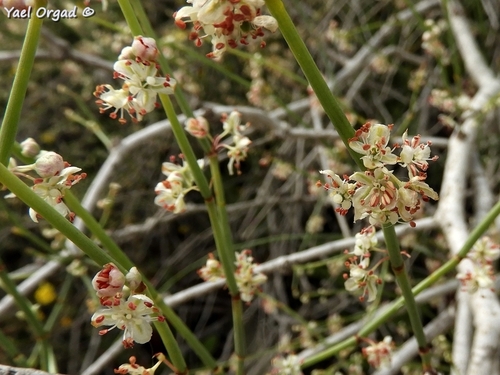
Rumex acetosella
L.
Sheep Sorrel, Red Sorrel

(c) Antti Henttonen, some rights reserved (CC BY-NC), uploaded by Antti Henttonen

(c) Agnieszka Kwiecień, Nova, some rights reserved (CC BY-SA)
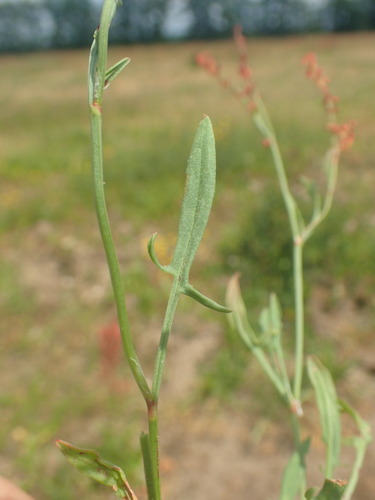
(c) Matthieu Gauvain, some rights reserved (CC BY-NC), uploaded by Matthieu Gauvain
What to Eat
Edible parts: Leaves, Seeds, Vegetable, Roots
The leaves can be eaten raw or cooked and have a delicious lemon-like flavour, though most people find them too strong to use in large quantities — they work best as a flavouring in mixed salads. Because of their oxalic acid content, leaves should only be used in small amounts. They also work as a thickener in soups and can be dried for later use. The root can be cooked, or dried, ground into a powder, and made into noodles. The seeds can be eaten raw or cooked; they are relatively easy to harvest but small and fiddly to use. Boiling the leaves produces a drink similar to lemonade, though without the fizz.
Known Hazards
Where to Find It
It is a temperate plant. It often grows self sown in poor soils and where there is little competition. Plants on frost prone sites are small. It grows best in open sunny locations. It is frost resistant. In Argentina it grows from sea level to 2,000 m above sea level. Tasmania Herbarium.
Africa, Alaska, Albania, Arctic, Argentina, Armenia, Asia, Australia, Balkans, Belarus, Bolivia, Bosnia, Britain, Bulgaria, Canada, Caucasus, Chile, China, Dominican Republic, East Africa, Ecuador, Estonia, Europe, Falklands, Finland, France, Georgia, Germany, Haiti, Hungary, India, Indochina, Ireland, Italy, Jamaica, Kenya, Korea, Kosovo, Macedonia, Mediterranean, Moldova, Morocco, Mozambique, Netherlands, New Zealand, North Africa, North America, Norway, Poland, Portugal, Romania, Scandinavia, SE Asia, Slovenia, South America, Spain, St Helena, Sweden, Tasmania, Turkey, Türkiye, Uruguay, USA, Venezuela, Vietnam, West Indies, Zimbabwe,
How to Identify
A herb. It grows 10-25 cm tall. It keeps growing from year to year. It has a slender but wide-spreading rootstock. It has narrow leaves. They are sword shaped and smooth. The veins run length wise right along the leaf. It has curved, winged ears at the base of the leaf. The leaves are on long stalks. The seeding spikes are slender and yellow-green at first but become reddish-brown. The seeds are small and do not have spines or bristles.
Nutrition Score: 17/100
| Part | Moisture | kJ | kcal | Protein | Vit A | Vit C | Iron | Zinc |
|---|---|---|---|---|---|---|---|---|
| Leaves | 88 | 180 | 44 | 1.1 | — | — | — | — |
How to Grow
Succeeds in most soils, preferring a moist moderately fertile well-drained soil in a sunny position. Although a plant of acid soils, it can tolerate some alkalinity. A good food plant for the caterpillars of many species of butterflies, it grows well in the summer meadow. Dioecious. Male and female plants must be grown if seed is required. A clumping mat former. Forming a dense prostrate carpet spreading indefinitely.
Propagation: Sow seed in autumn or spring directly in situ. Can also be propagated by division in spring.
Medicinal Uses
Sheep's sorrel is a detoxifying herb, and the fresh juice of the leaves has a pronounced diuretic effect. Like other members of the genus, it is mildly laxative and shows potential as a long-term treatment for chronic conditions, particularly those of the gastrointestinal tract. The plant is also one of four ingredients in the North American formula essiac, used as a popular treatment for cancer alongside Arctium lappa, Ulmus rubra, and Rheum palmatum — though its effectiveness has never been reliably proven or disproven due to a lack of controlled studies. The whole plant in its fresh state is diaphoretic, diuretic, and refrigerant. A tea made from the leaves treats fevers, inflammation, and scurvy, while leaf juice is useful for urinary and kidney diseases. A leaf poultice is applied to tumours and cysts as a folk cancer treatment. A tea made from the roots is astringent and is used for diarrhoea and excessive menstrual bleeding.
Other Uses
Dark green to brown and dark grey dyes can be obtained from the roots without the need for a mordant. The plant is also a dynamic accumulator, gathering minerals and nutrients from the soil and storing them in a more bioavailable form for use as fertilizer or to improve mulch.
Wikipedia
Source ↗Rumex acetosella, commonly known as red sorrel, sheep's sorrel, field sorrel and sour weed, is a species of flowering plant in the buckwheat family Polygonaceae. Native to Eurasia including the British Isles, the plant and its subspecies are common perennial weeds. It has green arrowhead-shaped leaves and red-tinted deeply ridged stems, and it sprouts from an aggressive and spreading rhizome. The flowers emerge from a tall, upright stem. Female flowers are maroon in color.
Other Information
It is sold in local markets.
Notes
The leaves are rich in Vitamin C. There are about 200 Rumex species.
Names & Synonyms
Acedera de lagartija, Acederilla, Acetosella, Aci kulak, Chuk, Chukapalam, Cimentursusu, Eksi kulak, Eksiotu, Epelek, Hapuoblikas, Hommaidat, Ifekroun, Kozya brada, Kuzukulagi, Lhamda, Macris, Mala kislica, Mzhauna, Puka kiwa, Romacilla, Romaza, Smasyre, Taonthao, Tirso, Tirsok, Trtnjuk, Vinagrillo
References (88)
- Ambasta S.P. (Ed.), 2000, The Useful Plants of India. CSIR India. p 534
- Ari, S., et al, 2015, Ethnobotanical survey of plants used in Afyonkarahisar-Turkey. Journal of Ethnobiology and Ethnomedicine 11:84
- Beckstrom-Sternberg, Stephen M., and James A. Duke. "The Foodplant Database." http://probe.nalusda.gov:8300/cgi-bin/browse/foodplantdb.(ACEDB version 4.0 - data version July 1994)
- Biscotti, N. et al, 2018, The traditional food use of wild vegetables in Apulia (Italy) in the light of Italian ethnobotanical literature. Italian Botanist 5:1-24
- Bussman, R. W., et al, 2016, A comparative ethnobotany of Khevsureti, Samtskhe-Javakheti, Tusheti, Svaneti, and Racha-Lechkhumi, Republic of Georgia (Sakartvelo), Caucasus. Journal of Ethnobiology and Ethnomedicine.
- Bussman, R. W. et al, 2017, Ethnobotany of Samtskhe-Javakheti, Sakartvelo (Republic of Georgia), Caucasus. Indian Journal of Traditional Knowledge Vol. 16(1) pp 7-24
- Bussman, R. W., et al, 2021, Unity in diversity—food plants and fungi of Sakartvelo (Republic of Georgia), Caucasus. Journal of Ethnobiology and Ethnomedicine (2021) 17:72 p 13
- Cakir, E. A., 2017, Traditional knowledge of wild edible plants of Iğdır Province (East Anatolia, Turkey). Acta Soc Bot Pol. 2017;86(4):3568
- Ciocarlan, N. & Ghendov, V., 2015, Ethnobotanical and Ecological Studies of Wild Edible Plants from Bugeac Steppe, Republic of Moldova. Journal of EcoAgriTourism. Cailta terra Vol. 11(2):
- Cordero, S. E., Abello, L. A., & Galvez, F. L., 2017, Plantas silvestres comestibles y medicinales de Chile y otras partes del mundo. CORMA p 230
- Cormack, R. G. H., 1967, Wild Flowers of Alberta. Commercial Printers Edmonton, Canada. p 75
- Curtis, W.M., 1993, The Student's Flora of Tasmania. Part 3 St David's Park Publishing, Tasmania, p 587
- DARLINGTON & AMMAL,
- Dashorst, G.R.M., and Jessop, J.P., 1998, Plants of the Adelaide Plains & Hills. Botanic Gardens of Adelaide and State Herbarium. p 52
- Demir, I. & Ayaz, N., 2022, Wild edible plants contributing to the traditional foods of Mardin (Turkey) Province. Indian Journal of Traditional Knowledge Vol 21(3), July 2022, pp 569-582
- Denes, A., et al, 2012, Wild plants used for food by Hungarian ethnic groups living in the Carpathian Basin. Acta Societatis Botanicorum Poloniae 81 (4): 381-396
- Diaz-Betancourt, M., et al, 1999, Weeds as a future source for human consumption. Rev. Biol. Trop. 47(3):329-338
- Dogan, A. & Tuzlaci, E., 2015, Wild Edible Plants of Pertek (Tunceli-Turkey). Marmara Pharmaceutical Journal 19: 126-135
- Dogan, Y., et al, 2004, The Use of Wild Edible Plants in Western and Central Anatolia (Turkey). Economic Botany 58(4) pp. 684-690
- Dogan, Y. et al, 2013, Wild Edible Plants sold in the Local Markets of Izmir, Turkey. Pak. J. Bot. 45(S1): 177-184
- Dogan, Y., et al, 2015, Of the importance of a leaf: the ethnobotany of sarma in Turkey and the Balkans. Journal of Ethnobiology and Ethnomedicine, 11:56
- Duke, J.A., 1992, Handbook of Edible Weeds. CRC Press. p 172
- Elias, T.S. & Dykeman P.A., 1990, Edible Wild Plants. A North American Field guide. Sterling, New York p 121
- Ertug, F., 2000, An Ethnobotanical Study in Central Anatolia (Turkey). Economic Botany Vol. 54. No. 2. pp. 155-182
- Ertug, F., 2004, Wild Edible Plants of the Bodrum Area. (Mugla, Turkey). Turk. J. Bot. 28 (2004): 161-174
- Ertug, F, Yenen Bitkiler. Resimli Türkiye Florası -I- Flora of Turkey - Ethnobotany supplement
- Facciola, S., 1998, Cornucopia 2: a Source Book of Edible Plants. Kampong Publications, p 186
- FAO, 1988, Traditional Food Plants, FAO Food and Nutrition Paper 42. FAO Rome p 429
- Flora of China @ efloras.org Volume 5
- Girard, N. J., 2020, Sustainable Foraging of Wild Edible Plants in Norway. A Biocultural Approach. M. Sc. thesis Norwegian University. p 134
- Guil-Guerrero, J. L., et al, 2001, Edible Wild Plants. in Recent Progress in Medicinal Plants Vol. 8 Sci. Tech publishing, Texas
- Gunes, S. et al, 2018, Survey of wild food plants for human consumption in Karaisali (Adana-Turkey). Indian Journal of Traditional Knowledge. Vol. 17(2), April 2018, pp 290-298
- Hancer, C. K., et al, 2020, Traditional Knowledge of Wild Edible Plants of Biga (Çanakkale), Turkey. Acta Societatis Botanicorum Poloniae / 2020 / Volume 89 / Issue 1 / Article 8914
- Hibbert, M., 2002, The Aussie Plant Finder 2002, Florilegium. p 282
- http://nordicfood lab/org/blog/2102/9/wild-edible-plants-an-overview
- http://www.botanic-gardens-ljubljana.com/en/plants
- Hussey, B.M.J., Keighery, G.J., Cousens, R.D., Dodd, J., Lloyd, S.G., 1997, Western Weeds. A guide to the weeds of Western Australia. Plant Protection Society of Western Australia. p 200
- Hwang, H., et al, 2013, A Study on the Flora of 15 Islands in the Western Sea of Jeollanamdo Province, Korea. Journal of Asia-Pacific Biodiversity Vol. 6, No. 2 281-310
- Hyde-Wyatt, B.H. & Morris D.I., 1975, Tasmanian Weed Handbook. Dept of Ag Tasmania. p 54
- Irving, M., 2009, The Forager Handbook, A Guide to the Edible Plants of Britain. Ebury Press p 177
- Jackes, D. A., 2007, Edible Forest Gardens
- Jernigan, K. (Ed.), 2012, A Guide to the Ethnobotany of the Yukon-Kuskokwim Region. Draft.
- Kalle, R. & Soukand, R., 2012, Historical ethnobotanical review of wild edible plants of Estonia (1770s-1960s) Acta Societatis Botanicorum Poloniae 81(4):271-281
- Kaya, O. M., et al, 2020, An ethnobotanical research in Sanhurfa central district and attached Villages (Turkey). Indian Journal of Traditional Knowledge. Vol. 19(1) pp 7-23
- Kirkpatrick, J., 1997, Alpine Tasmania, An Illustrated guide to the flora and vegetation. Oxford, p
- Kizilarslan, C. & Ozhatay, N., 2012, An ethnobotanical study of the useful and edible plants of İzmit. Marmara Pharmaceutical Journal 16: 134-140, 2012.
- Kolosova, V., et al, 2020, Foraging in Boreal Forest: Wild Food Plants of the Republic of Karelia, NW Russia. Foods 2020, 9, 1015; p 19
- Ladio, A. H. & Lozada, M., 2000, Edible Plant Use in a Mapuche Community of North-western Patagonia, Human Ecology. Vol. 28, No. 1. pp. 53-71
- Ladio, A. H., 2001, The Maintenance of Wild Edible Plant Gatherings in a Mapuche Community of Patagonia. Economic Botany, Vol. 55, No. 2, pp. 243-254
- Ladio, A. H. and Lozada, M., 2003, Comparison of wild edible plant diversity and foraging strategies in two aboriginal communities of northwestern Patagonia. Biodiversity and Conservation 12: 937–951
- Ladio, A., Lozada, M. & M. Weigandt, 2007, Comparison of traditional wild plant knowledge between aboriginal communities inhabiting arid and forest environments in Patagonia, Argentina. Journal of Arid Environments 69 (2007) 695–715
- Lamp, C & Collet F., 1989, Field Guide to Weeds in Australia. Inkata Press. p 244
- Lazarides, M. & Hince, B., 1993, Handbook of Economic Plants of Australia, CSIRO. p 208
- Lim, T. K., 2015, Edible Medicinal and Non Medicinal Plants. Volume 9, Modified Stems, Roots, Bulbs. Springer p 74
- Low, T., 1991, Wild Herbs of Australia and New Zealand. Angus & Robertson. p 41 (Drawing)
- Low, T., 1992, Bush Tucker. Australia’s Wild Food Harvest. Angus & Robertson. p 153
- Luczaj, L. et al, 2013, Wild edible plants of Belarus: from Rostakinski's questionnaire of 1883 to the present. Journal of Ethnobiology and Ethnomedicine 9:21
- Łukasz Łuczaj and Wojciech M Szymański, 2007, Wild vascular plants gathered for consumption in the Polish countryside: a review. J Ethnobiol Ethnomedicine. 3: 17
- Luczaj, L., et al, 2015, Wild food plants and fungi used by Ukrainians in the western part of the Maramureş region in Romania. Acta Soc Bot Pol 84(3):339–346
- MacKinnon, A., et al, 2009, Edible & Medicinal Plants of Canada. Lone Pine. p 320
- Mattalia, G., et al, 2012, Traditional uses of wild food and medicinal plants among Brigasc, Kye ́, and Provenc ̧al communities on the Western Italian Alps. Genet Resour Crop Evol. Springer
- Moerman, D. F., 2010, Native American Ethnobotany. Timber Press. p 495
- Nanagulyan, S., et al, 2020, Wild plants and fungi sold in the markets of Yerevan (Armenia). Journal of Ethnobiology and Ethnomedicine 16:26
- Nedelcheva A., 2013, An ethnobotanical study of wild edible plants in Bulgaria. EurAsian Journal of BioSciences 7, 77-94
- Nimis, P. L., et al, 2015, A guide to the vascular plants of the temporary ponds of Sardinia (Italy) p 171
- Özdemir, E. and Kültür, S., 2017, Wild Edible Plants of Savaştepe District (Balıkesir, Turkey), Marmara Pharm J 21/3: 578-589
- Pardo-de-Santayana, M., et al, 2007, Traditional knowledge of wild edible plants used in the northwest of the Iberian Peninsula (Spain and Portugal): a comparative study. Journal of Ethnobiology and Ethnomedicine 2007, 3:27
- Pham-Hoang Ho, 1999, An Illustrated Flora of Vietnam. Nha Xuat Ban Tre. p 741
- Pieroni, A., 1999, Gathered wild food plants in the Upper Valley of the Serchio River (Garfagnana), Central Italy. Economic Botany 53(3) pp 327-341
- Pieroni, A. et al, 2013, One century later: the folk botanical knowledge of the last remaining Albanians of the upper Reka Valley, Mount Korab, Western Macedonia. Journal of Ethnobiology and Ethnomedicine. 9:22
- Pieroni, A. & Soukand, R., 2017, The disappearing wild food and medicinal plant knowledge in a few mountain villages of North-Eastern Albania. Journal of Applied Botany and Food Quality 90, 58 - 67
- Plants of Haiti Smithsonian Institute http://botany.si.edu/antilles/West Indies
- Plants for a Future database, The Field, Penpol, Lostwithiel, Cornwall, PL22 0NG, UK. http://www.scs.leeds.ac.uk/pfaf/ (As Rumex tenuifolius)
- Redzic, S. J., 2006, Wild Edible Plants and their Traditional Use in the Human Nutrition in Bosnia-Herzegovina. Ecology of Food and Nutrition, 45:189-232
- SAYCE,
- Schneider, E., 2001, Vegetables from Amaranth to Zucchini: The essential reference. HarperCollins. p 574
- Skinner, G. & Brown, 1981, C., Simply Living. A gatherer's guide to New Zealand's fields, forests and shores. Reed. p 21
- Sp. pl. 1:338. 1753
- Steenbeeke, Greg as part of the Plants Directory project. List of plant species from northern NSW that may be used as food plants p 3 (As Acetosella vulgaris)
- Stern, G., 1986, Australian Weeds. A Source of Food and Medicine. Harper & Row. p 182
- Svanberg, I., 2012, The use of wild plants as food in pre-industrial Sweden. Acta Societatis Botanicorum Poloniae 81(4): 317-327
- Tasmanian Herbarium Vascular Plants list p 45 (As Acetosella vulgaris)
- Tardio, J., et al, Ethnobotanical review of wild edible plants in Spain. Botanical J. Linnean Soc. 152 (2006), 27-71
- Tbatou, M, et al, 2016, Wild Edible Plants traditionally used in the countryside of El Jadida, Coastal Area in the Center of Morocco. Life Sciences Leaflets 75:28-48
- Torre, de la L., et al, 2008, Enciclopedia de las Plantas Útiles del Ecuador. Herbario QCA. Pontificia Universidad Católica del Ecuador. p 157
- Upson, R., & Lewis R., 2014, Updated Vascular Plant Checklist and Atlas for the Falkland Islands. Falklands Conservation and Kew.
- Welcome, A. K. & Van Wyk, B.-E., 2019, An inventory and analysis of the food plants of southern Africa. South African Journal of Botany 122 (2019) 136–179
- www.wildediblefood.com