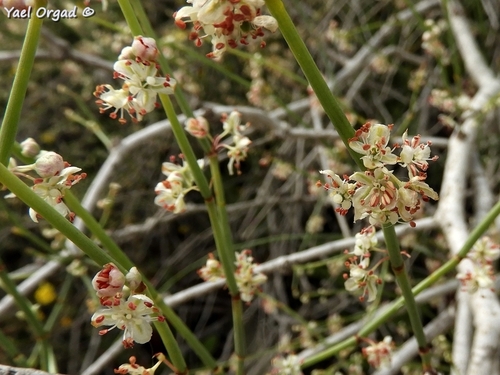
Rumex alpinus
Linn.
Alpine dock, Monk’s Rhubarb, Mountain rhubarb, Pyrenean sorrel

(c) Udo Schmidt, some rights reserved (CC BY-SA)
(c) Wolfgang Bacher, some rights reserved (CC BY-NC), uploaded by Wolfgang Bacher
(c) Claudio Flamigni, some rights reserved (CC BY-NC), uploaded by Claudio Flamigni
What to Eat
Edible parts: Leaves, Stem, Roots
The leaves can be eaten raw or cooked and can also be dried for later use. They have a strong flavour and are best used in salads from late autumn through spring, or cooked like spinach. Fresh leaves are available for most of the year, dying back only briefly during severe winters, though they often become bitter in summer. In taste trials, this species proved very popular as a cooked leaf in autumn and spring, making an excellent spinach substitute.
Known Hazards
Where to Find It
It is a temperate plant.
Armenia, Australia, Balkans, Bosnia, Britain, Caucasus, China, Europe, France, Georgia, Italy, Mediterranean, Romania, Scotland, Slovenia, Switzerland, Turkey, Türkiye,
How to Identify
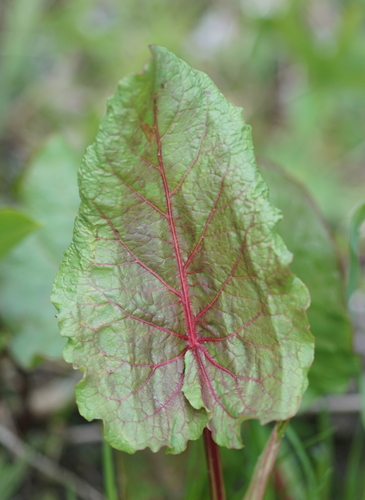
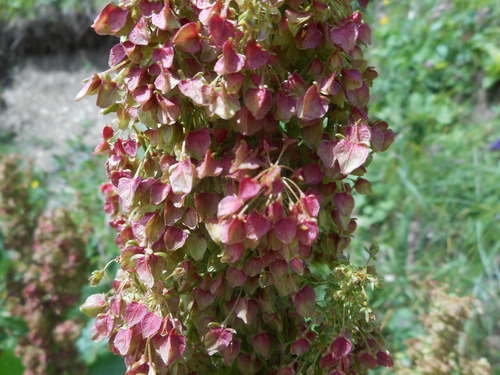
A herb. It keeps growing from year to year. It grows 1 m tall. It forms thick patches. The leaves are heart shaped and can be 40 cm wide. It has a dense spike of flowers.
How to Grow
A very easily grown and tolerant plant, it succeeds in most soils, preferring a moist moderately fertile well-drained soil in a sunny position. Hardy to about -20°c. Alpine dock was at one time cultivated for its edible leaves, though it has now fallen out of favour to be replaced by less strong-tasting plants. This is a pity because it is a very productive and useful vegetable and can produce its leaves all through the winter if the weather is not too severe. A very important plant for the caterpillars of many species of butterflies.
Propagation: Sow seed in spring in a cold frame. Seed can also be sown as soon as it is ripe, in which case it germinates rapidly and will provide edible leaves from early spring the following year. Prick seedlings out into individual pots once large enough to handle, then plant out in summer. Division can be done in spring, or at almost any time of year, though plants establish most successfully when divided in spring. Use a sharp spade or knife to divide the rootstock, ensuring at least one growth bud per section. Larger divisions can go straight into their permanent positions; smaller ones are best potted up and grown on in a lightly shaded cold frame until well established, then planted out in summer.
Medicinal Uses
The root is both astringent and laxative, with a regulatory effect on the digestive system similar to but weaker than rhubarb (Rheum rhaponticum). Depending on dosage, it can act as either a laxative or a remedy for diarrhoea. The root is harvested in early spring and dried for later use.
Other Uses
Dark green to brown and dark grey dyes can be obtained from the roots without the need for a mordant.
Wikipedia
Source ↗Rumex alpinus, common name monk's-rhubarb, Munk's rhubarb or Alpine dock, is a leafy perennial herb in the family Polygonaceae. It is native to upland areas of Europe and Western Asia.
Other Information
It is sold in local markets.
Notes
There are about 200 Rumex species.
Names & Synonyms
Alpska kislica, Arembou, Aveluk, Gholo, Lapi, Lape, Pejak, Planinska kiselica, Rembo, Sortah
References (24)
- Abbet, C., et al, 2014, Ethnobotanical survey on wild alpine food plants in Lower and Central Valais (Switzerland). Journal of Ethnopharmacology 151 (2014) 624–634
- Bodkin, F., 1991, Encyclopedia Botanica. Cornstalk publishing, p 895
- Bussman, R. W., et al, 2016, A comparative ethnobotany of Khevsureti, Samtskhe-Javakheti, Tusheti, Svaneti, and Racha-Lechkhumi, Republic of Georgia (Sakartvelo), Caucasus. Journal of Ethnobiology and Ethnomedicine.
- Bussman, R. W. et al, 2017, Ethnobotany of Samtskhe-Javakheti, Sakartvelo (Republic of Georgia), Caucasus. Indian Journal of Traditional Knowledge Vol. 16(1) pp 7-24
- Bussman, R. W., et al, 2021, Unity in diversity—food plants and fungi of Sakartvelo (Republic of Georgia), Caucasus. Journal of Ethnobiology and Ethnomedicine (2021) 17:72 p 13
- Cerne, M., 1992, Wild Plants from Slovenia used as Vegetables. Acta Horticulturae 318.
- Ertug, F, Yenen Bitkiler. Resimli Türkiye Florası -I- Flora of Turkey - Ethnobotany supplement
- Facciola, S., 1998, Cornucopia 2: a Source Book of Edible Plants. Kampong Publications, p 186
- Hammer, K. & Spahillari, M., 1999, Crops of European origin. in Report of a networking group on minor crops. IPGRI p 44
- Hedrick, U.P., 1919, (Ed.), Sturtevant's edible plants of the world. p 583
- Hovsepyan, R., et al, 2016, Food as a marker for economy and part of identity: traditional vegetal food of Yezidis and Kurds in Armenia. Journal of Ethnic Foods. 3:32-41
- http://www.botanic-gardens-ljubljana.com/en/plants
- Irving, M., 2009, The Forager Handbook, A Guide to the Edible Plants of Britain. Ebury Press p 178
- Kermath, B. M., et al, 2014, Food Plants in the Americas: A survey of the domesticated, cultivated and wild plants used for Human food in North, Central and South America and the Caribbean. On line draft. p 767
- Lim, T. K., 2015, Edible Medicinal and Non Medicinal Plants. Volume 9, Modified Stems, Roots, Bulbs. Springer p 50 (As Lapathum alpinum)
- Mabey, R., 1973, Food for Free. A Guide to the edible wild plants of Britain, Collins. p 104
- Mattalia, G., et al, 2012, Traditional uses of wild food and medicinal plants among Brigasc, Kye ́, and Provenc ̧al communities on the Western Italian Alps. Genet Resour Crop Evol. Springer
- Nanagulyan, S., et al, 2020, Wild plants and fungi sold in the markets of Yerevan (Armenia). Journal of Ethnobiology and Ethnomedicine 16:26
- Pieroni, A.,& Giusti, M. E., 2009, Alpine Ethnobotany in Italy: Journal of Ethnobiology and Ethnomedicine. 5:32
- Pieroni, A., et al, 2020, Wild food plants traditionally gathered in central Armenia: archaic ingredients or future sustainable foods? Environment, Development and Sustainability. Springer p 11
- Plants for a Future database, The Field, Penpol, Lostwithiel, Cornwall, PL22 0NG, UK. http://www.scs.leeds.ac.uk/pfaf/
- Redzic, S. J., 2006, Wild Edible Plants and their Traditional Use in the Human Nutrition in Bosnia-Herzegovina. Ecology of Food and Nutrition, 45:189-232
- Sp. pl. 1:334. 1753
- Uphof,