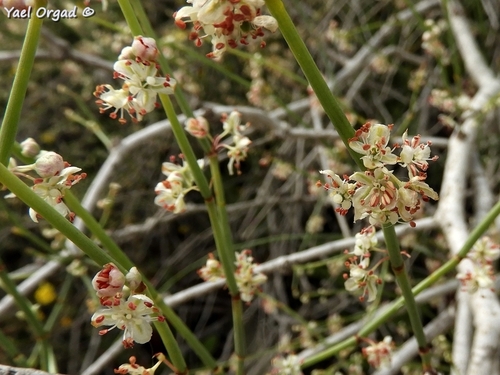
Rumex rugosus
Campd.
Sorrel
PolygonaceaeLeaves

iNaturalist · cc-by-nc
(c) atokazewski, some rights reserved (CC BY-NC)
(c) atokazewski, some rights reserved (CC BY-NC)

iNaturalist · cc-by-nc
(c) atokazewski, some rights reserved (CC BY-NC)
(c) atokazewski, some rights reserved (CC BY-NC)

iNaturalist · cc-by-nc
(c) atokazewski, some rights reserved (CC BY-NC)
(c) atokazewski, some rights reserved (CC BY-NC)
What to Eat
Edible parts: Leaves
The leaves are eaten.
Where to Find It
Is is a temperate plant. In Indonesia it grows above 500 m above sea level.
Asia, Europe, India, Indonesia, Scandinavia, SE Asia, Sweden,
Countries: Andorra, United Arab Emirates, Afghanistan, Albania, Armenia, Austria, Azerbaijan, Bosnia & Herzegovina, Bangladesh, Belgium, Bulgaria, Bahrain, Brunei, Bhutan, Belarus, Switzerland, China, Cyprus, Czechia, Germany, Denmark, Estonia, Spain, Finland, France, United Kingdom, Georgia, Greece, Croatia, Hungary, Indonesia, Ireland, Israel, India, Iraq, Iran, Iceland, Italy, Jordan, Japan, Kyrgyzstan, Cambodia, North Korea, South Korea, Kuwait, Kazakhstan, Laos, Lebanon, Liechtenstein, Sri Lanka, Lithuania, Luxembourg, Latvia, Monaco, Moldova, Montenegro, North Macedonia, Myanmar, Mongolia, Malta, Maldives, Malaysia, Netherlands, Norway, Nepal, Oman, Philippines, Pakistan, Poland, Portugal, Qatar, Romania, Serbia, Russia, Saudi Arabia, Sweden, Singapore, Slovenia, Slovakia, San Marino, Syria, Thailand, Tajikistan, Timor-Leste, Turkmenistan, Turkey, Taiwan, Ukraine, Uzbekistan, Vietnam, Yemen
How to Identify
A herb that keeps growing from year to year. It has a ring of leaves near the base. The stems are 50-80 cm tall. The leaves at the base are broadly oval and have a round tip and sword shaped base. They are 5015 cm long. The leaves on the stem are much smaller. The flowering shoots are at the top.
How to Grow
Plants can be grown by seeds or by division.
Other Information
It is cultivated.
Notes
There are about 200 Rumex species.
Names & Synonyms
Acetosa rugosa (Campd.) Holub.Rumex acetosa subsp. ambiguus (Gren.) A. LoveRumex ambiguus Gren.Rumex arifolius var. carpathicus Zapal.Rumex carpathicus (Zapal.) Zapal.
References (6)
- Hammer, K. & Spahillari, M., 1999, Crops of European origin. in Report of a networking group on minor crops. IPGRI p 44
- Heywood, V. H. & Zohary, D.,1995, A Catalogue of the Wild Relatives of Cultivated Plants Native to Europe. Flora Mediterranea 5 - 1995, p 381
- Martin, F.W. & Ruberte, R.M., 1979, Edible Leaves of the Tropics. Antillian College Press, Mayaguez, Puerto Rico. p 214 (As Rumex ambigius)
- Ochse, J. J. et al, 1931, Vegetables of the Dutch East Indies. Asher reprint. p 593 (As Rumex ambigius)
- Terra, G.J.A., 1973, Tropical Vegetables. Communication 54e Royal Tropical Institute, Amsterdam, p 70 (As Rumex ambigius)
- World Checklist of Useful Plant Species 2020. Royal Botanic Gardens, Kew