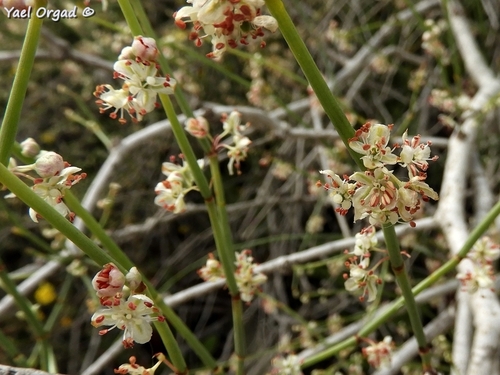
Rumex steudelii
Hochst. ex A. Rich.
PolygonaceaeLeaves

gbif · cc0
Royal Botanic Garden Edinburgh
Royal Botanic Garden Edinburgh

gbif · cc0
Royal Botanic Garden Edinburgh
Royal Botanic Garden Edinburgh

gbif · cc0
Royal Botanic Garden Edinburgh
Royal Botanic Garden Edinburgh
What to Eat
Edible parts: Leaves
The leaves are cooked and eaten as a vegetable.
Where to Find It
A tropical plant. It grows in the mountain regions in West and Central Africa.
Africa, Cameroon, Central Africa, East Africa, Ethiopia, Kenya, Madagascar, Malawi, South Africa, Southern Africa, West Africa,
Countries: Angola, Burkina Faso, Burundi, Benin, Botswana, Congo (DRC), Central African Republic, Congo (Republic), Cote d'Ivoire, Cameroon, Cape Verde, Djibouti, Algeria, Egypt, Eritrea, Ethiopia, Gabon, Ghana, Gambia, Guinea, Equatorial Guinea, Guinea-Bissau, Kenya, Comoros, Liberia, Lesotho, Libya, Morocco, Madagascar, Mali, Mauritania, Mauritius, Malawi, Mozambique, Namibia, Niger, Nigeria, Rwanda, Seychelles, Sudan, Sierra Leone, Senegal, Somalia, South Sudan, Sao Tome & Principe, Eswatini, Chad, Togo, Tunisia, Tanzania, Uganda, South Africa, Zambia, Zimbabwe
How to Identify
A herb. It keeps growing from year to year. It grows 2 m high. It has a stout rootstock. The leaves are long and strap shaped. The flowers are on long loose groups.
Notes
There are about 200 Rumex species.
Names & Synonyms
Kapserereyuek, Qakazea
Rumex bequaertii De Willd.Rumex nepalensis Spreng.Rumex steudelianus Meisn.
References (14)
- Burkill, H. M., 1985, The useful plants of west tropical Africa, Vol. 4. Kew.
- Bussman, R. W., 2006, Ethnobotany of the Samburu of Mt. Nyiru, South Turkana, Kenya. Journal of Ethnobiology and Ethnomedicine. 2:35
- FAO, 1988, Traditional Food Plants, FAO Food and Nutrition Paper 42. FAO Rome p 430
- FAO, 1988, Traditional Food Plants, FAO Food and Nutrition Paper 42. FAO Rome p 433 (As Rumex bequaertii)
- Glover et al, 1966b,
- Jardin, C., 1970, List of Foods Used In Africa, FAO Nutrition Information Document Series No 2.p 98
- Martin, F.W. & Ruberte, R.M., 1979, Edible Leaves of the Tropics. Antillian College Press, Mayaguez, Puerto Rico. p 214
- Marshall, F., Agriculture and Use of Wild and Weedy Greens by the Piik ap Oom Okiek of Kenya. Economic Botany, Vo. 55, No. 1, pp. 32-47
- Maundu, P. et al, 1999, Traditional Food Plants of Kenya. National Museum of Kenya. 288p
- Okigbo, B.N., Vegetables in Tropical Africa, in Opena, R.T. & Kyomo, M.L., 1990, Vegetable Research and development in SADCC countries. Asian Vegetable Research and development Centre. Taiwan. p 45
- Peters, C. R., O'Brien, E. M., and Drummond, R.B., 1992, Edible Wild plants of Sub-saharan Africa. Kew. p 163
- Ruiters-Welcome, A. K., 2019, Food plants of southern Africa. Ph.D. thesis. Univ. of Johannesburg p 91
- Welcome, A. K. & Van Wyk, B.-E., 2019, An inventory and analysis of the food plants of southern Africa. South African Journal of Botany 122 (2019) 136–179
- Williamson, J., 2005, Useful Plants of Malawi. 3rd. Edition. Mdadzi Book Trust. p 218