Rumex brownii
Campdera
Swamp dock, Slender dock

(c) Asimakis Patitsas, some rights reserved (CC BY-NC), uploaded by Asimakis Patitsas
(c) Chris Solum, some rights reserved (CC BY-NC)
(c) dirtgrrrl, some rights reserved (CC BY-NC)
What to Eat
Edible parts: Leaves, Root - drink
The leaves, which can grow up to 30cm long, are edible cooked. With the midrib removed before cooking, they make a fine substitute for leaf beet. The roasted root can be used as a coffee substitute.
Known Hazards
Where to Find It
It is a temperate plant. It grows in grassland. Tasmania Herbarium.
Australia, New Zealand, Norfolk Island, Pacific, Papua New Guinea, PNG, Tasmania,
How to Identify
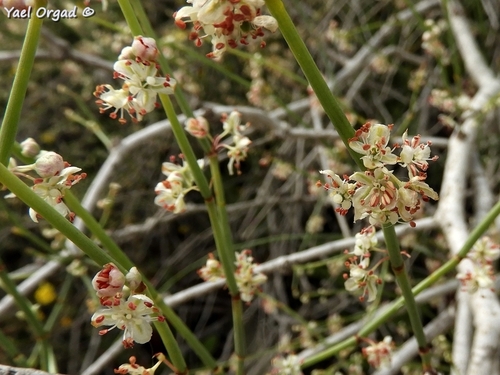
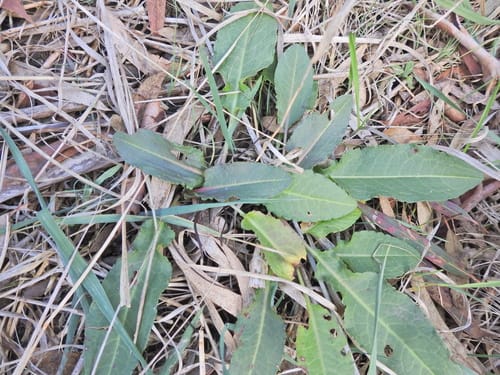
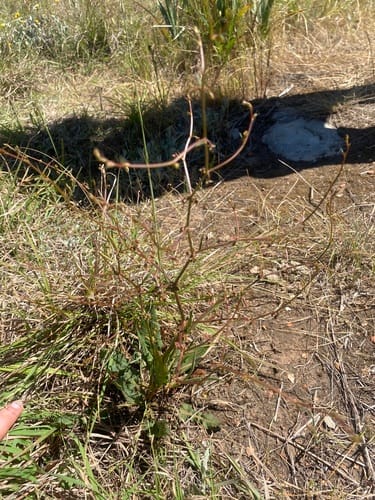
An erect herb. It keeps growing from year to year. It has a distinct flowering stem. It can grow 1 m high. The leaves near the base are sword shaped and taper to the tip. They are 5-15 cm long and 10-25 mm wide. The upper leaves are smaller and have parallel sides and taper to the tip. The flowers are very small. They are crowded in rings around the stem. These contain 5-16 flowers. The fruit have small hooked projections.
How to Grow
Succeeds in most soils but prefers a deep fertile moderately heavy soil that is humus-rich, moisture-retentive but well-drained and a position in full-sun or part shade. This species is sometimes introduced into Britain via bales of wool from Australia and it then persists for a few years.
Propagation: Sow seed in spring in a cold frame. Prick seedlings out into individual pots once large enough to handle, then plant out in summer. Can also be propagated by division in spring.
Medicinal Uses
None known.
Other Uses
A rich yellow dye is obtained from the root when fixed with alum. Dark green to brown and dark grey dyes can also be obtained from the roots without the need for a mordant, as is the case with many species in this genus.
Wikipedia
Source ↗Rumex brownii, the hooked dock, Browne's dock or swamp dock, is a leafy perennial herb native to Australia, and is widespread and grows in disturbed sites. It is an introduced weed in the Pacific Islands, England, Japan, and New Zealand. It is 50–80 cm high with variably shaped basal leaves, oblong or lanceolate, to 12 cm long, and to 4 cm wide with cordate to truncate base. The petiole is about half as long as the lamina. Flower whorls with 3–5 hooked teeth on each side and with a hooked tip. The hooks aid seed dispersal via attaching to animal fur and hair, and also human clothing.
Notes
There are about 200 Rumex species.
References (20)
- Bodkin, F., 1991, Encyclopedia Botanica. Cornstalk publishing, p 895
- Cribb, A.B. & J.W., 1976, Wild Food in Australia, Fontana. p 128
- Curtis, W.M., 1993, The Student's Flora of Tasmania. Part 3 St David's Park Publishing, Tasmania, p 585
- Flora of Australia Volume 49, Oceanic Islands 1, Australian Government Publishing Service, Canberra. (1994) p 103
- Harris, S., Buchanan, A., Connolly, A., 2001, One Hundred Islands: The Flora of the Outer Furneaux. Tas Govt. p 217
- Henty, E.E., in Womersley, J.S., (ed), 1978, Handbooks of the Flora of Papua New Guinea. Melbourne University Press,Victoria. Vol 1, p 246
- Henty, E.E., 1980, Harmful Plants in Papua New Guinea. Botany Bulletin No 12. Division Botany, Lae, Papua New Guinea. p 120
- Hunter, J. T. & Sheringham, P., 2006, Vegetation and Floristics of Melville Range Nature Reserve. A Report to the New South Wales Parks and Wildlife Service. p 178
- Hussey, B.M.J., Keighery, G.J., Cousens, R.D., Dodd, J., Lloyd, S.G., 1997, Western Weeds. A guide to the weeds of Western Australia. Plant Protection Society of Western Australia. p 200
- Hyde-Wyatt, B.H. & Morris D.I., 1975, Tasmanian Weed Handbook. Dept of Ag Tasmania. p 24, 58
- Lamp, C & Collet F., 1989, Field Guide to Weeds in Australia. Inkata Press. p 246
- Lazarides, M. & Hince, B., 1993, Handbook of Economic Plants of Australia, CSIRO. p 208
- Low, T., 1991, Wild Herbs of Australia and New Zealand. Angus & Robertson. p 39 (Drawing)
- Low, T., 1992, Bush Tucker. Australia’s Wild Food Harvest. Angus & Robertson. p 153
- Monogr. Rumex 64. 1819
- Morley, B.D., & Toelken, H.R., (Eds), 1983, Flowering Plants in Australia. Rigby. p 85
- Paczkowska, G . & Chapman, A.R., 2000, The Western Australian Flora. A Descriptive Calatogue. Western Australian Herbarium. p 461
- Plants for a Future database, The Field, Penpol, Lostwithiel, Cornwall, PL22 0NG, UK. http://www.scs.leeds.ac.uk/pfaf/
- Tasmanian Herbarium Vascular Plants list p 45
- Woolmore, E et al, 2002, King Island Flora: A Field Guide. p 66