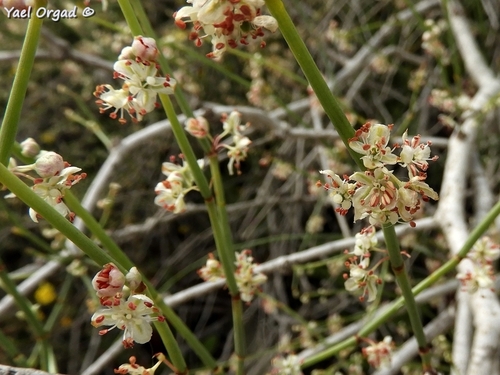
Rumex crispus
L.
Sour dock, Curled dock, Yellow dock

(c) Douglas Goldman, some rights reserved (CC BY-SA), uploaded by Douglas Goldman

(c) Thayne Tuason, some rights reserved (CC BY-SA)
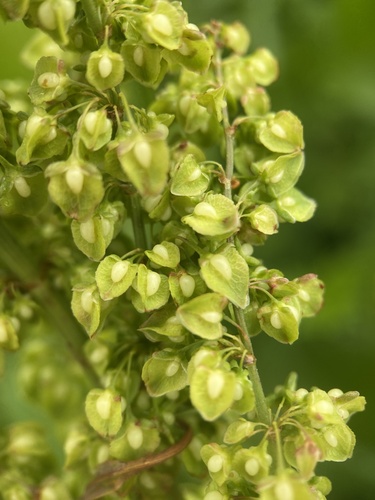
(c) Joseph Knight, some rights reserved (CC BY-NC), uploaded by Joseph Knight
What to Eat
Edible parts: Leaves, Seeds, Stalks, Roots, Vegetable
The leaves can be eaten raw or cooked and can also be dried for later use. They may be added to salads, cooked as a potherb, or added to soups. Only the youngest leaves should be used — ideally before the stems have developed — as even these are likely to be bitter. Leaves harvested in early spring and autumn tend to be the most palatable. The leaves are very rich in vitamins and minerals, particularly iron and vitamins A and C. Per 100g fresh weight: 21 calories; water 92.6%; protein 1.5g; fat 0.3g; carbohydrate 4.1g; fibre 0.9g; ash 1.5g; calcium 74mg; phosphorus 56mg; iron 5.6mg; vitamin A 1.38mg; thiamine (B1) 0.06mg; riboflavin (B2) 0.08mg; niacin 0.4mg; vitamin C 30mg. The stems can also be eaten raw or cooked, and are best peeled with the inner portion consumed. The seeds can be eaten raw or cooked — used as a piñole or ground into flour for pancakes and similar foods, though they are very fiddly to harvest and prepare. The roasted seed has also been used as a coffee substitute.
Known Hazards
Where to Find It
It is a temperate plant. It often grows self sown in waste ground. It can grow in cobble beach shores. It can grow in waterlogged soil and survive being covered with water in floods. It grows in wetlands. In Zimbabwe it grows between 1,220-1,700 m above sea level. In Argentina it grows from sea level to 3,700 m above sea level. Tasmania Herbarium. In Inner Mongolia. It grows in Sichuan and Yunnan.
Afghanistan, Africa, Andes, Andorra, Argentina, Armenia, Asia, Australia, Bahamas, Balkans, Bangladesh, Bosnia, Brazil, Britain, Cameroon, Canada, Caucasus, Central Africa, Central America, Central Asia, Chile, China, Cuba, Czech Republic, Dominican Republic, East Africa, Easter Island, East Timor, Ecuador, Egypt, Europe, Falklands, Georgia, Haiti, Himalayas, India, Indochina, Iran, Iraq, Italy, Jamaica, Japan, Jordan, Kazakhstan, Korea, Kosovo, Kyrgyzstan, Lesotho, Lord Howe Island, Liberia, Lbya, Macedonia, Macquarie Island, Mediterranean, Mexico, Middle East, Mongolia, Myanmar, Nepal, Netherlands, New Zealand, North Africa, North America, Pacific, Pakistan, Papua New Guinea, PNG, Poland, Puerto Rico, Russia, Saudi Arabia, SE Asia, Serbia, Sicily, Slovenia, South Africa, Southern Africa, South America, Spain, St Helena, Tajikistan, Tasmania, Thailand, Timor-Leste, Turkey, Türkiye, Uruguay, USA, Vietnam, West Africa, West Indies, Zimbabwe,
How to Identify
An erect herb. It can grow up to 1 m tall. It keeps growing from year to year. The leaves are smooth. They are sword shaped or oblong and up to 30 cm long. They are wavy along the edges. The leaves at the base are larger with larger leaf stalks. The flowers are very small. They are greenish. They are crowded in rings on a branched flower stalk. The flowering stems can be 1.2 m high. The fruit is dry and one seeded. It is 3 angled. The seed valves are broad and 4-6 mm long. They do not have spines.
Nutrition Score: 76/100
| Part | Moisture | kJ | kcal | Protein | Vit A | Vit C | Iron | Zinc |
|---|---|---|---|---|---|---|---|---|
| Seeds | 8.6 | 1750 | 427 | 13.4 | — | — | 56.2 | 6.6 |
| Leaves - boiled | 93.6 | 84 | 20 | 1.8 | 347 | 26.3 | 2.1 | 0.2 |
| Leaves dry | — | — | 32 | — | — | — | — | — |
How to Grow
Succeeds in most soils, preferring a moist moderately fertile well-drained soil in a sunny position. The plant does not need any help in growing, it is doing very nicely in Britain where it is a serious weed of agriculture. A very important food plant for the caterpillars of many species of butterfly. In garden design, as well as the above-ground architecture of a plant, root structure considerations help in choosing plants that work together for their optimal soil requirements including nutrients and water. Thick or swollen - fibrous or tap root.
Propagation: This plant does not require any assistance with propagation.
Medicinal Uses
Curled dock has a long history of domestic herbal use. It is a gentle and safe laxative, less powerful than rhubarb, making it particularly useful for treating mild constipation. The plant also has valuable cleansing properties and is useful across a wide range of skin problems. All parts can be used medicinally, though the root is the most active. The root is alterative, antiscorbutic, astringent, cholagogue, depurative, laxative, and mildly tonic, and was historically sold as a tonic and laxative. Depending on dose, harvest time, and the relative concentrations of tannins and anthraquinones, it can either cause or relieve diarrhoea. It is used internally for constipation, diarrhoea, piles, bleeding of the lungs, various blood complaints, and chronic skin diseases. Externally, the root can be mashed and used as a poultice or salve, or dried and powdered for use as a dusting powder on sores, ulcers, wounds, and other skin problems. The root has also been used with positive effect to slow the progression of cancer, employed as an alterative and tonic. The root is harvested in early spring and dried for later use. Excess doses can cause gastric disturbance, nausea, and dermatitis, so some caution is advised. The seed is used in the treatment of diarrhoea. A homeopathic remedy is made from the fresh root harvested in autumn before frost, used specifically in the treatment of one particular type of cough.
Other Uses
Yellow, dark green to brown, and dark grey dyes can be obtained from the roots without the need for a mordant. The plant is also an alternative ingredient in 'QR' herbal compost activator, a dried and powdered mixture of herbs added to a compost heap to stimulate bacterial activity and shorten the composting process.
Wikipedia
Source ↗Rumex crispus, the curly dock, curled dock or yellow dock, is a perennial flowering plant in the family Polygonaceae, native to Europe and Western Asia.
Production
Plants can flower 9 weeks after germination. Plants grow in winter and spring and flower in response to increasing daylength.
Other Information
Leaves are sold in local markets.
Notes
There are about 200 Rumex species.
Names & Synonyms
Acedera crespa, Adameveligi, Alabardagi, Arnazas, Arracachueco, Auru acitu, Aveluk, Azeda-crespa, Cama-roges, Ebe kuzulagi, Evelik, Ghvalo, Halhale sag, Hualtata, Hummaid, Huragan qihi, Kalar-chinbaung-nge, Krulzuring, Labaca-crespa, Labada, Langua de vaca crespa, Lapazzu, Lengua de caballo, Lechugon, Lenguaiguay, Lidvololenkhonyane, Lingua-devaca, Luerduo, Niushetou, Paradella, Romaza, Rombice, Rombicia, Romice, Sabuna leglege, Shtavej, Som, Sopal, Sorijaengi, Sumaksevaqi, Tarsho, Tǝrsho, Turso, Trshoke, Vinagrella, Yedahuang
References (116)
- Ahmad, S. A. & Askari, A. A., 2015, Ethnobotany of the Hawraman Region of Kurdistan Iraq. Harvard Papers in Botany, Vol. 20, No. 1, 2015, pp. 85–89
- Aipeisova S.A., et al, 2019, Wild useful herbs of Aktobe Region (Western Kazakhstan). Ukrainian Journal of Ecology, 9(3), 329-331
- Al-Qura'n, S. A., 2010, Ethnobotanical and Ecological Studies of Wild Edible Plants in Jordan. Libyan Agriculture Research Center Journal International 1(4):231-243
- Ambasta S.P. (Ed.), 2000, The Useful Plants of India. CSIR India. p 534
- Anderson, M. K., 2012, Edible Seeds and Grains of California Tribes and the Klamath Tribe of Oregon in the Phoebe Apperson Hearst Museum of Anthropology Collections, University of California, Berkeley. USDA p 15
- Arellanes, Y., et al, 2013, Influence of traditional markets on plant management in the Tehuacan Valley. Journal of Ethnobiology and Ethnomedicine 9:38
- Ari, S., et al, 2015, Ethnobotanical survey of plants used in Afyonkarahisar-Turkey. Journal of Ethnobiology and Ethnomedicine 11:84
- Beckstrom-Sternberg, Stephen M., and James A. Duke. "The Foodplant Database." http://probe.nalusda.gov:8300/cgi-bin/browse/foodplantdb.(ACEDB version 4.0 - data version July 1994)
- Biscotti, N. et al, 2018, The traditional food use of wild vegetables in Apulia (Italy) in the light of Italian ethnobotanical literature. Italian Botanist 5:1-24
- Bodkin, F., 1991, Encyclopedia Botanica. Cornstalk publishing, p 894
- Bonet, M. A. & Valles, J., 2002, Use of non-crop food vascular plants in Montseny biosphere reserve (Catalonia, Iberian Peninsula). International Journal of Food Sciences and Nutrition (2002) 53, 225–248
- Bremness, L., 1994, Herbs. Collins Eyewitness Handbooks. Harper Collins. p 212
- Burkill, H. M., 1985, The useful plants of west tropical Africa, Vol. 4. Kew.
- Bussman, R. W., et al, 2016, A comparative ethnobotany of Khevsureti, Samtskhe-Javakheti, Tusheti, Svaneti, and Racha-Lechkhumi, Republic of Georgia (Sakartvelo), Caucasus. Journal of Ethnobiology and Ethnomedicine.
- Bussman, R. W. et al, 2017, Ethnobotany of Samtskhe-Javakheti, Sakartvelo (Republic of Georgia), Caucasus. Indian Journal of Traditional Knowledge Vol. 16(1) pp 7-24
- Bussman, R. W., et al, 2021, Unity in diversity—food plants and fungi of Sakartvelo (Republic of Georgia), Caucasus. Journal of Ethnobiology and Ethnomedicine (2021) 17:72 p 13
- Caballero, J. N., & Mapes, C. S., 1985, Gathering and Subsistence Patterns among the P'urhepecha Indians of Mexico. J. Ethnol. 5(1): 31-47
- Cakir, E. A., 2017, Traditional knowledge of wild edible plants of Iğdır Province (East Anatolia, Turkey). Acta Soc Bot Pol. 2017;86(4):3568
- Cerne, M., 1992, Wild Plants from Slovenia used as Vegetables. Acta Horticulturae 318.
- Cordero, S. E., Abello, L. A., & Galvez, F. L., 2017, Plantas silvestres comestibles y medicinales de Chile y otras partes del mundo. CORMA p 230
- Curtis, W.M., 1993, The Student's Flora of Tasmania. Part 3 St David's Park Publishing, Tasmania, p 584
- Dashorst, G.R.M., and Jessop, J.P., 1998, Plants of the Adelaide Plains & Hills. Botanic Gardens of Adelaide and State Herbarium. p 52
- Demir, E., et al, 2020, Nutrient and bioactive substance contents of edible plants grown naturally in Salıpazarı (Samsun). Acta Sci. Pol. Hortorum Cultus, 19(1), 151–160
- Demir, I. & Ayaz, N., 2022, Wild edible plants contributing to the traditional foods of Mardin (Turkey) Province. Indian Journal of Traditional Knowledge Vol 21(3), July 2022, pp 569-582
- Dogan, Y., et al, 2004, The Use of Wild Edible Plants in Western and Central Anatolia (Turkey). Economic Botany 58(4) pp. 684-690
- Dogan, Y., et al, 2015, Of the importance of a leaf: the ethnobotany of sarma in Turkey and the Balkans. Journal of Ethnobiology and Ethnomedicine, 11:56
- Elias, T.S. & Dykeman P.A., 1990, Edible Wild Plants. A North American Field guide. Sterling, New York p 121
- Ertug, F., 2000, An Ethnobotanical Study in Central Anatolia (Turkey). Economic Botany Vol. 54. No. 2. pp. 155-182
- Ertug, F, Yenen Bitkiler. Resimli Türkiye Florası -I- Flora of Turkey - Ethnobotany supplement
- Esperanca, M. J., 1988. Surviving in the wild. A glance at the wild plants and their uses. Vol. 2. p 237
- Facciola, S., 1998, Cornucopia 2: a Source Book of Edible Plants. Kampong Publications, p 187
- FAO, 1988, Traditional Food Plants, FAO Food and Nutrition Paper 42. FAO Rome p 430
- Flora of Australia Volume 49, Oceanic Islands 1, Australian Government Publishing Service, Canberra. (1994) p 102
- Flora of China @ efloras.org Volume 5
- Fox, F. W. & Young, M. E. N., 1982, Food from the Veld. Delta Books. p 306
- Galalaey, A. M. K., et al, 2021, Ethnobotanical study of some wild edible plants in Hujran Bason, Kurdistan Region of Iraq. ZANCO Journal of Pure and Applied Sciences. Salahaddin University-Erbil p 27
- Geraci, A., et al, 2018, The wild taxa utilized as vegetables in Sicily (Italy): a traditional component of the Mediterranean diet. Journal of Ethnobiology and Ethnomedicine (2018) 14:14
- Gunes, S. et al, 2018, Survey of wild food plants for human consumption in Karaisali (Adana-Turkey). Indian Journal of Traditional Knowledge. Vol. 17(2), April 2018, pp 290-298
- Grubben, G. J. H. and Denton, O. A. (eds), 2004, Plant Resources of Tropical Africa 2. Vegetables. PROTA, Wageningen, Netherlands. p 564
- Hancer, C. K., et al, 2020, Traditional Knowledge of Wild Edible Plants of Biga (Çanakkale), Turkey. Acta Societatis Botanicorum Poloniae / 2020 / Volume 89 / Issue 1 / Article 8914
- Harris, S., Buchanan, A., Connolly, A., 2001, One Hundred Islands: The Flora of the Outer Furneaux. Tas Govt. p 217
- Hedrick, U.P., 1919, (Ed.), Sturtevant's edible plants of the world. p 583
- Henty, E.E., & Pritchard, G.S., 1973, Weeds of New Guinea and their control. Botany Bulletin No 7, Division of Botany, Lae, PNG. p 142
- Henty, E.E., in Womersley, J.S., (ed), 1978, Handbooks of the Flora of Papua New Guinea. Melbourne University Press,Victoria. Vol 1, p 248
- Henty, E.E., 1980, Harmful Plants in Papua New Guinea. Botany Bulletin No 12. Division Botany, Lae, Papua New Guinea. p 120, 119
- Hovsepyan, R., et al, 2016, Food as a marker for economy and part of identity: traditional vegetal food of Yezidis and Kurds in Armenia. Journal of Ethnic Foods. 3:32-41
- Hussey, B.M.J., Keighery, G.J., Cousens, R.D., Dodd, J., Lloyd, S.G., 1997, Western Weeds. A guide to the weeds of Western Australia. Plant Protection Society of Western Australia. p 200
- Hwang, H., et al, 2013, A Study on the Flora of 15 Islands in the Western Sea of Jeollanamdo Province, Korea. Journal of Asia-Pacific Biodiversity Vol. 6, No. 2 281-310
- Hyde-Wyatt, B.H. & Morris D.I., 1975, Tasmanian Weed Handbook. Dept of Ag Tasmania. p 24, 55
- Irving, M., 2009, The Forager Handbook, A Guide to the Edible Plants of Britain. Ebury Press p 179
- JSTOR Global Plants edible
- Kang, Y., et al, 2012, Wild food plants and wild edible fungi in two valleys on the Qinling Mountains (Shaanxi, central China) Journal of Ethnobiology and Ethnomedicine; 9:26
- Kargioglu, M., et al, 2008, An Ethnobotanical Survey of Inner-West Anatolia, Turkey. Human Ecology 36:763-777
- Kermath, B. M., et al, 2014, Food Plants in the Americas: A survey of the domesticated, cultivated and wild plants used for Human food in North, Central and South America and the Caribbean. On line draft. p 768
- Khasbagan, Yeruhan and Zhao Hui, 2011, Study on Traditional Knowledge of Wild Edible Plants Used by the Mongolians in Xilingol Typical Steppe Area. Plant Diversity and Resources. 33(2): 239-246
- Kim, H. & Song, M., 2013, Ethnobotanical analysis for traditional knowledge of wild edible plants in North Jeolla Province (Korea). Genetic. Resour. Crop Evol. (2013) 60:1571-1585
- Kiple, K.F. & Ornelas, K.C., (eds), 2000, The Cambridge World History of Food. CUP p 1766
- Koca, I., et al, 2015, Some Wild Edible Plants and Their Dietary Fiber Contents. Pakistan Journal of Nutrition. 14(4): 188-194
- Lamp, C & Collet F., 1989, Field Guide to Weeds in Australia. Inkata Press. p 247
- Lazarides, M. & Hince, B., 1993, Handbook of Economic Plants of Australia, CSIRO. p 208
- Lentini, F. and Venza, F., 2007, Wild food plants of popular use in Sicily. J Ethnobiol Ethnomedicine. 3: 15
- Long, C., 2005, Swaziland's Flora - siSwati names and Uses http://www.sntc.org.sz/flora/
- Low, T., 1991, Wild Herbs of Australia and New Zealand. Angus & Robertson. p 39 (Drawing)
- Low, T., 1992, Bush Tucker. Australia’s Wild Food Harvest. Angus & Robertson. p 153
- Łukasz Łuczaj and Wojciech M Szymański, 2007, Wild vascular plants gathered for consumption in the Polish countryside: a review. J Ethnobiol Ethnomedicine. 3: 17
- Luczaj, L. et al, 2017, Comfrey and Buttercup Eaters: Wild Vegetables of the Imereti Region in Western Georgia, Caucasus. Economic Botany, 71(2), 2017, pp. 188–193
- Mabey, R., 1973, Food for Free. A Guide to the edible wild plants of Britain, Collins. p 104
- MacKinnon, A., et al, 2009, Edible & Medicinal Plants of Canada. Lone Pine. p 320
- Mahklouf, M. H., 2019, Ethnobotanical Study of Edible Wild Plants in Libya. European Journal of Ecology. 5(2): 30-40
- Malezas Comestibles del Cono Sur, INTA, 2009, Buernos Aires
- Martin, F.W. & Ruberte, R.M., 1979, Edible Leaves of the Tropics. Antillian College Press, Mayaguez, Puerto Rico. p 214
- Mercy, N. A., et al, 2016, Survey of Wild Vegetables in the Lebialem Highlands of South Western Cameroon. Journal of Plant Sciences 4(6): 172-184
- Miskoska-Milevska, E. et al, 2020, Traditional uses of wild edible plants in the Republic of North Macedonia. PHYTOLOGIA BALCANICA 26(1): 155–162, Sofia, 2020 p 159
- Moerman, D. F., 2010, Native American Ethnobotany. Timber Press. p 496
- Nanagulyan, S., et al, 2020, Wild plants and fungi sold in the markets of Yerevan (Armenia). Journal of Ethnobiology and Ethnomedicine 16:26
- Özdemir, E. and Kültür, S., 2017, Wild Edible Plants of Savaştepe District (Balıkesir, Turkey), Marmara Pharm J 21/3: 578-589
- Paczkowska, G . & Chapman, A.R., 2000, The Western Australian Flora. A Descriptive Calatogue. Western Australian Herbarium. p 461
- Pasta, S., et al, 2020, An Updated Checklist of the Sicilian Native Edible Plants: Preserving the Traditional Ecological Knowledge of Century-Old Agro-Pastoral Landscapes. Frontiers in Plant Science. Volume 11|Article 388
- Pham-Hoang Ho, 1999, An Illustrated Flora of Vietnam. Nha Xuat Ban Tre. p 742
- Pieroni, A., 1999, Gathered wild food plants in the Upper Valley of the Serchio River (Garfagnana), Central Italy. Economic Botany 53(3) pp 327-341
- Pieroni, A., et al, 2017, The spring has arrived: traditional wild vegetables gathered by Yarsanis (Ahl-e Haqq) and Sunni Muslims in Western Hawraman, SE Kurdistan (Iraq). Acta Soc Bot Pol 86(1):3519
- Pieroni, A., et al, 2020, Wild food plants traditionally gathered in central Armenia: archaic ingredients or future sustainable foods? Environment, Development and Sustainability. Springer p 11
- Plants for a Future database, The Field, Penpol, Lostwithiel, Cornwall, PL22 0NG, UK. http://www.scs.leeds.ac.uk/pfaf/
- Plants of Haiti Smithsonian Institute http://botany.si.edu/antilles/West Indies
- Redzic, S., 2010, Use of Wild and Semi-Wild Edible Plants in Nutrition and Survival of People in 1430 Days of Siege of Sarajevo during the War in Bosnia and Herzegovina (1992–1995). Coll. Antropol 34 (2010) 2:551-570
- Rivera, C., et al, 2005, The Ethnobotanical Study of Local Mediterranean Food Plants as Medicinal Resources in Southern Spain. Journal of Physiologyand Pharmacology. 56, Suppl. 1, 97-114
- Romanowski, N., 2007, Edible Water Gardens. Hyland House. p 114
- Sainty, G.R. & Jacobs, S.W.L., 1981, Waterplants of New South Wales. Water Resources Commission. NSW p 355
- Saunders, C.F., 1948, Edible and Useful Wild Plants. Dover. New York. p 121
- Schneider, E., 2001, Vegetables from Amaranth to Zucchini: The essential reference. HarperCollins. p 574
- Senkardes, I & Tuzlaci, E., 2016, Wild Edible Plants of Southern Part of Nevsehir inTurkey. Marmara Pharmaceutical Journal 20:34-43
- Shaheen, N., et al, 2013, Food Composition Table for Bangladesh. University of Daka. p 33
- Simkova, K. et al, 2014, Ethnobotanical review of wild edible plants used in the Czech Republic. Journal of Applied Botany and Food Quality 88, 49-67
- Somnasang, P., Moreno, G and Chusil K., 1998, Indigenous knowledge of wild hunting and gathering in north-east Thailand. Food and Nutrition Bulletin 19(4) p 359f
- Soukand, R., et al, 2021, The trauma of no-choice: Wild food ethnobotany in Yaghnobi and Tajik villages, Varzob Valley, Tajikistan. Genetic Resources and Crop Evolution · December 2021
- Sp. pl. 1:335. 1753
- Stern, G., 1986, Australian Weeds. A Source of Food and Medicine. Harper & Row. p 69
- Tasmanian Herbarium Vascular Plants list p 45, 101
- Tardio, J., et al, Ethnobotanical review of wild edible plants in Spain. Botanical J. Linnean Soc. 152 (2006), 27-71
- Terra, G.J.A., 1973, Tropical Vegetables. Communication 54e Royal Tropical Institute, Amsterdam, p 70
- Torre, de la L., et al, 2008, Enciclopedia de las Plantas Útiles del Ecuador. Herbario QCA. Pontificia Universidad Católica del Ecuador. p 159
- Toupal, R. S. & Hollenback, K., 2009, An Ethnobotany of Indiana Dunes National Lakeshore: Plant Uses of the Ojibwa People. Bureau of Applied Research in Anthropology. University of Arizona
- Tukan, S. K., et al, 1998, The use of wild edible plants in the Jordanian diet. International Journal of Food Sciences and Nutrition. 49:225-235
- Upson, R., & Lewis R., 2014, Updated Vascular Plant Checklist and Atlas for the Falkland Islands. Falklands Conservation and Kew.
- van Wyk, Be., & Gericke, N., 2007, People's plants. A Guide to Useful Plants of Southern Africa. Briza. p 74
- Vieyra-Odilon, L and Vibrans, H., 2001, Weeds as Crops: The Value of Maize Field Weeds in the Valley of Toluca, Mexico. Economic Botany 55(3):426-443
- Villagran, C., et al, 1999, La Tradicion Altiplanica: Estudio Etnobotanico en Los Andes de Iquique, Primera Region, Chile. Chungara, volumen 31 No. 1 pp 81-186
- Vorstenbosch, T., et al, 2017, Famine food of vegetal origin consumed in the Netherlands during World War II. Journal of Ethnobiology and Ethnomedicine (2017) 13:63
- Welcome, A. K. & Van Wyk, B.-E., 2019, An inventory and analysis of the food plants of southern Africa. South African Journal of Botany 122 (2019) 136–179
- Westerway, J., et al, 2018, Preliminary checklist of the naturalised and pest plants of Timor-Leste. Blumea 63:157-163
- World Checklist of Useful Plant Species 2020. Royal Botanic Gardens, Kew
- www.wildediblefood.com
- Yesil, Y., et al, 2019, Wild edible plants in Yeşilli (Mardin-Turkey), a multicultural area. Journal of Ethnobiology and Ethnomedicine (2019) 15:52
- Yesil, Y., et al, 2019, Traditional knowledge of wild edible plants in Hasankeyf (Batman Province, Turkey). Acta Societatis Botanicorum Poloniae. 88(3):3633
- Zhang, Y., et al, 2014, Diversity of wetland plants used traditionally in China: a literature review. Journal of Ethnobiology and Ethnomedicine. 10:72
- Zizka, G., 1991, Flowering Plants of Easter Island. Palmarum Hortus Francofurtensis