Rumex hastatus
D. Don
Nepali sorrel, Heartwing sorrel

(c) Chen Shu, some rights reserved (CC BY-NC), uploaded by Chen Shu
(c) 刘光裕 Liu Guangyu, some rights reserved (CC BY-NC)
(c) Alok Chirping Orchard, some rights reserved (CC BY-NC)
What to Eat
Edible parts: Leaves
Tender young leaves and shoots can be eaten raw or cooked. They have a sour, acid flavour and are used in the same way as sorrel.
Known Hazards
Where to Find It
It is a temperate plant. In Nepal they grow between 1000-2600 m altitude. They grow on shady slopes or in dry streambeds. It can grow in cold and arid places. It grows in Sichuan and Yunnan.
Afghanistan, Asia, Bhutan, China, Himalayas, India, Nepal, NW India, Pakistan, Tibet,
How to Identify
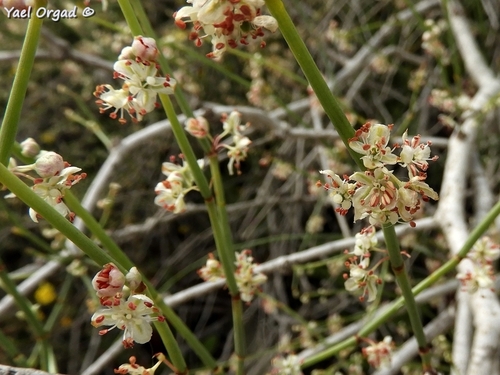
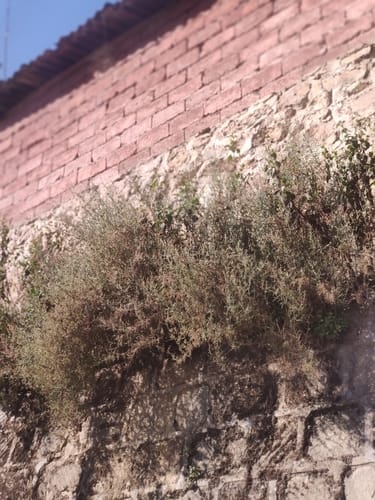
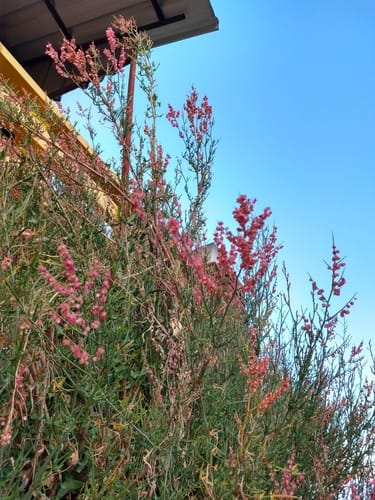
A herb. It has many branches. It grows about 1 m high. It has reddish brown stems. The leaves have stalks. They are 1.3-5 cm long and vary is size. They are flattened and spear head shaped with the leaf blade at right angles to the leaf stalk. They have a central lobe which in narrow and long and fleshy. The flowers are red. They occur in small clusters. The fruit is a nut. It is enclosed by the large ring of outer flower parts.
How to Grow
We have very little information on this species and do not know if it will be hardy in Britain, though judging by its native range it should succeed outdoors in many parts of this country. It is likely to succeed in dry soils. The following notes are based on the general needs of the genus. Succeeds in most soils but prefers a deep fertile moderately heavy soil that is humus-rich, moisture-retentive but well-drained and a position in full-sun or part shade.
Propagation: Sow seed in spring in a cold frame. Once seedlings are large enough to handle, prick them out into individual pots and plant out during summer. Can also be propagated by division in spring.
Medicinal Uses
The plant's juice is astringent and has been used to treat bloody dysentery. The fresh tuber is chewed to relieve throat pain.
Other Uses
The root contains 25–30% tannin. Roots of plants in this genus also yield dark green to brown and dark grey dyes without the need for a mordant, though no dye use has been specifically recorded for this species.
Wikipedia
A perennial herb reaching 1 m in height. Hermaphroditic, wind-pollinated plants flower from April to May with seed ripening May to June. Grows in light sandy, medium loamy, and heavy clay soils with good drainage. Tolerates mildly acidic to basic soil pH. Can establish in semi-shade or full sun and adapts to both dry and moist conditions.
Notes
There are about 200 Rumex species.
Names & Synonyms
Aambi, Aamy, Adimaro, Almoda, Almor, Amlora, Ammi, Charemala, Cheki, Chekow, Chulmora, Ghandal tharokay, Gungaste, Huli, Ilmora, Jhemlu, Kapu, Katambal, Khata-palak, Khati-mithi, Khatti butti, Khattimal, Malori, Raktia bujo, Sho mang, Takely, Tarokay, Tarokew, Tarukay
References (28)
- Abbasi, A. M., Khan, M & Zafar, M., 2013, Ethno-medicinal assessment of some selected wild edible fruits and vegetables of Lesser-Himalayas, Pakistan. Pak. J. Bot. 45 (SI):215-222
- Agarwal, R. & Chandra, V., 2019, Diversity of wild edible plants in the Mandal-Chopta forest, Uttarakhand. Journal of Medicinal Plants Studies 2019; 7(1): 89-92
- Ahmad, K., et al, 2018, Ethnobotanical investigation of wild vegetables used among local communities in northwest Pakistan. Acta Soc Bot Pol. 2019;88(1):3616.
- Ali, H., et al, 2011, Ethnobotanical profile of some plant resources in Malam Jabba valley of Swat, Pakistan. Journal of Medicinal Plants Research Vol. 5(18), pp 4676-4687
- Ambasta S.P. (Ed.), 2000, The Useful Plants of India. CSIR India. p 534
- Amin, M., et al, 2023, Edible wild plant species used by different linguistic groups of Kohistan Upper Khyber Pakhtunkhwa (KP), Pakistan. Journal of Ethnobiology and Ethnomedicine 19:6 p 13
- Awan, M. R., et al, 2011, Studies on traditional knowledge of economically important plants of Kaghan Valley, Mansehra District, Pakistan. Journal of Medicinal Plants Research Vol. 5(16), pp. 3958-3967
- Bhatia, H., et al, 2018, Traditionally used wild edible plants of district Udhampur, J&K, India. Journal of Ethnobiology and Ethnomedicine (2018) 14:73
- Boesi, A., 2014, Traditional knowledge of wild food plants in a few Tibetan communities. Journal of Ethnobiology and Ethnomedicine 10:75
- Dhyani, S.K., & Sharma, R.V., 1987, Exploration of Socio-economic plant resources of Vyasi Valley in Tehri Garwhal. J. Econ. Tax. Bot. Vol. 9 No. 2 pp 299-310
- Ethnobotanical Study of Tehsil Kabal, Swat District, KPK, Pakistan, Table 1
- Flora of China @ efloras.org Volume 5
- Flora of Pakistan. www.eFloras.org
- Ghimire, S. K., et al, 2008, Non-Timber Forest Products of Nepal Himalaya. WWF Nepal p 118
- GUPTA,
- Joshi, N., et al, 2007, Traditional neglected vegetables of Nepal: Their sustainable utilization for meeting human needs. Tropentag 2007. Conference on International Agricultural Research for Development.
- Khan, A. H., et al, 2023, Traditional foraging for ecological transition? Wild food ethnobotany among three ethnic groups in the highlands of the eastern Hindukush, North Pakistan. Journal of Ethnobiology and Ethnomedicine 19:9
- Khan, M. & Hussain, S., 2014, Diversity of wild edible plants and flowering phenology of district Poonch (J & K) in the northwest Himalaya. Indian Journal of Sci, Res. 9(1): 032-038
- Khan, M. T., et al, 2016, Ethnobotanical Study of Wild Flora in the Remote Areas of Northern Pakistan. Wulfenia Journal Vol. 23, No 10 p 159
- Manandhar, N.P., 2002, Plants and People of Nepal. Timber Press. Portland, Oregon. p 406
- Masoodi, H. U. R. & Sundriyal, R. C., 2020, Richness of non-timber forest products in Himalayan communities—diversity, distribution, use pattern and conservation status. Journal of Ethnobiology and Ethnomedicine 16:56
- Misra, S. et al, 2008, Wild leafy vegetables: A study of their subsistence dietetic support to the inhabitants of Nanda Devi Biosphere reserve, India. Journal of Ethnobiology and Ethnomedicine. 4:15
- Plants for a Future database, The Field, Penpol, Lostwithiel, Cornwall, PL22 0NG, UK. http://www.scs.leeds.ac.uk/pfaf/
- Radha, B., et al, 2013, Wild Edible Plant Resources of the Lohba Range of Kedarnath Forest Division (KFD), Garhwal Himalaya, India. Int. Res J. Biological Sci. Vol. 2 (11), 65-73
- Rana, J.C. et al, 2011, Genetic resources of wild edible plants and their uses among tribal communities of cold arid regions of India. Genetic Resources and Crop Evolution. 59:135-149
- Sharma, P., et al, 2013, Wild edibles of Murari Devi and surrounding areas in Mandi district of Himachal Pradesh, India. International Journal of Biodiversity and Conservation. Vol. 5(9), pp. 580-592, September 2013
- Singh, H.B., Arora R.K.,1978, Wild edible Plants of India. Indian Council of Agricultural Research, New Delhi. p 34
- Thakur, D., et al, 2017, Why they eat, what they eat: patterns of wild edible plants consumption in a tribal area of Western Himalaya. Journal of Ethnobiology and Ethnomedicine (2017) 13:70