Rumex hymenosepalus
Torr.
Tanner's dock, Canaigre rock

(c) Anita, some rights reserved (CC BY-NC)

(c) Matthew O'Donnell, some rights reserved (CC BY-NC-SA)
What to Eat
Edible parts: Leaves, Root, Seeds
Young leaves are cooked as a pot-herb, usually in several changes of water to remove bitter-tasting tannin. Leaf stems are cooked and have a crisp, tart flavour excellent in pies prepared like rhubarb; they are often cooked with sugar, or can be baked and the central portion eaten. Stems harvested before the flowers open have been boiled to make a drink. Seed can be eaten raw or cooked — ground into a powder and cooked with water to a thick, gravy-like consistency as a mush, or mixed with water, shaped into cakes, and baked. Children have eaten the root raw in early spring.
Known Hazards
Where to Find It
It grows near streambeds but also on well drained higher ground. It grows in dry soil. It grows between 60-1,800 m above sea level. It can grow in arid places. It suits hardiness zones 6-10.
Africa, Australia, Britain, Central America, East Africa, Europe, Mexico, North America, Tanzania, USA,
How to Identify
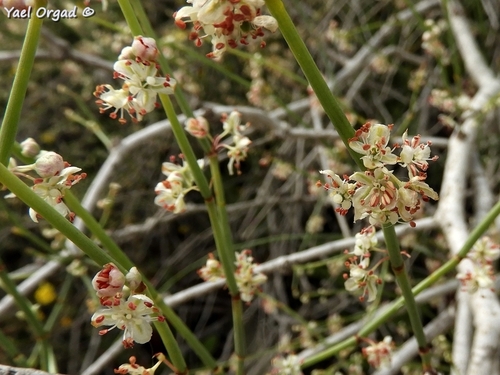
A small herb. It grows 90-100 cm high and spreads 50-70 cm wide. The tuberous roots are rich in tannin. It keeps growing from year to year. The leaves are spear head shaped and 30 cm long. They have slightly wavy edges. The flowers are on upright stalks. They changed from green to pink. The seeds are brown.
How to Grow
Succeeds in most soils but prefers a deep fertile moderately heavy soil that is humus-rich, moisture-retentive but well-drained and a position in full-sun or part shade. Judging by its native range, this plant should succeed in dry soils. Extensively cultivated for the tannin contained in its root.
Propagation: Sow seed in spring in situ. Can also be propagated by division in spring.
Medicinal Uses
An infusion of the stems and leaves has been used as a wash for sores, ant bites, and infected cuts. The roots are astringent; an infusion has been used to treat diarrhoea, and as a gargle for coughs, sore mouths, and sore throats. The root has been chewed for coughs and colds, and the dried powdered root has been used as a dusting powder and dressing on burns and sores. A tea made from the plant is used to treat colds.
Other Uses
The roots are rich in tannin — dried roots contain approximately 35–60%, with wild roots containing more than cultivated ones and old roots more than young ones. Yellow, dark green to brown, and dark grey dyes can be obtained from the roots without the need for a mordant.
Wikipedia
Source ↗Rumex hymenosepalus, commonly known as canaigre, canaigre dock, ganagra, wild rhubarb, Arizona dock, and tanner's dock, is a perennial flowering plant which is native to the North American deserts in the southwestern United States and northern Mexico. It is a common food plant of the ruddy copper larvae.
Other Information
Wild dock (Rumex hymenosepalus) At several Rio Grande pueblos, dock leaves, brimming with Vitamins A and C, are cooked like spinach or toasted and saved for winter stews.
Notes
There are about 200 Rumex species.
Names & Synonyms
Canaigre, Ganagra, Wild rhubarb
References (17)
- Anderson, B. A., (Rev.) 1996, Desert Plants of Utah. Utah State University Extension p 20
- Anderson, M. K., 2012, Edible Seeds and Grains of California Tribes and the Klamath Tribe of Oregon in the Phoebe Apperson Hearst Museum of Anthropology Collections, University of California, Berkeley. USDA p 15
- Beckstrom-Sternberg, Stephen M., and James A. Duke. "The Foodplant Database." http://probe.nalusda.gov:8300/cgi-bin/browse/foodplantdb.(ACEDB version 4.0 - data version July 1994)
- Cundall, P., (ed.), 2004, Gardening Australia: flora: the gardener's bible. ABC Books. p 1287
- W. H. Emory, Rep. U.S. Mex. bound. 2(1):177. 1858 ("1859")
- Facciola, S., 1998, Cornucopia 2: a Source Book of Edible Plants. Kampong Publications, p 187
- Hedrick, U.P., 1919, (Ed.), Sturtevant's edible plants of the world. p 583
- Heywood, V.H., Brummitt, R.K., Culham, A., and Seberg, O., 2007, Flowering Plant Families of the World. Royal Botanical Gardens, Kew. p 264
- https://www.fireflyforest.com/flowers/category/edible-plants/ Edible Plants – Southeastern Arizona Wildflowers and Plants
- Kermath, B. M., et al, 2014, Food Plants in the Americas: A survey of the domesticated, cultivated and wild plants used for Human food in North, Central and South America and the Caribbean. On line draft. p 768
- Loughmiller, C & L., 1985, Texas Wildflowers. A Field Guide. University of Texas, Austin. p 197
- Moerman, D. F., 2010, Native American Ethnobotany. Timber Press. p 497
- Plants for a Future database, The Field, Penpol, Lostwithiel, Cornwall, PL22 0NG, UK. http://www.scs.leeds.ac.uk/pfaf/
- Royal Botanic Gardens, Kew (1999). Survey of Economic Plants for Arid and Semi-Arid Lands (SEPASAL) database. Published on the Internet; http://www.rbgkew.org.uk/ceb/sepasal/internet [Accessed 6th June 2011]
- Saunders, C.F., 1948, Edible and Useful Wild Plants. Dover. New York. p 121
- Uphof,
- World Checklist of Useful Plant Species 2020. Royal Botanic Gardens, Kew