Rumex obtusifolius
L.
Broad-leaf dock, Round-leaf Dock
(c) George Cook, some rights reserved (CC BY-NC)

(c) Andreas Rockstein, some rights reserved (CC BY-SA)

(c) Jim Natale, some rights reserved (CC BY-NC)
What to Eat
Edible parts: Leaves, Vegetable, Seeds
Young leaves are edible cooked, though they carry a bitter taste that intensifies with age. To reduce bitterness, the leaves are typically boiled in at least one change of water. They can also be dried for later use. Leaves gathered in early spring, when first produced, have a noticeably milder flavour. Young stems can be cooked and eaten as well. The seeds are edible raw or cooked, and can be ground into a powder to make a gruel or blended into cereal flours for bread-making, though they are small and somewhat fiddly to harvest.
Known Hazards
Where to Find It
It is a temperate plant. It will grow in most soils and positions. It is resistant to frost but sensitive to drought. In Argentina it grows from sea level to 2,000 m above sea level. Tasmania Herbarium. In Yunnan.
Africa, Argentina, Armenia, Asia, Australia, Bolivia, Brazil, Britain*, Caucasus, Chile, China, Colombia, Cuba, Dominican Republic, Ecuador, Europe*, Falklands, France, Greece, Haiti, Indochina, Italy, Jamaica, Japan, Korea, Mediterranean, Mexico, Myanmar, New Zealand, North Africa, North America, Portugal, Romania, Russia, SE Asia, Slovenia, South Africa, Southern Africa, South America, Spain, Switzerland, Taiwan, Tasmania, Turkey, Türkiye, Uruguay, Venezuela, West Indies,
How to Identify
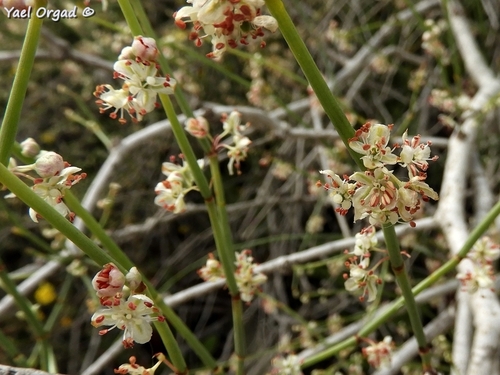
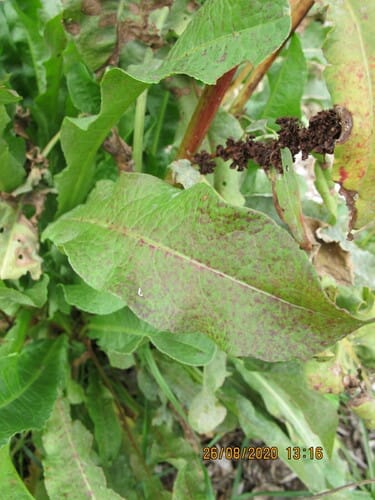
A plant that keeps growing from year to year. It grows 1 m high and spreads 1 m wide. It has a long taproot. The stem is erect with spreading branches. The leaves are broad and blunt. The leaves are wavy. The flower spikes are crowded. The flowers are small and green. The seed valves have 1-4 teeth on each side.
Nutrition Score: 33/100
| Part | Moisture | kJ | kcal | Protein | Vit A | Vit C | Iron | Zinc |
|---|---|---|---|---|---|---|---|---|
| Leaves | 85 | 179 | 44 | 5 | — | — | — | — |
| Leaves | 89.9 | 156 | 38 | 2.9 | — | — | 1.1 | 0.4 |
How to Grow
Requires a good soil. Plants are occasionally cultivated for their edible leaves. A very important food plant for the caterpillars of many species of butterfly. This species is an alternative host of the turnip fly.
Propagation: Sow seed in spring directly in situ. Plants can also be propagated by division in spring.
Medicinal Uses
The leaves are commonly applied externally as a folk remedy for blisters, burns, and scalds. The root contains tannin and acts as an astringent and blood purifier. A tea made from the roots has been used to treat jaundice, whooping cough, boils, and bleeding. A root infusion used as a wash has helped treat skin eruptions, particularly in children. One report notes the root has been used as a contraceptive to stop menstruation. The root is best harvested in early spring and dried for later use.
Other Uses
Yellow, dark green to brown, and dark grey dyes can be obtained from the roots without the need for a mordant. This plant is also noted as a dynamic accumulator and for attracting wildlife.
Wikipedia
Source ↗Rumex obtusifolius, commonly known as bitter dock, broad-leaved dock, bluntleaf dock, dock leaf, dockens or butter dock, is a perennial plant in the family Polygonaceae. It is native to Europe, but is found on all temperate continents. It is a highly invasive species in some zones, resulting from its abundant seed dispersal, adaptability to reproduce, aggressive roots, ability to tolerate extreme climates, and hardiness.
Notes
There are about 200 Rumex species.
Names & Synonyms
Alabardak, Bijuaca, Bitter rock, Kokukizil, Labaca, Lengua de vaca, Pakta, Ramaza, Romaza, Sacha wulak Stevie, Tursho, Yabani labada, Yurak
References (43)
- Biscotti, N. et al, 2018, The traditional food use of wild vegetables in Apulia (Italy) in the light of Italian ethnobotanical literature. Italian Botanist 5:1-24
- Bodkin, F., 1991, Encyclopedia Botanica. Cornstalk publishing, p 895
- Bonet, M. A. & Valles, J., 2002, Use of non-crop food vascular plants in Montseny biosphere reserve (Catalonia, Iberian Peninsula). International Journal of Food Sciences and Nutrition (2002) 53, 225–248
- Cerne, M., 1992, Wild Plants from Slovenia used as Vegetables. Acta Horticulturae 318.
- Curtis, W.M., 1993, The Student's Flora of Tasmania. Part 3 St David's Park Publishing, Tasmania, p 585
- Dashorst, G.R.M., and Jessop, J.P., 1998, Plants of the Adelaide Plains & Hills. Botanic Gardens of Adelaide and State Herbarium. p 52
- Diaz-Betancourt, M., et al, 1999, Weeds as a future source for human consumption. Rev. Biol. Trop. 47(3):329-338
- Dogan, Y., et al, 2004, The Use of Wild Edible Plants in Western and Central Anatolia (Turkey). Economic Botany 58(4) pp. 684-690
- Dogan, Y., 2012, Traditionally used wild edible greens in the Aegean Region of Turkey. Acta Societatis Botanicorum Poloniae 81(4): 329-342
- Ertug, F, Yenen Bitkiler. Resimli Türkiye Florası -I- Flora of Turkey - Ethnobotany supplement
- Facciola, S., 1998, Cornucopia 2: a Source Book of Edible Plants. Kampong Publications, p 187
- Flora of China @ efloras.org Volume 5
- Guil-Guerrero, J. L., et al, 2001, Edible Wild Plants. in Recent Progress in Medicinal Plants Vol. 8 Sci. Tech publishing, Texas
- Hani Medicine of Xishuangbanna, 1999, p 247
- Hussey, B.M.J., Keighery, G.J., Cousens, R.D., Dodd, J., Lloyd, S.G., 1997, Western Weeds. A guide to the weeds of Western Australia. Plant Protection Society of Western Australia. p 202
- Hyde-Wyatt, B.H. & Morris D.I., 1975, Tasmanian Weed Handbook. Dept of Ag Tasmania. p 24, 56
- Lamp, C & Collet F., 1989, Field Guide to Weeds in Australia. Inkata Press. p 248
- Lim, T. K., 2015, Edible Medicinal and Non Medicinal Plants. Volume 9, Modified Stems, Roots, Bulbs. Springer p 50
- PARMENTIER, (As Lapathum sylvestris)
- Low, T., 1991, Wild Herbs of Australia and New Zealand. Angus & Robertson. p 39
- Low, T., 1992, Bush Tucker. Australia’s Wild Food Harvest. Angus & Robertson. p 153
- Malezas Comestibles del Cono Sur, INTA, 2009, Buernos Aires
- Orhan, I., et al., 2009, Antiviral activity and cytotoxicity of the lipophilic extracts of various edible plants and their fatty acids. Food Chemistry 115: 701-705 (var. subalpinus)
- Özdemir, E. and Kültür, S., 2017, Wild Edible Plants of Savaştepe District (Balıkesir, Turkey), Marmara Pharm J 21/3: 578-589
- Paczkowska, G . & Chapman, A.R., 2000, The Western Australian Flora. A Descriptive Calatogue. Western Australian Herbarium. p 461
- Paoletti, M.G., Dreon, A.L., and Lorenzoni, G.G., 1995, Pistic, Traditional Food from Western Friuli, NE Italy. Economic Botany 49(1) pp 26-30
- Pardo-de-Santayana et al, 2006, Diversity and selection of wild food plants. Proceedings of the IVth International Congress of Ethnobotany (ICEB) 2005) p 53
- Pardo-de-Santayana, M., et al, 2007, Traditional knowledge of wild edible plants used in the northwest of the Iberian Peninsula (Spain and Portugal): a comparative study. Journal of Ethnobiology and Ethnomedicine 2007, 3:27
- Pieroni, A., 1999, Gathered wild food plants in the Upper Valley of the Serchio River (Garfagnana), Central Italy. Economic Botany 53(3) pp 327-341
- Pieroni, A., et al, 2020, Wild food plants traditionally gathered in central Armenia: archaic ingredients or future sustainable foods? Environment, Development and Sustainability. Springer p 11
- Plants for a Future database, The Field, Penpol, Lostwithiel, Cornwall, PL22 0NG, UK. http://www.scs.leeds.ac.uk/pfaf/
- Plants of Haiti Smithsonian Institute http://botany.si.edu/antilles/West Indies
- Reis, S. V. and Lipp, F. L., 1982, New Plant Sources for Drugs and Foods from the New York Botanical Garden herbarium. Harvard. p 53
- Ruiters-Welcome, A. K., 2019, Food plants of southern Africa. Ph.D. thesis. Univ. of Johannesburg p 91
- Schneider, E., 2001, Vegetables from Amaranth to Zucchini: The essential reference. HarperCollins. p 574
- Sp. pl. 1:335. 1753
- Stern, G., 1986, Australian Weeds. A Source of Food and Medicine. Harper & Row. p 69
- Tasmanian Herbarium Vascular Plants list p 45
- Tardio, J., et al, Ethnobotanical review of wild edible plants in Spain. Botanical J. Linnean Soc. 152 (2006), 27-71
- Torre, de la L., et al, 2008, Enciclopedia de las Plantas Útiles del Ecuador. Herbario QCA. Pontificia Universidad Católica del Ecuador. p 159
- Upson, R., & Lewis R., 2014, Updated Vascular Plant Checklist and Atlas for the Falkland Islands. Falklands Conservation and Kew.
- Welcome, A. K. & Van Wyk, B.-E., 2019, An inventory and analysis of the food plants of southern Africa. South African Journal of Botany 122 (2019) 136–179
- www.ediblewildfood.com