Rumex pulcher
L.
Fiddle dock, Red dock

(c) Eric Keith, some rights reserved (CC BY-NC)

(c) Eric Keith, some rights reserved (CC BY-NC)

(c) Eric Keith, some rights reserved (CC BY-NC)
What to Eat
Edible parts: Leaves
The leaves can be eaten raw or cooked and make an acidic-flavoured addition to salads.
Known Hazards
Where to Find It
It grows in a temperate or Mediterranean climate. It will grow in most soils and positions. It is resistant to frost and drought. It grows in pasture. In Argentina it grows below 500 m above sea level. Tasmania Herbarium.
Africa, Albania, Argentina, Asia, Australia, Balkans, Bosnia, Brazil, Britain, Caucasus, Chile, Crete, Croatia, Cyprus, East Africa, Europe*, Georgia, Greece, Italy, Jordan, Libya, Mediterranean, Mexico, Middle East, Morocco, North Africa, North America, Paraguay, Sicily, South America, Spain, St Helena, Tasmania, Turkey, Türkiye, Uruguay, Zimbabwe,
How to Identify
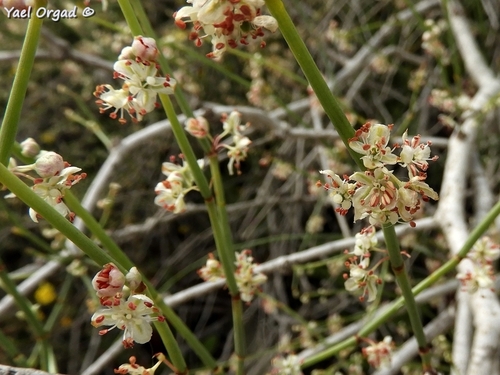
An erect herb. It grows about 60 cm high. It has stiff spreading branches. The leaves have a soft texture. They are 3-13 cm long by 10-30 mm wide. They are oblong to heart shaped and often with a narrow waste just below the middle. The flowering stalk has angular branches. It droops and forms tangled masses. The fruit have projections which are not hooked.
How to Grow
Succeeds in most soils but prefers a deep fertile moderately heavy soil that is humus-rich, moisture-retentive but well-drained and a position in full-sun or part shade.
Propagation: Sow seed in spring in a cold frame. Prick seedlings out into individual pots once large enough to handle, and plant out during summer. Plants can also be propagated by division in spring.
Medicinal Uses
None known
Other Uses
No specific dye data has been recorded for this species, but roots of many plants in this genus yield dark green to brown and dark grey dyes without requiring a mordant.
Wikipedia
Source ↗Rumex pulcher is a species of flowering plant in the knotweed family known by the common name fiddle dock. It is quite variable in appearance, and some authorities divide it into several subspecies that are more or less distinguishable. In general, it is a perennial herb producing a slender, erect stem from a thick taproot, approaching 70 centimetres (28 in) in maximum height. The top of the plant may bend, especially as the fruit develops. The leaves are up to 10–15 cm (4–6 in) long and variable in shape, though often oblong with a narrow middle in the rough shape of a fiddle. The inflorescence is made up of many branches, each an interrupted series of clusters of up to 20 flowers each, individual flowers hanging from a pedicel. The flower has usually six tepals, the inner three of which are edged with teeth and have tubercles at their centers. The plant is native to Eurasia and North Africa and it can be found elsewhere, including parts of North America, as an introduced species and a roadside weed.
Other Information
Leaves are sold in local markets.
Notes
There are about 200 Rumex species.
Names & Synonyms
Cama-roja, Carsaf, Efelek, Eksilik, Hanbaza, Kertilce, Ksinolapatho, Lengua de vaca, Labada, Lapatho, Lapaza, Lengua de vaca, Mancar, Mancarotu, Oreja de liebre, Pancarotu, Peixos, Romasa, Romaza, Selk, Stavolj, Stavljak, Yapalak, Yoruk otu
References (41)
- Al-Qura'n, S. A., 2010, Ethnobotanical and Ecological Studies of Wild Edible Plants in Jordan. Libyan Agriculture Research Center Journal International 1(4):231-243
- Astrada, E., et al, 2007, Ethnobotany in the Cumbres de Monterrey National Park, Nuevo Leon, Mexico. Journal of Ethnobiology and Ethnomedicine 3:8
- Biscotti, N. et al, 2018, The traditional food use of wild vegetables in Apulia (Italy) in the light of Italian ethnobotanical literature. Italian Botanist 5:1-24
- Blanco-Salas, J., et al, 2019, Wild Plants Potentially Used in Human Food in the Protected Area “Sierra Grande de Hornachos” of Extremadura (Spain). Sustainability 2019, 11, 456
- Bonet, M. A. & Valles, J., 2002, Use of non-crop food vascular plants in Montseny biosphere reserve (Catalonia, Iberian Peninsula). International Journal of Food Sciences and Nutrition (2002) 53, 225–248
- Curtis, W.M., 1993, The Student's Flora of Tasmania. Part 3 St David's Park Publishing, Tasmania, p 585
- Dashorst, G.R.M., and Jessop, J.P., 1998, Plants of the Adelaide Plains & Hills. Botanic Gardens of Adelaide and State Herbarium. p 52
- Della, A., et al, 2006, An ethnobotanical survey of wild edible plants of Paphos and Larnaca countryside of Cyprus. J. Ethnobiol. Ethnomed. 2:34
- Dogan, Y., et al, 2015, Of the importance of a leaf: the ethnobotany of sarma in Turkey and the Balkans. Journal of Ethnobiology and Ethnomedicine, 11:56
- Dolina, K. & Luczaj, L., 2014, Wild food plants used on the Dubrovnik coast (south-eastern Croatia) Acta Soc Bot Pol 83(3):175–181
- Dretakis, M. et al, 2012, Flora and Fauna Biodiversity in an ancient olive grove in Crete (Greece) in Calabrese G. (Ed.) Study on Biodiversity in Century-Old Olive Groves. CIHEAM - Mediterranean Agronomic Institute of Bari. p 94
- Geraci, A., et al, 2018, The wild taxa utilized as vegetables in Sicily (Italy): a traditional component of the Mediterranean diet. Journal of Ethnobiology and Ethnomedicine (2018) 14:14
- Ghanimi, R., et al, 2022, Ethnobotanical study on wild edible plants traditionally used by Messiwa people, Morocco. Journal of Ethnobiology and Ethnomedicine. 18:16
- Gonzalez, J. A., et al, 2011, The consumption of wild and semi-domesticated edible plants in the Arribes del Duero (Salamanca-Zamora, Spain): an ananalysis of traditional knowledge. Genetic Resources and Crop Evolution 58:991-1006
- Ertug, F, Yenen Bitkiler. Resimli Türkiye Florası -I- Flora of Turkey - Ethnobotany supplement
- Geraci, A., et al, 2018, The wild taxa utilized as vegetables in Sicily (Italy): a traditional component of the Mediterranean diet. Journal of Ethnobiology and Ethnomedicine (2018) 14:14
- Ghanimi, R., et al, 2022, Ethnobotanical study on wild edible plants traditionally used by Messiwa people, Morocco. Journal of Ethnobiology and Ethnomedicine. 18:16
- Gurdal, B. & Kultur, S., 2014, The edible and miscellaneous useful plants in Marmaris (Southwest Turkey). İstanbul Ecz. Fak. Derg. / J. Fac. Pharm. Istanbul 44(1) 2014 pp.69-78
- Hancer, C. K., et al, 2020, Traditional Knowledge of Wild Edible Plants of Biga (Çanakkale), Turkey. Acta Societatis Botanicorum Poloniae / 2020 / Volume 89 / Issue 1 / Article 8914
- Harris, S., Buchanan, A., Connolly, A., 2001, One Hundred Islands: The Flora of the Outer Furneaux. Tas Govt. p 217
- Hussey, B.M.J., Keighery, G.J., Cousens, R.D., Dodd, J., Lloyd, S.G., 1997, Western Weeds. A guide to the weeds of Western Australia. Plant Protection Society of Western Australia. p 202
- Hyde-Wyatt, B.H. & Morris D.I., 1975, Tasmanian Weed Handbook. Dept of Ag Tasmania. p 24, 57
- Kizilarslan, C. & Ozhatay, N., 2012, An ethnobotanical study of the useful and edible plants of İzmit. Marmara Pharmaceutical Journal 16: 134-140, 2012.
- Lamp, C & Collet F., 1989, Field Guide to Weeds in Australia. Inkata Press. p 248
- Low, T., 1991, Wild Herbs of Australia and New Zealand. Angus & Robertson. p 39
- Luczaj, L. et al, 2013, Wild food plants used in the villages of the Lake Vrana Nature Park (northern Dalmatia, Croatia). Acta Societatis Botanicorum Poloniae, 82(4): 275-281
- Luczaj, L. et al, 2014, Wild Food Plants of Dalmatia (Croatia). in A. Pieroni, C. L. Quave (eds.), Ethnobotany and Biocultural Diversities in the Balkans, p 143
- Luczaj, L. et al, 2017, Comfrey and Buttercup Eaters: Wild Vegetables of the Imereti Region in Western Georgia, Caucasus. Economic Botany, 71(2), 2017, pp. 188–193
- Mahklouf, M. H., 2019, Ethnobotanical Study of Edible Wild Plants in Libya. European Journal of Ecology. 5(2): 30-40
- Malezas Comestibles del Cono Sur, INTA, 2009, Buernos Aires
- Molina, M. et al, 2014, Weeds and Food Diversity: Natural Yield Assessment and Future Alternatives for Traditionally Consumed Wild Vegetables. Journal of Ethnobiology 34(1): 44–67
- Paczkowska, G . & Chapman, A.R., 2000, The Western Australian Flora. A Descriptive Calatogue. Western Australian Herbarium. p 461
- Pasta, S., et al, 2020, An Updated Checklist of the Sicilian Native Edible Plants: Preserving the Traditional Ecological Knowledge of Century-Old Agro-Pastoral Landscapes. Frontiers in Plant Science. Volume 11|Article 388
- Pieroni, A. & Soukand, R., 2017, The disappearing wild food and medicinal plant knowledge in a few mountain villages of North-Eastern Albania. Journal of Applied Botany and Food Quality 90, 58 - 67
- Plants for a Future database, The Field, Penpol, Lostwithiel, Cornwall, PL22 0NG, UK. http://www.scs.leeds.ac.uk/pfaf/
- Rivera, C., et al, 2005, The Ethnobotanical Study of Local Mediterranean Food Plants as Medicinal Resources in Southern Spain. Journal of Physiologyand Pharmacology. 56, Suppl. 1, 97-114
- Sanchez-Mata, M. C., et al, 2010, Wild vegetables of the Mediterranean area as valuable sources of bioactive compounds. Genet. Resourc. Crop Evol. 59:431-443
- Sp. pl. 1:336. 1753
- Tasmanian Herbarium Vascular Plants list p 45
- Tardio, J., et al, Ethnobotanical review of wild edible plants in Spain. Botanical J. Linnean Soc. 152 (2006), 27-71
- Taskin, T. and Bitis, L., 2016, In vitro Antioxidant activity of eight wild edible plants in Bursa Province of Turkey. Farmacia 2016, Vol. 64, 5