Rumex scutatus
L.
French sorrel, Buckler-leaved sorrel

Wikimedia Commons (via Wikimedia Commons)

Krzysztof Ziarnek, Kenraiz (via Wikimedia Commons)

Barbara Kossy

(c) Nuuuuuuuuuuul, some rights reserved (CC BY)

(c) Martin A. Prinz, some rights reserved (CC BY-NC)
What to Eat
Edible parts: Leaves, Herb, Vegetable
The leaves can be eaten raw or cooked, offering a delicious lemon-like flavour. Most people find them overpowering in large quantities, but they make a delightful addition to salads and can also be used as a pot-herb. This species has less acidic leaves than sorrel (R. acetosa), making it a frequently preferred alternative. The leaves should be used sparingly due to their oxalic acid content.
Known Hazards
Where to Find It
It is a temperate plant. It does well on rocky well-drained soil. It needs a protected sunny position. It grows in alpine and sub-alpine regions. It suits hardiness zones 3-9.
Africa, Australia, Balkans, Bosnia, Britain, Caucasus, Egypt, Europe, France*, Georgia, Germany, India, Iraq, Italy, Mediterranean, Middle East, North Africa, North America, Sicily, Slovenia, South Africa, Southern Africa, Spain, Switzerland, Tasmania, Turkey, Türkiye, USA,
How to Identify
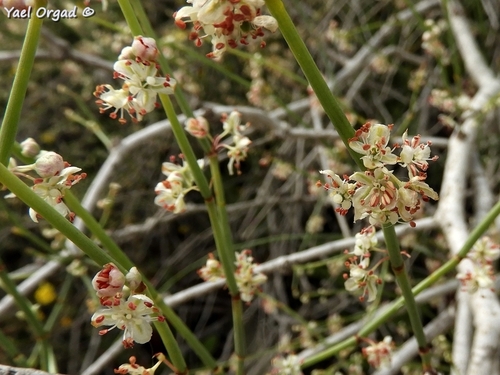
A leafy plant which keeps growing from year to year. It grows in clumps It is low growing and forms mats. The clumps can be 10-15 cm tall. The leaves are as broad as long and small. The leaves are 15 cm long and 8 cm wide. They are dark green and somewhat crinkly. The crisply or wavy edges help distinguish it. They have reddish stems. The flower stalks are long and tough and have red streaks. The flowers are small and greenish. The seeds are brown.
How to Grow
A very easily grown plant, succeeding in most soils but preferring a moist moderately fertile well-drained soil in a sunny position. Prefers a rather dry soil. Established plants are drought tolerant. Plants often self-sow freely in the garden. Buckler-leafed sorrel is occasionally cultivated for its edible leaves. There are some named varieties that have been selected for their ornamental value. A food plant for the caterpillars of many species of butterfly. In garden design, as well as the above-ground architecture of a plant, root structure considerations help in choosing plants that work together for their optimal soil requirements including nutrients and water. Thick or swollen - fibrous or tap root.
Propagation: Sow seed in spring in a cold frame; germination is rapid. Prick seedlings into individual pots once large enough and plant out in early summer. Seed can also be sown in situ in mid spring. Division in spring is straightforward, though establishment is best at that time. Larger divisions can go directly into permanent positions. Smaller divisions are best potted up and grown on in a lightly shaded cold frame until well established, then planted out in summer.
Medicinal Uses
The leaves are antiscorbutic, astringent, diuretic, laxative, and refrigerant, though the plant is rarely employed as a specifically medicinal herb.
Other Uses
The cultivar 'Silver Shield' makes a good, if rampant, ground cover beside paths and at the front of borders. Roots of plants in this genus yield dark green to brown and dark grey dyes without requiring a mordant. This plant acts as a dynamic accumulator, gathering minerals and nutrients from the soil and storing them in a more bioavailable form for use as fertilizer or mulch. It is also noted for attracting wildlife and for use in food forest systems.
Wikipedia
Source ↗Rumex scutatus (syn. Rumex alpestris) is a plant in the buckwheat family, used as a culinary herb. Its common names include French sorrel, buckler sorrel, shield-leaf sorrel, and sometimes the culinary name "green-sauce". As a culinary herb, it is used in salads, soups, and sauces (especially for fish). French sorrel tastes tart from its oxalic acid content, with a hint of lemon. Later in the season, it can be bitter. French sorrel is hardy in most regions, tolerating frost, full sun and short dry spells. It grows quickly to a clump up to 1 m (3.3 ft) in diameter, with long leaves up to 10 cm (4 in) wide. It is sometimes preferred for culinary uses to Rumex acetosa, garden sorrel.
Production
The young tender leaves are harvested and used fresh.
Other Information
It is a commercially cultivated vegetable.
Notes
There are about 200 Rumex species.
Names & Synonyms
Aceturia, Agrietas, Ambavati, Amrula, Citulidda, Dastursusu, Eksimen, Gholo, ščitasta kislica, Tirsokturs
References (40)
- Ambasta S.P. (Ed.), 2000, The Useful Plants of India. CSIR India. p 535
- Ari, S., et al, 2015, Ethnobotanical survey of plants used in Afyonkarahisar-Turkey. Journal of Ethnobiology and Ethnomedicine 11:84
- Bodkin, F., 1991, Encyclopedia Botanica. Cornstalk publishing, p 895
- Bremness, L., 1994, Herbs. Collins Eyewitness Handbooks. Harper Collins. p 213
- Burnie, G & Fenton-Smith, J., 1999, A Grower's Guide to Herbs. Murdoch Books. p 66
- Bussman, R. W., et al, 2021, Unity in diversity—food plants and fungi of Sakartvelo (Republic of Georgia), Caucasus. Journal of Ethnobiology and Ethnomedicine (2021) 17:72 p 13
- Cakir, E. A., 2017, Traditional knowledge of wild edible plants of Iğdır Province (East Anatolia, Turkey). Acta Soc Bot Pol. 2017;86(4):3568
- Cerne, M., 1992, Wild Plants from Slovenia used as Vegetables. Acta Horticulturae 318.
- Cheifetz, A., (ed), 1999, 500 popular vegetables, herbs, fruits and nuts for Australian Gardeners. Random House p 153
- Cundall, P., (ed.), 2004, Gardening Australia: flora: the gardener's bible. ABC Books. p 1288
- Dogan, A. & Tuzlaci, E., 2015, Wild Edible Plants of Pertek (Tunceli-Turkey). Marmara Pharmaceutical Journal 19: 126-135
- Ertug, F., 2000, An Ethnobotanical Study in Central Anatolia (Turkey). Economic Botany Vol. 54. No. 2. pp. 155-182
- Ertug, F, Yenen Bitkiler. Resimli Türkiye Florası -I- Flora of Turkey - Ethnobotany supplement
- Esperanca, M. J., 1988. Surviving in the wild. A glance at the wild plants and their uses. Vol. 1. p 359
- Facciola, S., 1998, Cornucopia 2: a Source Book of Edible Plants. Kampong Publications, p 187
- Geraci, A., et al, 2018, The wild taxa utilized as vegetables in Sicily (Italy): a traditional component of the Mediterranean diet. Journal of Ethnobiology and Ethnomedicine (2018) 14:14
- Hadfield, J., 2001, The A-Z of Vegetable Gardening in South Africa. Struik p 135
- Hammer, K. & Spahillari, M., 1999, Crops of European origin. in Report of a networking group on minor crops. IPGRI p 46
- Hedrick, U.P., 1919, (Ed.), Sturtevant's edible plants of the world. p 584
- Hemphill, I, 2002, Spice Notes. Macmillan. p 371
- Hibbert, M., 2002, The Aussie Plant Finder 2002, Florilegium. p 282
- http://www.botanic-gardens-ljubljana.com/en/plants
- Jackes, D. A., 2007, Edible Forest Gardens
- Kargioglu, M., et al, 2008, An Ethnobotanical Survey of Inner-West Anatolia, Turkey. Human Ecology 36:763-777
- Kays, S. J., and Dias, J. C. S., 1995, Common Names of Commercially Cultivated Vegetables of the World in 15 languages. Economic Botany, Vol. 49, No. 2, pp. 115-152
- Kiple, K.F. & Ornelas, K.C., (eds), 2000, The Cambridge World History of Food. CUP p 1854
- Lentini, F. and Venza, F., 2007, Wild food plants of popular use in Sicily. J Ethnobiol Ethnomedicine. 3: 15
- Mukemre, M., et al, 2016, Survey of wild food plants for human consumption in villages of Catak, (Van-Turkey), Indian Journal of Traditional Knowledge. Vol. 15(2) pp. 183-191
- Nebel, S., Pieroni, A. & Heinrich, M., 2006, Ta cho`rta: Wild edible greens used in the Graecanic area in Calabria, Southern Italy. Appetite 47 (2006) 333–342
- Pardo-de-Santayana, M., et al, 2007, Traditional knowledge of wild edible plants used in the northwest of the Iberian Peninsula (Spain and Portugal): a comparative study. Journal of Ethnobiology and Ethnomedicine 2007, 3:27
- Pasta, S., et al, 2020, An Updated Checklist of the Sicilian Native Edible Plants: Preserving the Traditional Ecological Knowledge of Century-Old Agro-Pastoral Landscapes. Frontiers in Plant Science. Volume 11|Article 388
- Plants for a Future database, The Field, Penpol, Lostwithiel, Cornwall, PL22 0NG, UK. http://www.scs.leeds.ac.uk/pfaf/
- Redzic, S. J., 2006, Wild Edible Plants and their Traditional Use in the Human Nutrition in Bosnia-Herzegovina. Ecology of Food and Nutrition, 45:189-232
- Rigat, M et al, 2009, Ethnobotany of Food Plants in the High River Ter Valley (Pyrenees, catalonia, Iberian Peninsula): Non-Crop Food Vascular Plants and Crop Food Plants with medicinal Properties. Ecology of Food and Nutrition, 48:303-327
- Sp. pl. 1:337. 1753
- Tardio, J., et al, Ethnobotanical review of wild edible plants in Spain. Botanical J. Linnean Soc. 152 (2006), 27-71
- USDA, ARS, National Genetic Resources Program. Germplasm Resources Information Network - (GRIN). [Online Database] National Germplasm Resources Laboratory, Beltsville, Maryland. Available: www.ars-grin.gov/cgi-bin/npgs/html/econ.pl (10 April 2000)
- van Wyk, B., 2005, Food Plants of the World. An illustrated guide. Timber press. p 331
- Wiersema, J. H. & Leon, B., 2013, World Economic Plants. A Standard Reference CRC Press. 2nd Ed. p 602
- World Checklist of Useful Plant Species 2020. Royal Botanic Gardens, Kew