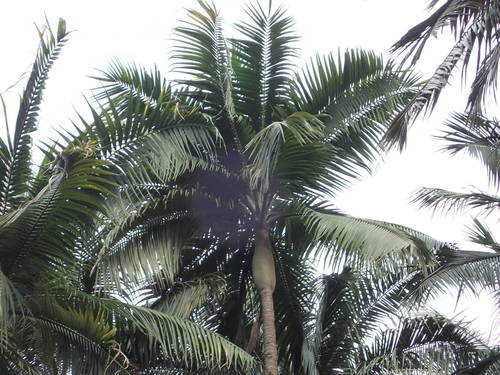
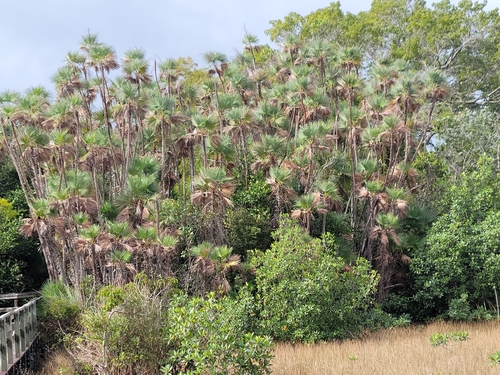
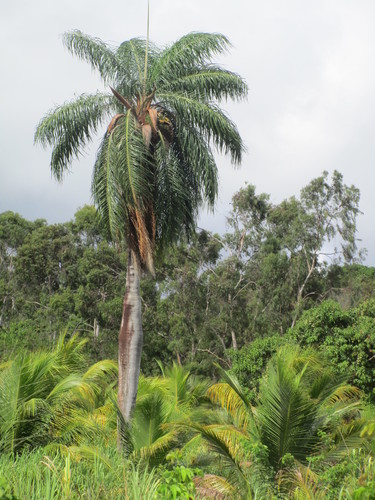
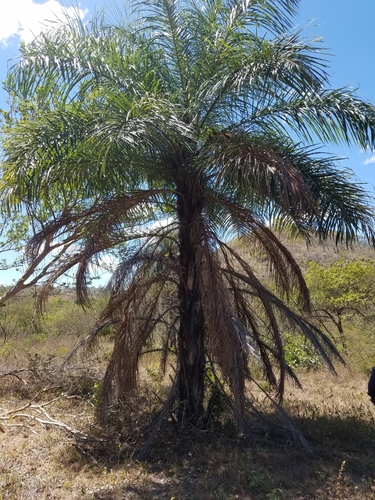
Sagus laevis
Rumph.

Rik Schuiling / TropCrop-TCS (via Wikimedia Commons)
What to Eat
Edible parts: Cabbage, Palm heart
The tree is of commercial importance as the main source of sago, a starch obtained from the trunk by washing the starch kernels out of the pulverized pith with water. A trunk cut just prior to flowering contains enough sago to feed a person for a year. Sago is used in cooking for puddings, noodles, breads, and as a thickener. In the Sepik River region of New Guinea, pancakes made from sago are a staple food, often served with fresh fish. Its leaflets are also used as thatching which can remain intact for up to five years. The dried petioles (called gaba-gaba in Indonesian) are used to make walls and ceilings; they are very light, and therefore also used in the construction of rafts. To harvest the starch in the stem, it is felled shortly before or early during its final flowering stage when starch content is highest. Sago palm is propagated by man by collecting (cutting) and replanting young suckers rather than by seed. The upper portion of the trunk's core can be roasted for food; the young nuts, fresh shoots and palm cabbage are also edible. Research published in 2013 indicates that the sago palm was an important food source for the ancient people of coastal China, in the period prior to the cultivation of rice.
Where to Find It
It is a tropical plant.
Asia,
How to Identify
A tropical palm in the Arecaceae family.
References (1)
- Martin, F.W. & Ruberte, R.M., 1979, Edible Leaves of the Tropics. Antillian College Press, Mayaguez, Puerto Rico. p 211