Scaphium linearicarpum
(Mast.) Pierre
Kambang semangkok bulat

Wikimedia Commons - National Museum of Natural History
What to Eat
Edible parts: Fruit, Seeds
The seed coat of all species in the genus contains large mucilage-sacs which, when placed in water, swell up to eight times their original volume to yield a transparent, mucilaginous gel. This is removed from the seeds, mixed with the soaked seeds of basil (Ocimum spp.) and made into a refreshing drink.
Where to Find It
A tropical plant. It grows in tropical rainforest between 10-100 m above sea level. It can be up to 700 m above sea level.
Asia, Indochina, Indonesia, Malaysia, SE Asia, Thailand,
How to Identify
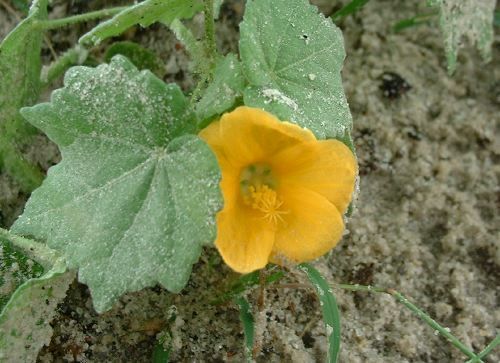
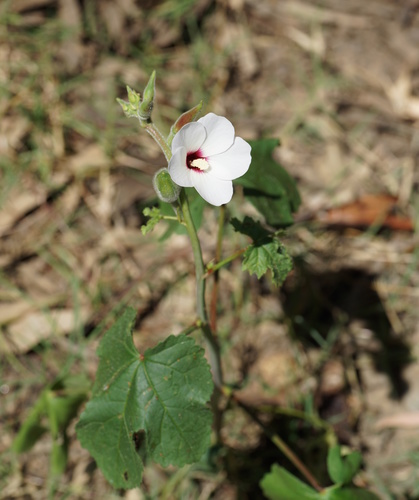
A tree. It grows 35 m tall. The trunk can be 60 cm across. It has buttresses. The leaves are broadly oval and the base is deeply heart shaped. They are arranged in spirals. The flowers are pale green in groups in the axils of leaves. The fruit is a yellowish nut with boat shaped wings. There is a single seed.
How to Grow
Plants can be grown from seeds.
Propagation: A physical dormancy caused by the hard seed coat of the mature seeds of many species in this genus can be overcome by scarifying the seed. This is carried out by cutting away or abrading some of the seed coat to allow the ingress of water, though great care must be taken not to damage the embryo. The aril surrounding the seed should also be removed - this is easiest when it has been softened through soaking in water. The seeds germinate optimally at temperatures between 20 - 30°c. They can be sown in a nursery seedbed or in containers. A germination rate of about 95%, occurring within about 2 weeks can be expected if the seed has been properly treated.
Medicinal Uses
The seed coat of all species in the genus contains large mucilage-sacs which, when placed in water, expand to produce a jelly-like substance. This is used as a febrifuge and also to treat complaints such as coughs and asthma; diarrhoea and dysentery; and also as a remedy for pharyngitis and sore throats. It probably works by coating the affected area in a soothing, healing mucilage and thus giving it an opportunity to recover.
Other Uses
The fibrous bark is sometimes used for walls in temporary local houses. The wood of all species in this genus is very similar and no distinction in use is made between them. The wood is often traded; in Malaysia it is known as 'kembang semangkok', in Indonesia as 'kapas-kapasan', in Thailand as samrong. The following is a general description of the wood:- The heartwood is light yellow to light brown, with a large silver figure; it is not clearly demarcated from the sapwood. The texture is medium to slightly coarse and uneven; the grain straight or shallowly interlocked. The wood is light to moderately heavy; soft to moderately hard; fairly strong; somewhat resistant to fungi but susceptible to dry wood borers. It seasons fairly rapidly, with very little risk of checking and distortion; once dry it is moderately stable to stable in service. Because of its high silica content, it has a blunting effect on tools and so stellite-tipped and tungsten carbide tools are recommended. It is easy to work, nailing and screwing are good; gluing is correct; planing is easy and the surface produced is generally smooth. Considered a light hardwood, it has a very attractive figure, making the timber very suitable for interior finishing, panelling, furniture components etc, It is also used in construction, for joinery, boxes and crates, flooring, matches, plywood etc. Logs can be easily peeled to various thicknesses of veneers without any form of pretreatment - the veneers produced are found to be smooth and tight. Attractive ornamental figures can be found on the veneer surfaces and the veneer can be glued fairly easily. The wood is used for fuel.
Production
In Thailand, fruit occur in December to February.
Notes
The seeds are used in medicine. Also put in the family Sterculiaceae.
Names & Synonyms
Pohon kembang, Pohon payang karang, Thau phao khaao
References (5)
- Burkill, I.H., 1966, A Dictionary of the Economic Products of the Malay Peninsula. Ministry of Agriculture and Cooperatives, Kuala Lumpur, Malaysia. Vol 2 (I-Z) p 2006
- Milow, P., et al, 2013, Malaysian species of plants with edible fruits or seeds and their evaluation. International Journal of Fruit Science. 14:1, 1-27
- Saw, L.G., LaFrankie, J. V. Kochummen, K. M., Yap S. K., 1991, Fruit Trees in a Malaysian Rain Forest. Economic Botany, Vol. 45, No. 1, pp. 120-136
- Sukarya, D. G., (Ed.) 2013, 3,500 Plant Species of the Botanic Gardens of Indonesia. LIPI p 497
- Thai Forestry Bulletin 23:62-108, 1995