Sechium tacaco
(Pittier) C. Jeffrey
Tacaco
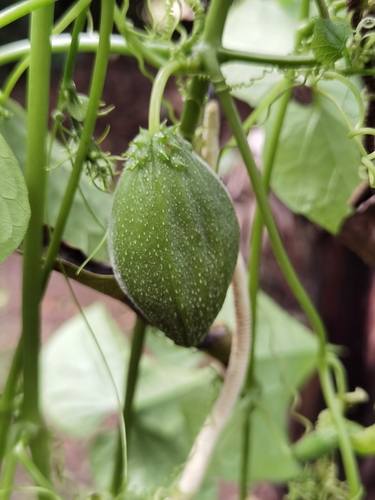
(c) Eduardo Chacón Madrigal, some rights reserved (CC BY), uploaded by Eduardo Chacón Madrigal
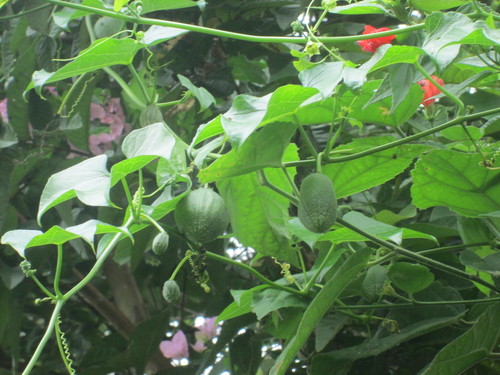
(c) Josebeth Mora Sánchez, some rights reserved (CC BY-NC), uploaded by Josebeth Mora Sánchez

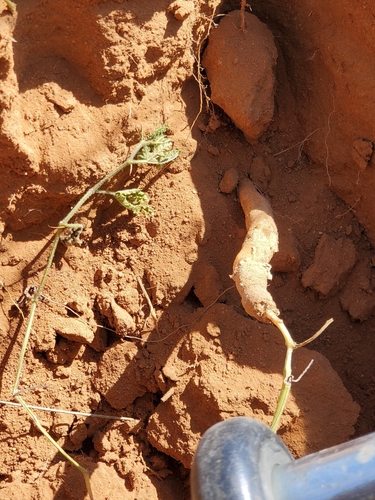
(c) Nate Hartley, some rights reserved (CC BY-NC), uploaded by Nate Hartley
What to Eat
Edible parts: Fruit, Leaves, Shoots, Seeds
Young green fruit are boiled as a vegetable with the spiny skin removed, pickled, or used in soups. The leaves, shoots, and seeds are also edible.
Where to Find It
A tropical plant. It grows in the highlands of Costa Rica. It grows in humid places between 900-1,500 m altitude.
Central America, Costa Rica*,
How to Identify
A pumpkin family plant. It is a climbing vine. The leaves are simple and alternate. The leaf blades are 9-16 cm long by 9-15 cm wide. There are 3-5 lobes. The fruit are 5-6 cm long and oval. There are spines at one end. There is one seed.
How to Grow
The whole fruit is sown.
Propagation: Seed - traditionally, the seed is sown by setting a whole mature fruit in a rich, loose leaf mould with the spiny end up and almost showing at the surface.
Other Information
It is a cultivated food crop. Fruit are sold in markets.
Names & Synonyms
Chures, Kuk, Mirera, Qui
References (21)
- Castaneda, H., & Stepp, J. R., 2007, Ecosystems as Sources of Useful Plants for the Guaymi People of Costa Rica. Ethnobotany Journal. 5:249-257
- Chizmar Fernandez, C., et al, 2009, Plantas comestibles de Centroamerica. Instituto de Biodiversidad, Costa Rica. p 165
- Contr. U.S. Natl. Herb. 13:131. 1910 (As Polakowskia tacaco)
- D'Ambrosio, U., & Puri, R. K., 2016, Foodways in transition: food plants, diet and local perceptions of change in a Costa Rican Ngäbe community. Journal of Ethnobiology and Ethnomedicine (2016) 12:3 p 24
- Esquinas-Alcazar, et al, 1983, Genetic Resources of Cucurbitaceae. International Board of Plant Genetic Resources. (As Polakowskia tacaco)
- FAO, 1993, Valor Nutritivo Y Usis en Alimantacion humana de Algunis Cultivos Autoctonos Subexplotados de Mesoamerica. FAO, Santiago, Chile. p 56
- Galluzzi, G. & Noriega, I. L., 2014, Conservation and Use of Genetic Resources of Underutilized Crops in the Americas - A Continental Analysis. Sustainability, 6:980-1017 (As Frantzia)
- Garcia-Serrano, C. R., & Del Monte, J. P., 2004, The Use of Tropical Forest (Agroecosystems and wild Plant harvesting) as a Source of Food in the Bribri and Cabecar Cultures in the Caribbean Coast of Costa Rica. Economic Botany 58(1) pp 58-71
- Hermandez Bermejo, J.E., and Leon, J. (Eds.), 1994, Neglected Crops. 1492 from a different perspective. FAO Plant Production and Protection Series No 26. FAO, Rome. p18
- Kermath, B. M., et al, 2014, Food Plants in the Americas: A survey of the domesticated, cultivated and wild plants used for Human food in North, Central and South America and the Caribbean. On line draft. p 792
- Kew Bull. 33:361. 1978
- Krings, A. & Braham, R. R., 2005, Guide to Tendrillate Climbers of Costa Rican Mountains. Blackwell Publishing. p 68
- Langlois, H. C., 2004, Ethnobotanical analysis of different successional stages as sources of wild edible plants for the Guaymi people in Costa Rica. M. Sc. thesis University of Florida.
- Martin, F.W. & Ruberte, R.M., 1979, Edible Leaves of the Tropics. Antillian College Press, Mayaguez, Puerto Rico. p 190 (As Polakowskia tacaco)
- Robinson, R.W., & Decker-Walters, D.S., Cucurbits. CAB International p
- Smith, N., Mori, S.A., et al, 2004, Flowering Plants of the Neotropics. Princeton. p 121
- Terra, G.J.A., 1973, Tropical Vegetables. Communication 54e Royal Tropical Institute, Amsterdam, p 68 (As Polakowskia tacaco)
- Useful Tropical Plants
- Wiersema, J. H. & Leon, B., 2013, World Economic Plants. A Standard Reference CRC Press. 2nd Ed. p 624
- World Checklist of Useful Plant Species 2020. Royal Botanic Gardens, Kew
- Zuchowski W., 2007, Tropical Plants of Costa Rica. A Zona Tropical Publication, Comstock Publishing. p 174