Shorea singkawang
(Miq.) Burck
Dark red meranti

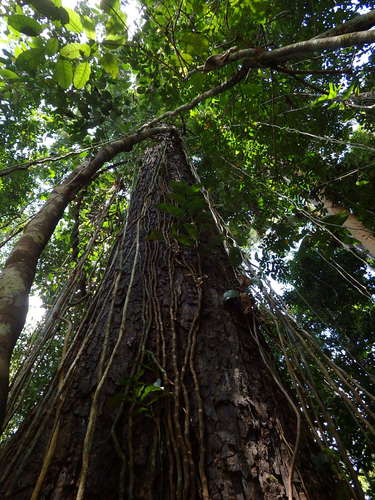
(c) syuhada, some rights reserved (CC BY)

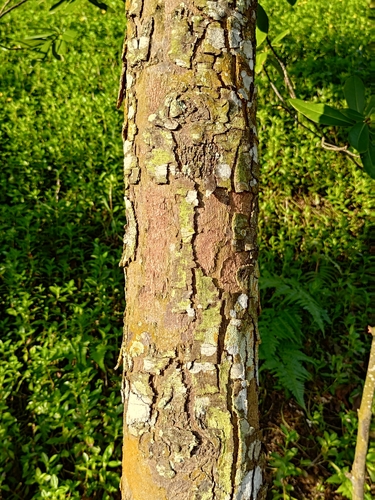
(c) Arief Hamidi, some rights reserved (CC BY-NC)

(c) Arief Hamidi, some rights reserved (CC BY-NC)
What to Eat
Edible parts: Fruit for starch, Nuts
The fruit yields an edible fat resembling cocoa butter and is also eaten for starch, and the nuts are consumed.
Where to Find It
A tropical plant. It grows in lowland dipterocarp forests. It is usually in damp soils near streams. It can grow up to 400 m above sea level.
Asia, Indochina, Malaysia, SE Asia, Thailand,
How to Identify
A large tropical tree of the Dipterocarpaceae family found in lowland dipterocarp forests up to 400 m elevation, typically growing in damp soils near streams. It is listed as an at-risk species.
How to Grow
Propagation: We have no specific information for this species - the information below is a general guide for the genus. Seed - best sown as soon as possible. It does not require pre-treatment, but it is recommended to soak the seed for 12 hours prior to sowing. The seeds are sown in seedbeds, where they are covered with a mixture of sand and soil (1:1) or with a thin layer of sawdust. Germination of fresh seeds is usually good and rapid. About two weeks after germination, when the seedlings are 5 - 6cm tall, they are potted up into individual containers about 15 x 23cm with good drainage holes at their base. It is normally recommended to use a mixture of forest soil and sand (at a ratio of 3:1) as the potting medium in order to introduce the appropriate mycorrhiza to the roots. The seedlings are placed in 50 - 60% sunlight and watered twice daily. Seedlings can be planted out when 30 - 40cm tall - harden the seedlings off in full sunlight for one month prior to planting.
Medicinal Uses
The fruit produces an edible fat like cocoa butter.
Other Uses
The wood is a source of the timber 'Dark Red Meranti'. We do not have a specific description, but the general description of dark red meranti is as follows:- The heartwood is pink-brown to dark red or purplish-brown, with white resin streaks; it is clearly demarcated from the 4 - 8cm wide band of sapwood. The texture is medium; the grain interlocked. The wood is moderately heavy, soft, moderately durable. It seasons well and is stable in service. It has a fairly high blunting effect and so stellite-tipped and tungsten-carbide tools are recommended, there is some risk of tearing due to the interlocked grain; nailing and screwing are good; gluing is correct. The wood has a wide range of uses including for interior and exterior panelling and joinery, light carpentry, flooring, turnery, sculpture, wood-ware and cabinetwork.
Notes
It is an at risk species.
Names & Synonyms
Meranti sengkawang merah
References (3)
- Ashton, P.S., 1982, Dipterocarpaceae in Flora Malesiana 9(2) p 536
- World Checklist of Useful Plant Species 2020. Royal Botanic Gardens, Kew
- www.frim.gov.my id=8585