Sida alba
L.
Paddy's lucerne, Spiny sida
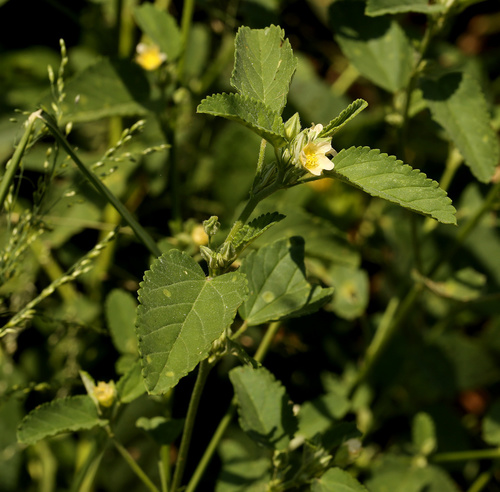
(c) Wynand Uys, some rights reserved (CC BY), uploaded by Wynand Uys
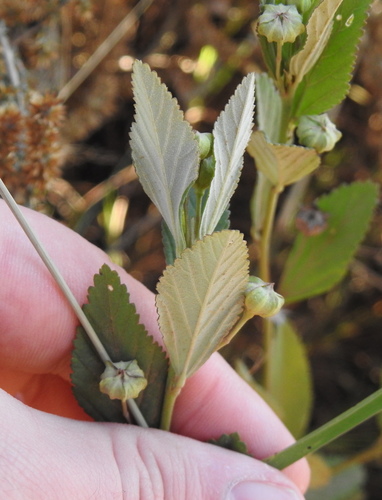
(c) Matthew Fainman, some rights reserved (CC BY), uploaded by Matthew Fainman
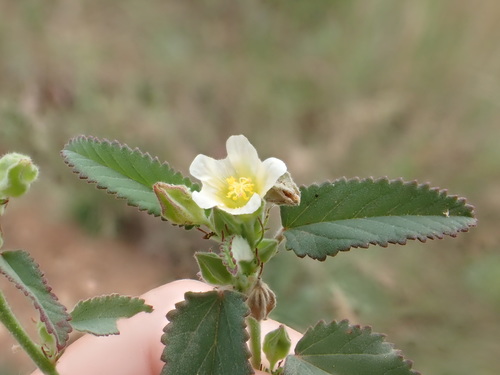
(c) Delia Oosthuizen, some rights reserved (CC BY-NC), uploaded by Delia Oosthuizen
What to Eat
Edible parts: Leaves, Vegetable
The leaves are cooked and eaten, or used in relishes and chutneys.
Where to Find It
A tropical plant. It often grows in wet areas on alluvial soils and flood plains near rivers. It grows in hot arid zones with a marked dry season. It grows between 120-1,465 m above sea level. It can tolerate shade. It can grow in arid places.
Africa, Angola, Australia, Benin, Bhutan, Botswana, Burkina Faso, Burundi, Cameroon, Canary Islands, Cape Verde, Central Africa, Chad, Colombia, Comoros, Congo, Côte d'Ivoire, East Africa, Egypt, Equatorial Guinea, Eswatini, Ethiopia, Europe, Gambia, Ghana, Himalayas, India, Ivory Coast, Kenya, India, Indonesia, Italy, Jamaica, Lesotho, Madagascar, Malawi, Mali, Mauritius, Mediterranean, Middle East, Mozambique, Namibia, Niger, Nigeria, North Africa, Pakistan, Reunion, Sao Tome and Principe, SE Asia, Senegal, Sierra Leone, South Africa, Southern Africa, South America, South Sudan, Sri Lanka, Sudan, Swaziland, Tanzania, Togo, Uganda, USA, West Africa, West Indies, Yemen, Zambia, Zimbabwe,
How to Identify
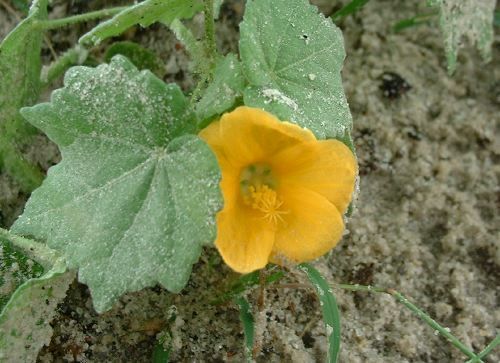
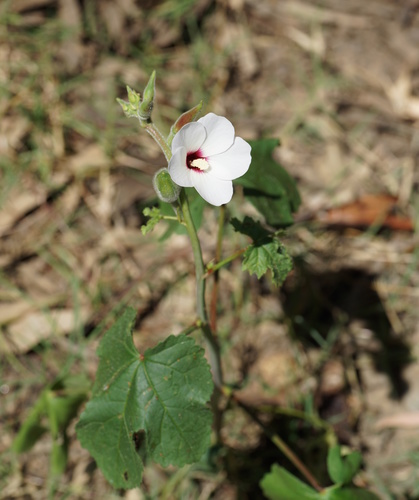
A small herb or shrub. It grows 30-80 cm high. The leaves have stalks and are arranged in spirals. They are oval but taper towards the tip. There are teeth along the edge. The teeth are small, blunt and of equal size. There is often a small 1 mm long peg below the leaf stalk and a pair of bristle like leaf structures 4-5 mm long on each side. The flowers are small and white or pale yellow. The flower stalk usually has a swelling a little below the flower. The flowers open early in the morning. The fruit are round and in 5 sections.
Production
The young leaves are plucked off the plant.
Notes
There are about 100 Sida species.
Names & Synonyms
Am gonaba, Chichibe, Gem thok, Katelko, Ladha, Lute, Orucuhya, Um hebiba, Um
References (17)
- Achigan-Dako, E, et al (Eds), 2009, Catalogue of Traditional Vegetables in Benin. International Foundation for Science.
- Agea, J. G., et al 2011, Wild and Semi-wild Food Plants of Bunyoro-Kitara Kingdom of Uganda: etc. Environmental Research Journal 5(2) 74-86
- CRÉAC'H,
- Fowler, D. G., 2007, Zambian Plants: Their Vernacular Names and Uses. Kew. p 46
- Fox, F. W. & Young, M. E. N., 1982, Food from the Veld. Delta Books. p 262
- Godfrey, J. et al, 2013, Harvesting, preparation and preservation of commonly consumed wild and semi-wild food plants in Bunyoro-Kitara Kingdom, Uganda. Int. J. Med. Arom. Plants. Vol.3 No.2 pp 262-282
- Goode, P., 1989, Edible Plants of Uganda. FAO p 39
- Grivetti, L. E., 1980, Agricultural development: present and potential role of edible wild plants. Part 2: Sub-Saharan Africa, Report to the Department of State Agency for International Development. p 71
- Grubben, G. J. H. and Denton, O. A. (eds), 2004, Plant Resources of Tropical Africa 2. Vegetables. PROTA, Wageningen, Netherlands. p 565
- Jardin, C., 1970, List of Foods Used In Africa, FAO Nutrition Information Document Series No 2.p 101
- Martin, F.W. & Ruberte, R.M., 1979, Edible Leaves of the Tropics. Antillian College Press, Mayaguez, Puerto Rico. p 72, 204
- Peters, C. R., O'Brien, E. M., and Drummond, R.B., 1992, Edible Wild plants of Sub-saharan Africa. Kew. p 145
- Royal Botanic Gardens, Kew (1999). Survey of Economic Plants for Arid and Semi-Arid Lands (SEPASAL) database. Published on the Internet; http://www.rbgkew.org.uk/ceb/sepasal/internet [Accessed 3rd May 2011]
- Scudder, 1962, 1971,
- Swaziland's Flora Database http://www.sntc.org.sz/flora
- Vernon, R., 1983, Field Guide to Important Arable Weeds of Zambia. Dept of Agriculture, Chilanga, Zambia. p 54
- Williamson, J., 2005, Useful Plants of Malawi. 3rd. Edition. Mdadzi Book Trust. p 226