Areca caliso
Becc.
Kaliso, Sakolon

iNaturalist · cc-by-sa
(c) filibot.web, some rights reserved (CC BY-SA)
(c) filibot.web, some rights reserved (CC BY-SA)

iNaturalist · cc-by-sa
(c) filibot.web, some rights reserved (CC BY-SA)
(c) filibot.web, some rights reserved (CC BY-SA)
What to Eat
Edible parts: Nuts, Fruit, Sap, Growing tip, Cabbage, Palm heart
The cooked bud is eaten, sap is collected as a drink (though of poor quality), and the nut serves as a substitute for betel nut. The growing tip, fruit, nuts, and palm heart are also edible parts.
Where to Find It
It is a tropical plant. They occur on mountain slopes and in dense humid forests of the Philippines. They are common in regions with a long dry season.
Asia, Pacific, Philippines, SE Asia,
Countries: United Arab Emirates, Afghanistan, Armenia, Australia, Azerbaijan, Bangladesh, Bahrain, Brunei, Bhutan, China, Fiji, Micronesia, Georgia, Indonesia, Israel, India, Iraq, Iran, Jordan, Japan, Kyrgyzstan, Cambodia, Kiribati, North Korea, South Korea, Kuwait, Kazakhstan, Laos, Lebanon, Sri Lanka, Marshall Islands, Myanmar, Mongolia, Maldives, Malaysia, Nepal, Nauru, New Zealand, Oman, Papua New Guinea, Philippines, Pakistan, Palau, Qatar, Saudi Arabia, Solomon Islands, Singapore, Syria, Thailand, Tajikistan, Timor-Leste, Turkmenistan, Tonga, Turkey, Tuvalu, Taiwan, Uzbekistan, Vietnam, Vanuatu, Samoa, Yemen
How to Identify
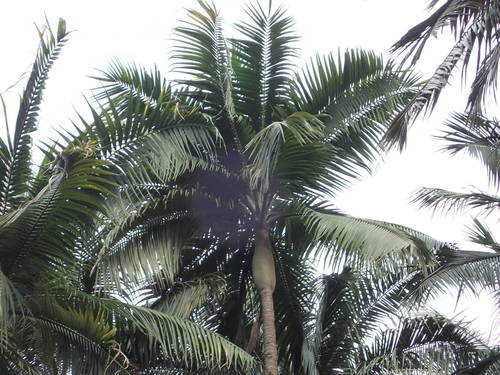
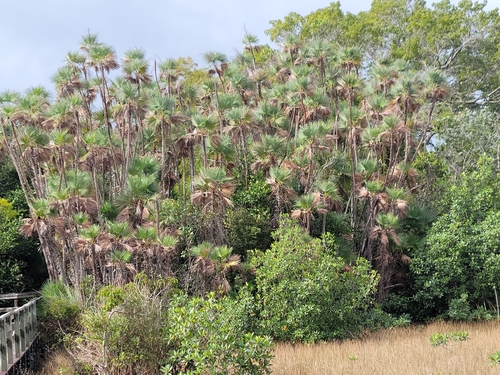
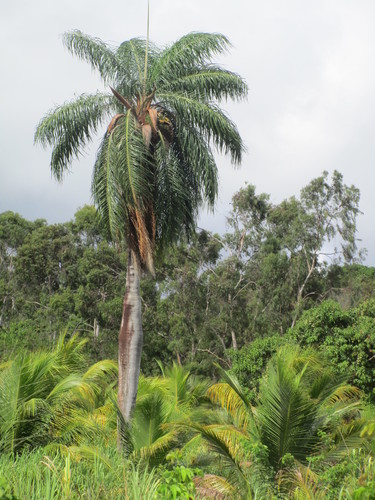
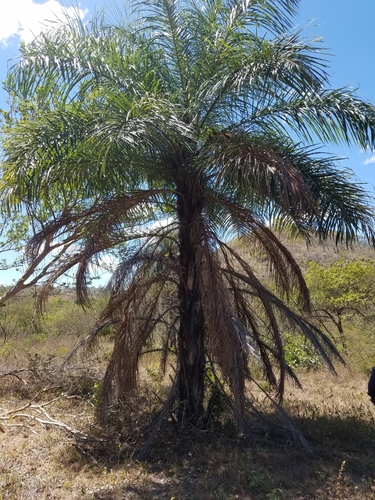
A slender palm about 7 to 15 cm across the trunk. They can be 7 m high. The leaves are about 3 m long.
Notes
There are 60 Areca species. They are tropical.
References (7)
- Bircher, A. G. & Bircher, W. H., 2000, Encyclopedia of Fruit Trees and Edible Flowering Plants in Egypt and the Subtropics. AUC Press. p 40
- Burkill, I.H., 1966, A Dictionary of the Economic Products of the Malay Peninsula. Ministry of Agriculture and Cooperatives, Kuala Lumpur, Malaysia. Vol 1 (A-H) p 223
- Haynes, J., & McLaughlin, J., 2000, Edible palms and Their Uses. University of Florida Fact sheet MCDE-00-50-1 p 2
- Leafl. Philipp. Bot. 8:2998. 1919
- Monsalud, M.R., Tongacan, A.L., Lopez, F.R., & Lagrimas, M.Q., 1966, Edible Wild Plants in Philippine Forests. Philippine Journal of Science. p 520
- Vossen, H. A. M. van der & M. Wessel, eds. 2000. Stimulants. In: Faridah Hanum, I. & L. J. G. van der Maesen, eds., Plant Resources of South-East Asia (PROSEA). (Pl Res SEAs) 16:123.
- World Checklist of Useful Plant Species 2020. Royal Botanic Gardens, Kew