Areca concinna
Thwaites
Lenateri
ArecaceaeSeeds/Nuts

iNaturalist · cc-by-sa
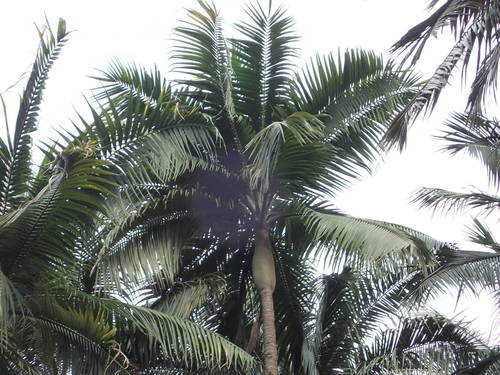
(c) Photo by David J. Stang, some rights reserved (CC BY-SA)
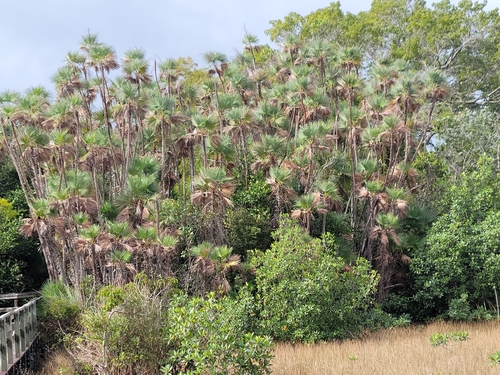
(c) Photo by David J. Stang, some rights reserved (CC BY-SA)

iNaturalist · cc-by-sa
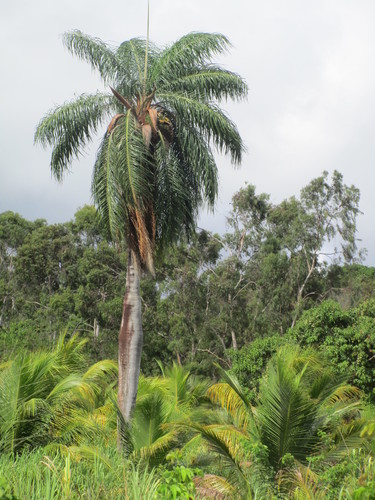
(c) Photo by David J. Stang, some rights reserved (CC BY-SA)
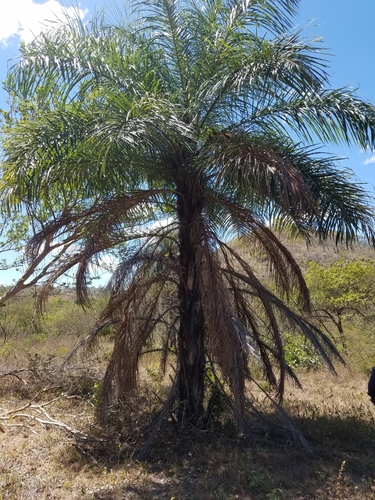
(c) Photo by David J. Stang, some rights reserved (CC BY-SA)
What to Eat
Edible parts: Nuts
The nuts are used as a betel substitute.
Where to Find It
A tropical plant. It grows in the lowland rainforest in Sri Lanka. It grows best in a shady situation. It likes plenty of moisture. Cairns Botanical Gardens. In XTBG Yunnan.
Asia, Australia, China, India, Sri Lanka,
Countries: United Arab Emirates, Afghanistan, Armenia, Australia, Azerbaijan, Bangladesh, Bahrain, Brunei, Bhutan, China, Georgia, Indonesia, Israel, India, Iraq, Iran, Jordan, Japan, Kyrgyzstan, Cambodia, North Korea, South Korea, Kuwait, Kazakhstan, Laos, Lebanon, Sri Lanka, Myanmar, Mongolia, Maldives, Malaysia, Nepal, Oman, Philippines, Pakistan, Qatar, Saudi Arabia, Singapore, Syria, Thailand, Tajikistan, Timor-Leste, Turkmenistan, Turkey, Taiwan, Uzbekistan, Vietnam, Yemen
How to Identify
A medium sized clumping palm. The fruit are in clusters. They are scarlet when ripe.
How to Grow
Plants are grown from seed.
Wikipedia
Source ↗Areca concinna is a species of flowering plant in the family Arecaceae. It is found only in Sri Lanka. It is threatened by habitat loss.
Notes
There are 60 Areca species. They are tropical.
Names & Synonyms
Len-teri
References (7)
- Ambasta S.P. (Ed.), 2000, The Useful Plants of India. CSIR India. p 50
- Haynes, J., & McLaughlin, J., 2000, Edible palms and Their Uses. University of Florida Fact sheet MCDE-00-50-1 p 2
- Johnson, D.V., 1998, Tropical palms. Non-wood Forest products 10. FAO Rome. p 20
- Jones, D.L., 1994, Palms throughout the World. Smithtonian Institution, Washington. p 128
- Jones, D.L., 2000, Palms of Australia 3rd edition. Reed/New Holland. p 115
- Menninger, E.A., 1977, Edible Nuts of the World. Horticultural Books. Florida p 167
- G. H. K. Thwaites & J. D. Hooker, Enum. pl. zeyl. 328. 1864