Areca ipot
Becc.
Bungang-ipot

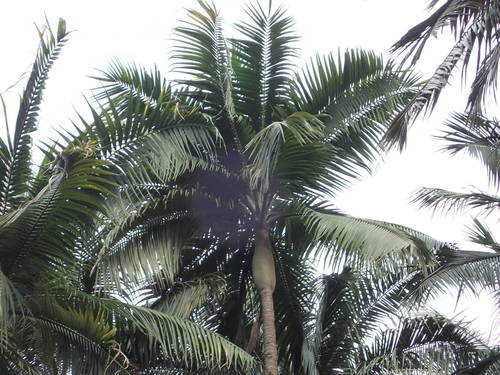
(c) Scott Zona, some rights reserved (CC BY-NC)

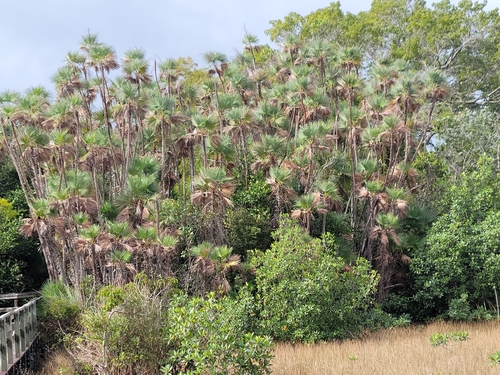
(c) Greg III Espera, some rights reserved (CC BY), uploaded by Greg III Espera
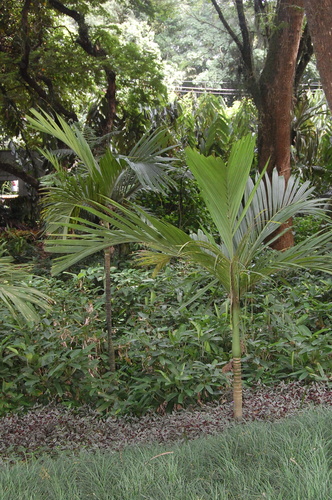
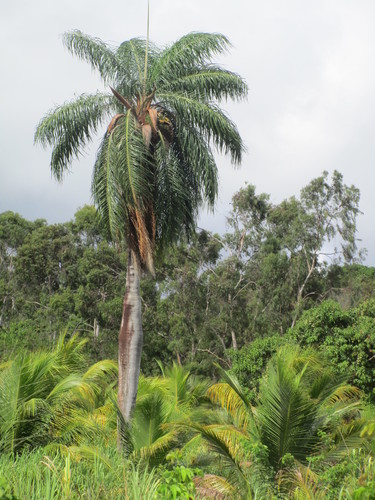
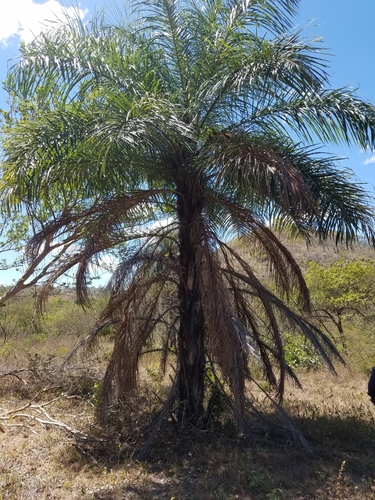
(c) Igor Azevedo, some rights reserved (CC BY-NC), uploaded by Igor Azevedo
What to Eat
Edible parts: Nuts, Palm heart, Cabbage
The nut is occasionally used as a betel substitute. The palm heart is edible.
Where to Find It
A tropical and subtropical palm. It does best in a shady position and needs plenty of water. It suits hardiness zones 11-12. In the Cairns Botanical Gardens.
Asia, Australia, Pacific, Philippines, SE Asia,
How to Identify
A palm like betel nut but smaller and more slender. It grows to 3.5-4.5 m high. It has a single trunk and has distinct rings due to leaf scars. The trunk is 8-12 cm across. The crown-shaft due to the leaf bases is swollen. The crown spreads 3 m across. The leaves have a mixture of wide and narrow leaflets on the one leaf. The ends of the leaflets are ragged. The flowering stalk comes below the crown-shaft. The fruit are red when ripe and 5 cm long. The seed are oval but flattened at one end.
How to Grow
Plants are grown from fresh seed. Seed germinate quickly.
Wikipedia
Source ↗Areca ipot, the Ipot palm, is a species of flowering plant in the family Arecaceae. It is endemic to the Philippines. It is threatened by habitat loss.
Production
The plant grows quickly.
Notes
There are 60 Areca species. They are tropical.
References (10)
- Cundall, P., (ed.), 2004, Gardening Australia: flora: the gardener's bible. ABC Books. p 180
- Etherington, K., & Imwold, D., (Eds), 2001, Botanica's Trees & Shrubs. The illustrated A-Z of over 8500 trees and shrubs. Random House, Australia. p 103
- Gibbons, M., 1993, Palms. Compact study Guide and Identifier. Sandstone. p 17
- Haynes, J., & McLaughlin, J., 2000, Edible palms and Their Uses. University of Florida Fact sheet MCDE-00-50-1 p 2
- Johnson, D.V., 1998, Tropical palms. Non-wood Forest products 10. FAO Rome. p 44
- Jones, D.L., 1994, Palms throughout the World. Smithtonian Institution, Washington. p 56, 129
- Jones, D.L., 2000, Palms of Australia 3rd edition. Reed/New Holland. p 116
- Leafl. Philipp. Bot. 2:639. 1909
- Menninger, E.A., 1977, Edible Nuts of the World. Horticultural Books. Florida p 167
- Riffle, R.L. & Craft, P., 2003, An Encyclopedia of Cultivated Palms. Timber Press. p 30, 254