Arenga tremula
(Blanco) Becc.
Philippine dwarf sugar palm
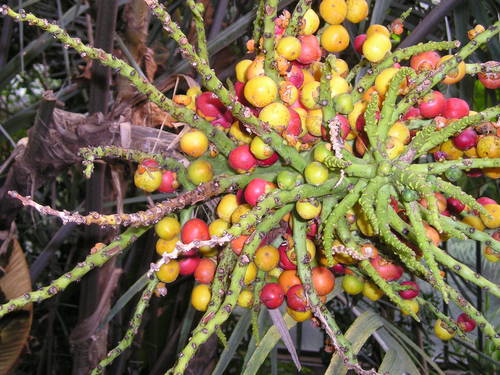
(с) Archibald Tuttle, некоторые права защищены (CC BY-SA)
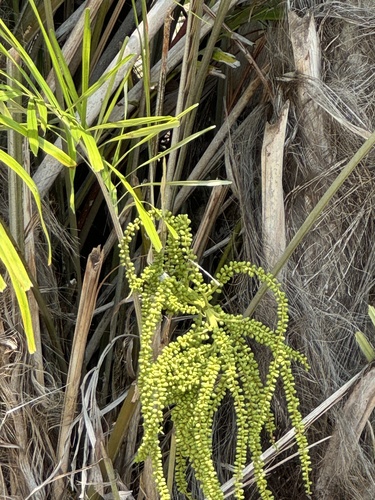
(c) Geovane Siqueira, some rights reserved (CC BY-NC)
What to Eat
Edible parts: Sap, Cabbage, Bud
The apical bud (known as a 'palm heart') of all the species in this genus is edible and is used as a vegetable. However, consuming large quantities of the buds is not advised since, in some species (especially Arenga tremula) they can provoke toxic effects. Harvesting the apical bud also leads to the death of the individual stem, since it is unable to produce side shoots, though any other stems on the plant continue to grow. The stems are a source of starch.
Known Hazards
Where to Find It
A tropical plant. They are widely distributed in the central Philippines but of very local occurrence where they can occur in significant numbers. They grow in tropical areas and also warm temperate places. It suits hardiness zones 10-12. In the Cairns Botanical Gardens.
Asia, Australia, Indonesia, Malaysia, Pacific, Philippines*, SE Asia,
How to Identify
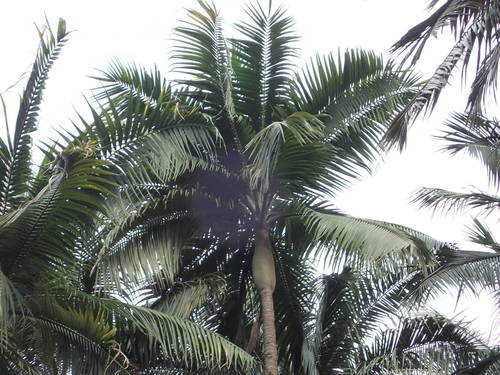
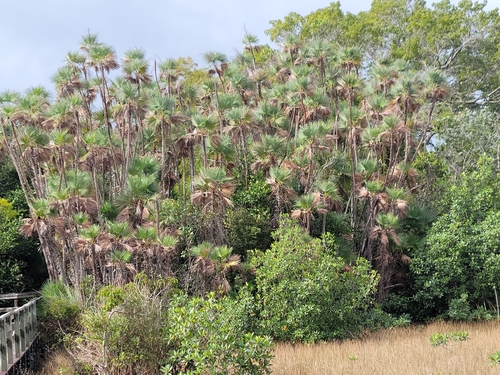
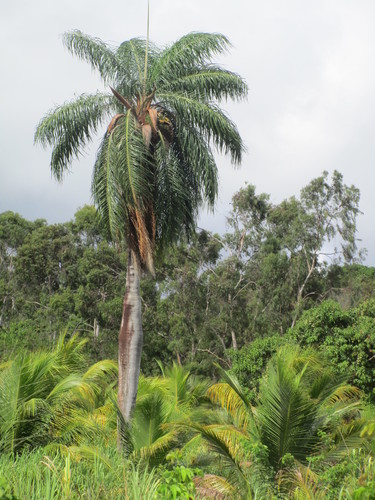
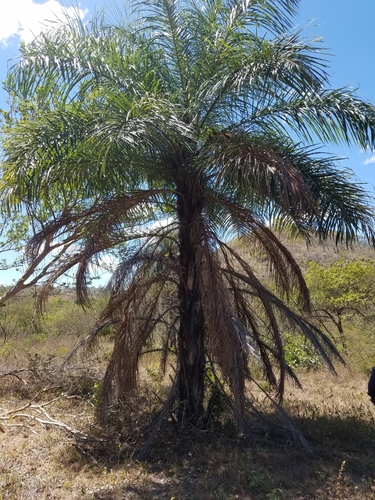
A small sized palm often growing in large clumps or tufts. They are very distinctly ornamental. They grow to about 3 or 4 m high and the trunk is usually very short or almost absent. The leaf stalks are rather long and the leaflets narrow. They are 20 to 35 mm long and 13 to 18 mm wide. They are toothed and sometimes slightly lobed at the tip. The flower is large and held above the leaves.
How to Grow
Plants can be grown from seed.
Propagation: Seed - a deep root is formed before the seedling emerges above soil level, and so the seed should be sown in individual, deep containers. Pre-soak the seed for 24 hours in warm water before sowing. It can take 3 - 6 months or more before signs of growth are seen above soil level.
Other Uses
The leaves are used for thatching and wickerwork. The petioles and midribs are used to make baskets.
Notes
There are 17-20 Arenga species.
Names & Synonyms
Dumayaka, Palem aren mini filipina
References (9)
- Bircher, A. G. & Bircher, W. H., 2000, Encyclopedia of Fruit Trees and Edible Flowering Plants in Egypt and the Subtropics. AUC Press. p 40
- Burkill, I.H., 1966, A Dictionary of the Economic Products of the Malay Peninsula. Ministry of Agriculture and Cooperatives, Kuala Lumpur, Malaysia. Vol 1 (A-H) p 232
- Cundall, P., (ed.), 2004, Gardening Australia: flora: the gardener's bible. ABC Books. p 181
- Jones, D.L., 1994, Palms throughout the World. Smithtonian Institution, Washington. p 136
- Jones, D.L., 2000, Palms of Australia 3rd edition. Reed/New Holland. p 119
- Monsalud, M.R., Tongacan, A.L., Lopez, F.R., & Lagrimas, M.Q., 1966, Edible Wild Plants in Philippine Forests. Philippine Journal of Science. p 519
- Philipp. J. Sci., C 4:612. 1909
- Riffle, R.L. & Craft, P., 2003, An Encyclopedia of Cultivated Palms. Timber Press. p 38, 260
- Sukarya, D. G., (Ed.) 2013, 3,500 Plant Species of the Botanic Gardens of Indonesia. LIPI p 754