Tessaria absinthioides
(Hook. & Arn.) DC
Brea
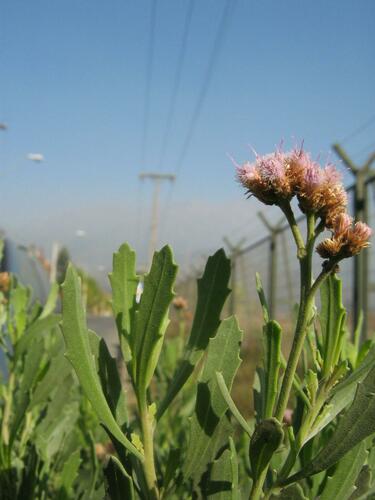
user:penarc, no known copyright restrictions (public domain)

(c) Diego Almendras G., some rights reserved (CC BY-NC)
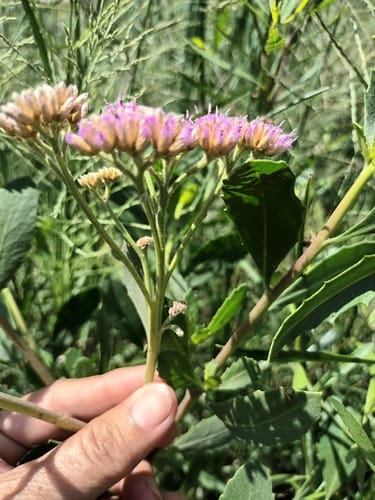
(c) olgaarica, some rights reserved (CC BY-NC)
What to Eat
Edible parts: Roots
The roots are edible.
Where to Find It
It is a subtropical plant. In Argentina it grows from sea level to 3,000 m above sea level.
Argentina, Bolivia, Brazil, Chile*, Paraguay, South America*, Uruguay,
How to Identify
A shrub. It keeps growing from year to year. It grows 1-2 m tall. The leaves are alternate and broadly sword shaped. They are 5-8 cm long by 0.5-1.2 cm wide.
Wikipedia
Source ↗Tessaria absinthioides is a halophytic species of flowering plant in the family Asteraceae. While it prefers to grow along river beds, it is extremely adaptable to many different environments, the most notable being the Atacama Desert. Here, in the Pampa del Tamarugal, the plant gains moisture almost exclusively through fog. It is also known as a compass plant.
Names & Synonyms
Callacozo, Chilquilla, Pajaro bobo, Peril, Soona, Suncho negro, Suncho rosado
References (4)
- Aldunate, C. et al, 1983, Ethnobotany of pre-Altiplanic Community in the Andes of Northern Chile. Economic Botany 37( ) p 120-134
- Leon-Lobos, P., et al, 2022, Patterns of Traditional and Modern Uses of Wild Edible Native Plants of Chile: Challenges and Future Perspectives. Plants (Basel) v 11 (6) Table S1
- Malezas Comestibles del Cono Sur, INTA, 2009, Buernos Aires
- Ugalde, P. C., et al, 2020, 13,000 years of sociocultural plant use in the Atacama Desert of northern Chile. Vegetation History and Archaeobotany. Springer