Tragopogon dubius
Scopoli
Yellow Goatsbeard, Western Salsify, Yellow salsify
(c) Sokolov Yuriy Ivanovich, some rights reserved (CC BY-NC)

(c) Lilly Linden, some rights reserved (CC BY-NC)

(c) Lilly Linden, some rights reserved (CC BY-NC)
What to Eat
Edible parts: Leaves, Root, Stem, Gum
The fleshy root can be eaten raw or cooked. Young stems when 5–10 cm high, along with the bases of the lower leaves, can be eaten raw or cooked as a potherb.
Where to Find It
It is a temperate plant. It grows in dry woodland and rough grassy places. In western China it grows on stony steppes and grassy slopes at the base of mountains between 500-2,000 m above sea level. In Argentina it grows from sea level to 1,000 m above sea level.
Alaska, Argentina, Armenia, Asia, Australia, Balkans, Canada, Caucasus, Central Asia, Chile, China, Croatia, Europe*, France, Greece, Italy, Kazakhstan, Korea, Mediterranean, North America, Portugal, Russia, Slovenia, South America, Spain, Turkey, Türkiye, USA,
How to Identify
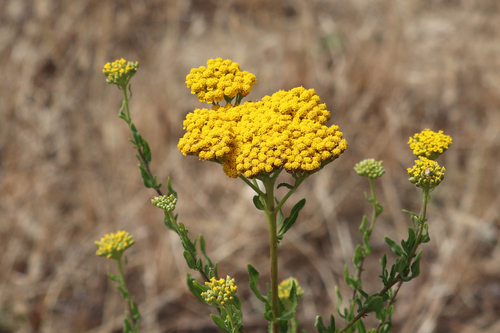
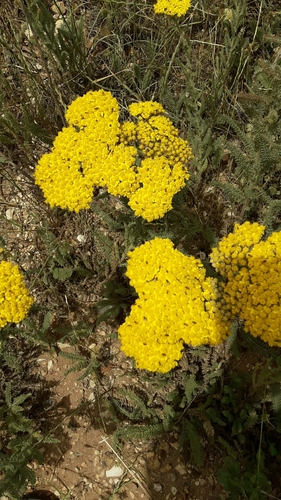
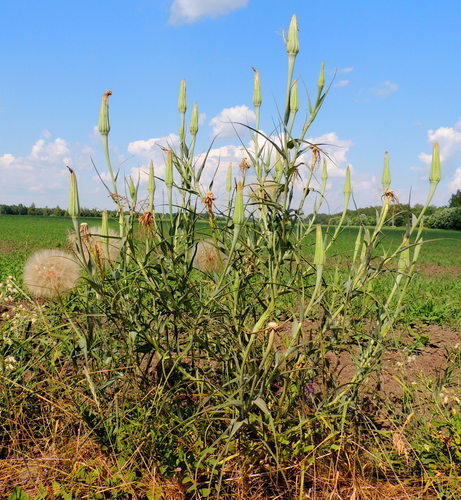
A herb that takes 2 years to complete its life cycle. It is like a large dandelion. In grows 20-60 cm tall. It is very similar to Salsify except it has yellow flowers. The flower stalks are strongly inflated below the flower heads. There are 8-12 flower bracts. The flower heads occur singly and are 3-5 cm across. The fruit is a narrow long-beaked achene.
How to Grow
Succeeds in ordinary garden soils, including heavy clays.
Propagation: Sow seed in spring directly in situ. Water in well if the weather is dry.
Medicinal Uses
None known.
Other Uses
None known.
Wikipedia
Source ↗Tragopogon dubius, commonly known as yellow salsify, is a species of salsify with yellow flower heads. It is native to Eurasia and has been introduced to North America.
Other Information
The sap is especially chewed by children. It is sold in local markets.
Notes
There are about 50 Tragopogon species.
Names & Synonyms
Atyemligi, Cercifim, Salsifi silvestre, Velika kozja brada
References (24)
- Blamey, M and Grey-Wilson, C., 2005, Wild flowers of the Mediterranean. A & C Black London. p 464
- Bowser, M., 2017, Handout on Edible Plants of the Kenai Peninsula. USFWS Kenai National Wildlife Refuge p 10
- Cakir, E. A., 2017, Traditional knowledge of wild edible plants of Iğdır Province (East Anatolia, Turkey). Acta Soc Bot Pol. 2017;86(4):3568
- Cormack, R. G. H., 1967, Wild Flowers of Alberta. Commercial Printers Edmonton, Canada. p 400
- Diaz-Betancourt, M., et al, 1999, Weeds as a future source for human consumption. Rev. Biol. Trop. 47(3):329-338
- Duke, J.A., 1992, Handbook of Edible Weeds. CRC Press. p 197
- Elias, T.S. & Dykeman P.A., 1990, Edible Wild Plants. A North American Field guide. Sterling, New York p 106
- Ertug, F, Yenen Bitkiler. Resimli Türkiye Florası -I- Flora of Turkey - Ethnobotany supplement
- Facciola, S., 1998, Cornucopia 2: a Source Book of Edible Plants. Kampong Publications, p 44
- Fl. carniol. ed. 2, 2:95. 1772
- http://www.stoller-eser.com/Flora/ethnobotany_table.htm
- http://www.botanic-gardens-ljubljana.com/en/plants
- Kermath, B. M., et al, 2014, Food Plants in the Americas: A survey of the domesticated, cultivated and wild plants used for Human food in North, Central and South America and the Caribbean. On line draft. p 872
- Kiple, K.F. & Ornelas, K.C., (eds), 2000, The Cambridge World History of Food. CUP p 1816
- Lim, T. K., 2015, Edible Medicinal and Non Medicinal Plants. Volume 9, Modified Stems, Roots, Bulbs. Springer p 82
- Low, T., 1991, Wild Herbs of Australia and New Zealand. Angus & Robertson. p 32
- Luczaj et al, 2013, Wild vegetable mixes sold in the markets of Dalmatia (southern Croatia). Journal of Ethnobiology and Ethnomedicine. 8:2
- MacKinnon, A., et al, 2009, Edible & Medicinal Plants of Canada. Lone Pine. p 331
- Malezas Comestibles del Cono Sur, INTA, 2009, Buernos Aires
- Nanagulyan, S., et al, 2020, Wild plants and fungi sold in the markets of Yerevan (Armenia). Journal of Ethnobiology and Ethnomedicine 16:26
- Plants for a Future database, The Field, Penpol, Lostwithiel, Cornwall, PL22 0NG, UK. http://www.scs.leeds.ac.uk/pfaf/
- Senkardes, I & Tuzlaci, E., 2016, Wild Edible Plants of Southern Part of Nevsehir inTurkey. Marmara Pharmaceutical Journal 20:34-43
- Stubbs, R. D., 1966, An investigation of the Edible and Medicinal Plants used by the Flathead Indians. MA thesis University of Montana. p 41
- www.ediblewildfood.com