Trema tomentosum
(Roxb.) H. Hara
Poison Peach
no rights reserved
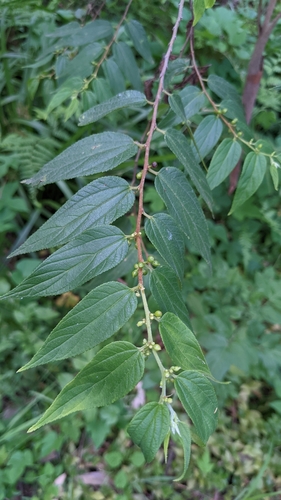
no rights reserved
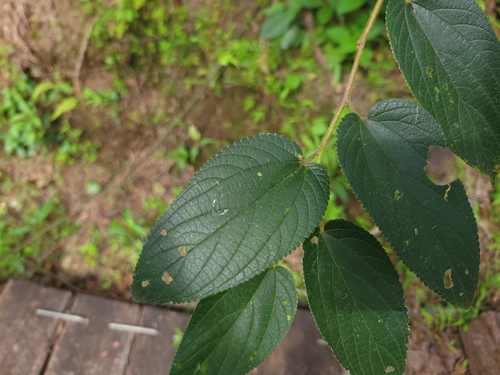
(c) 曾昱承 Yu-Cheng Zeng, some rights reserved (CC BY-NC)
What to Eat
Edible parts: Insect larvae, Caution
Aboriginal people in Australia cooked and ate the larvae of wood-boring insects that inhabit this plant.
Known Hazards
Where to Find It
A tropical plant. It grows in tropical and subtropical areas.
Africa, Asia, Australia, Bhutan, Cambodia, China, East Africa, East Timor, Himalayas, India, Indochina, Japan, Laos, Madagascar, Malaysia, Myanmar, Nepal, Northeastern India, Pacific Islands, Pakistan, Ryuku, SE Asia, Sikkim, Timor-Leste, Vietnam,
How to Identify
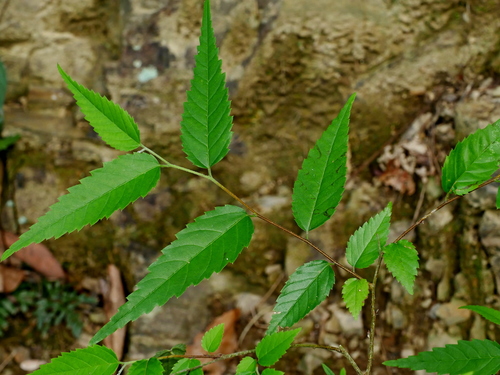
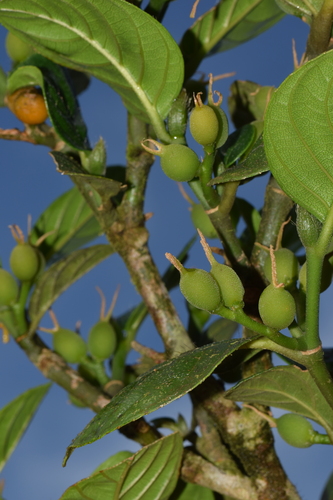
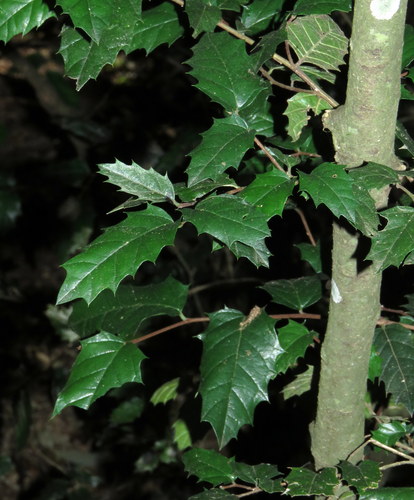
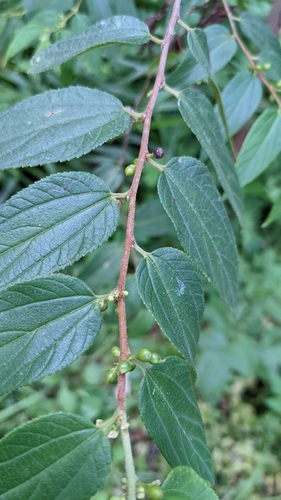
A shrub with several stems. It grows 4 m high. The stems are covered with stiff hairs. The leaves are alternate. They vary in shape but are oval. They can be 2-13 cm long by 1-5 cm wide. The leaves are rough to touch. The leaves have teeth along the edge and a pointed tip. They are paler underneath. The flowers are green or white. They are on short stalks in the axils of leaves. The male and female flowers are separate on the same plant. The fruit are fleshy and round. They are 3 mm across. They occur in bunches are change from green to black as they mature.
How to Grow
Plants can be grown from seed or cuttings.
Notes
Also put in the family Ulmaceae.
Names & Synonyms
Kywe-sa, Satsha
References (12)
- Cowie, I, 2006, A Survey of Flora and vegetation of the proposed Jaco-Tutuala-Lore National Park. Timor-Lests (East Timor) www.territorystories.nt/gov.au p 55
- Fl. E. Himalaya 2:19. 1971 "tomentosa" [As tomentosum] - may not be specifically distinct from T. orientalis (L.) Blume\; the genus is of neuter gender according to NCU-3
- Flora of China @ efloras.org Volume 5
- Hibbert, M., 2002, The Aussie Plant Finder 2002, Florilegium. p 301 (var. viridus)
- Jackes, B.R., 2001, Plants of the Tropics. Rainforest to Heath. An Identification Guide. James Cook University. p 85
- Lazarides, M. & Hince, B., 1993, Handbook of Economic Plants of Australia, CSIRO. p 238
- Melzer, R. & Plumb, J., 2011, Plants of Capricornia. Belgamba, Rockhampton. p 352
- Milson, J., 2000, Trees and Shrubs of north-west Queensland. DPI p 298
- Paczkowska, G . & Chapman, A.R., 2000, The Western Australian Flora. A Descriptive Calatogue. Western Australian Herbarium. p 565
- Townsend, K., 1994, Across the Top. Gardening with Australian Plants in the tropics. Society for Growing Australian Plants, Townsville Branch Inc. p 359
- Wheeler, J.R.(ed.), 1992, Flora of the Kimberley Region. CALM, Western Australian Herbarium, p 76
- Williams, K.A.W., 1999, Native Plants of Queensland Volume 4. Keith A.W. Williams North Ipswich, Australia. p 372