Trillium ovatum
Pursh
Wakerobin, Western trillium, Pacific trillium

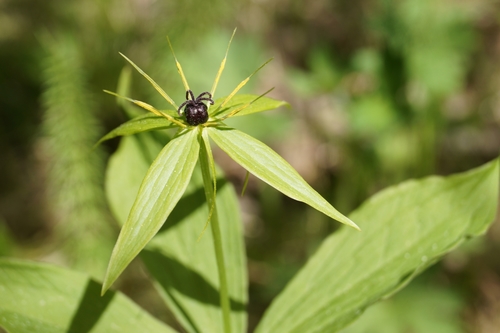
(c) Brent Miller, some rights reserved (CC BY-NC-ND)

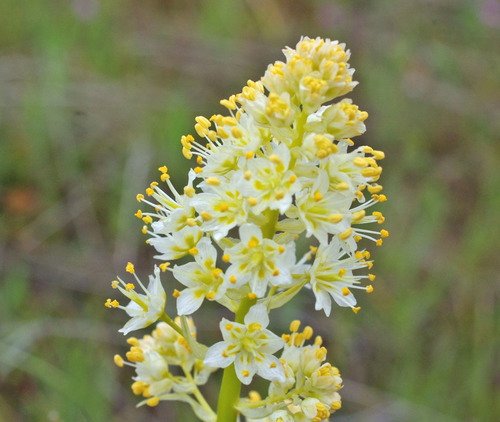
(c) Brian Starzomski, some rights reserved (CC BY-NC), uploaded by Brian Starzomski

(c) Mike Patterson, some rights reserved (CC BY-NC), uploaded by Mike Patterson
What to Eat
Edible parts: Leaves
The leaves are sometimes cooked and eaten as greens.
Where to Find It
It is a temperate plant. In Canada it grows in moist forests and moist open places. It suits hardiness zones 6-9.
Australia, Canada, North America, USA,
How to Identify
A small plant. It grows 15 cm high and spreads 15-20 cm wide. The leaflets are narrow and 5 cm long. They can be blue-green. The flowers are white. The petals are 25 mm long.
How to Grow
Prefers a deep well-drained woodland or humus-rich soil in a somewhat shady position that remains moist in the summer. Prefers a neutral to slightly acid soil. Grows well in open woodland. Succeeds in deep shade. Succeeds in a sunny position if the soil does not dry out. Any transplanting is best done whilst the plants are in flower. Plants can flower in two years from seed. Members of this genus are rarely if ever troubled by browsing deer or rabbits, though slugs are very fond of the leaves.
Propagation: Seed is best sown in a shaded cold frame as soon as it is ripe. Stored seed should be sown in late winter or early spring. Germination usually occurs within 1–3 months at 15°C, though some reports indicate seeds produce a root after the first cold stratification but no shoot until after a second winter; others suggest germination can take up to 3 years. Seedlings are prone to damping off and must be watered carefully with good air circulation. Young plants should be overwintered in a cold frame in their first year, then planted out in late spring. Pots must not become too dry or too wet. Divide with care when plants die down after flowering. Larger divisions can go directly into permanent positions; smaller divisions are best potted up and grown on in light shade in a greenhouse or cold frame until establishing well, then planted out the following spring.
Medicinal Uses
A decoction of the fresh or dried powdered root is used to treat sore eyes, and fresh root juice can be dripped directly into an affected eye. The juice of the plant can be applied externally to treat boils, as can a poultice made from the root. The thick underground root stalks were used by some native North American Indian tribes as a birthing aid during childbirth.
Other Uses
None known.
Wikipedia
Source ↗Trillium ovatum, commonly known as the Pacific trillium, western wakerobin, western white trillium, or western trillium, is a species of flowering plant in the family Melanthiaceae. It is the most widespread and abundant trillium in western North America. Its type specimen was gathered by Meriwether Lewis during the return trip of the Lewis and Clark Expedition in 1806.
Notes
There are about 46 Trillium species. Also put in the family Trilliaceae.
References (4)
- Cundall, P., (ed.), 2004, Gardening Australia: flora: the gardener's bible. ABC Books. p 1431
- Fl. Amer. sept. 1:245. 1813-1814
- MacKinnon, A., et al, 2009, Edible & Medicinal Plants of Canada. Lone Pine. p 173
- Plants for a Future database, The Field, Penpol, Lostwithiel, Cornwall, PL22 0NG, UK. http://www.scs.leeds.ac.uk/pfaf/