Zamia floridana
A. DC.
Seminole Bread

iNaturalist · cc-by
(c) Ashwin Srinivasan, some rights reserved (CC BY)
(c) Ashwin Srinivasan, some rights reserved (CC BY)

iNaturalist · cc-by
(c) Ashwin Srinivasan, some rights reserved (CC BY)
(c) Ashwin Srinivasan, some rights reserved (CC BY)

iNaturalist · cc-by
(c) Ashwin Srinivasan, some rights reserved (CC BY)
(c) Ashwin Srinivasan, some rights reserved (CC BY)
What to Eat
Edible parts: Seeds, Roots, Stem starch
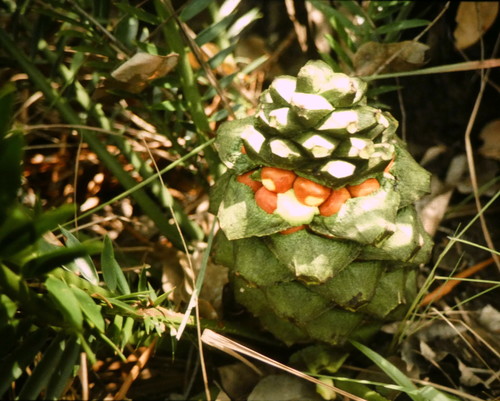
The roots when properly prepared yield an arrowroot-type starch used for bread or porridge. The trunk also yields starch. Seeds and stem starch are edible portions.
Known Hazards
Where to Find It
It is a subtropical and tropical plant. In Rockhampton Botanical Gardens.
Australia, Bahamas, Central America, Cuba, North America, Pakistan, Puerto Rico, USA, West Indies,
Countries: Antigua & Barbuda, Australia, Barbados, Bahamas, Belize, Canada, Costa Rica, Cuba, Dominica, Dominican Republic, Grenada, Guatemala, Honduras, Haiti, Jamaica, St Kitts & Nevis, St Lucia, Mexico, Nicaragua, Panama, Pakistan, Puerto Rico, El Salvador, Trinidad & Tobago, United States, St Vincent
How to Identify
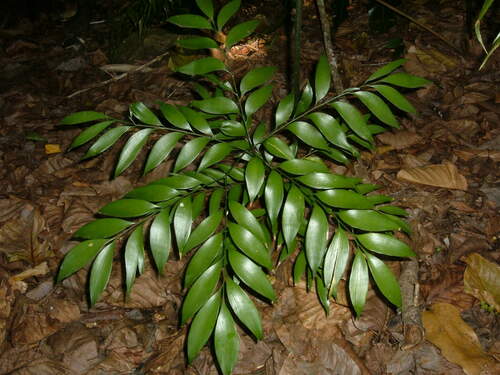
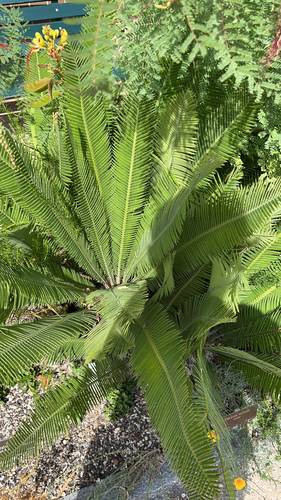
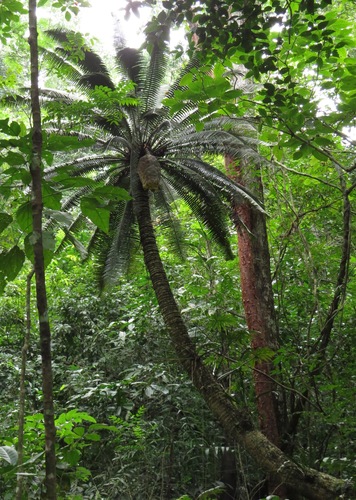
A small cycad from subtropical and tropical regions. The plant yields starch from both its roots and trunk that can be processed into an arrowroot-type starch.
Notes
There are about 55 Zamia species.
Names & Synonyms
Comptie, Coontie
Zamia tenuis Willd.and others
References (12)
- Beckstrom-Sternberg, Stephen M., and James A. Duke. "The Foodplant Database." http://probe.nalusda.gov:8300/cgi-bin/browse/foodplantdb.(ACEDB version 4.0 - data version July 1994)
- Facciola, S., 1998, Cornucopia 2: a Source Book of Edible Plants. Kampong Publications, p 247
- Flora of Pakistan. www.eFloras.org (As Zamia angutifolia)
- Hedrick, U.P., 1919, (Ed.), Sturtevant's edible plants of the world. p 692 (As Zamia tenuis)
- Hibbert, M., 2002, The Aussie Plant Finder 2002, Florilegium. p 310
- Jones, D.L., 2000, Cycads of the world. Reed New Holland. p 280
- Kermath, B. M., et al, 2014, Food Plants in the Americas: A survey of the domesticated, cultivated and wild plants used for Human food in North, Central and South America and the Caribbean. On line draft. p 936
- Lim, T. K., 2015, Edible Medicinal and Non Medicinal Plants. Volume 9, Modified Stems, Roots, Bulbs. Springer p 87
- Morton,
- Prodr. 16(2):544. 1868
- Saunders, C.F., 1948, Edible and Useful Wild Plants. Dover. New York. p 28
- Wickens, G.E., 1995, Edible Nuts. FAO Non-wood forest products. FAO, Rome. p 179