Dioon edule
Lindley
Mexican Fern palm, Mexican cycad, Edible-seed cycas
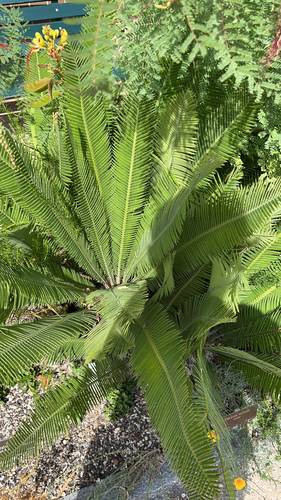
(c) aonatur, some rights reserved (CC BY-NC)
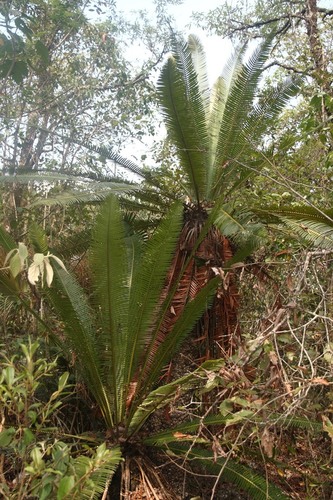
(c) Juan Cruzado Cortés, some rights reserved (CC BY-SA), uploaded by Juan Cruzado Cortés
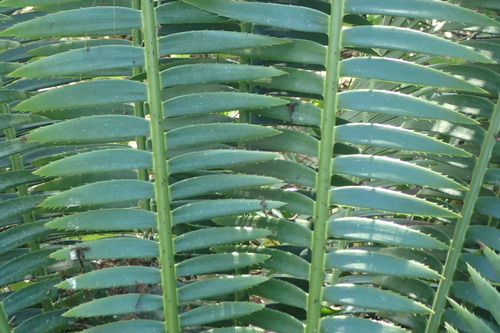
(c) Ron Vanderhoff, some rights reserved (CC BY-NC), uploaded by Ron Vanderhoff
What to Eat
Edible parts: Seeds
The seeds yield a starch used as an arrowroot substitute and in tortillas. The seeds are eaten boiled or roasted.
Known Hazards
Where to Find It
A tropical plant. It grows in tropical conditions. It grows in deciduous and oak forests up to 1,500 m above sea level. In Adelaide Botanical Gardens. In the Cairns Botanical Gardens. It suits hardiness zones 10-12.
Asia, Australia, Brazil, Central America, Europe, Germany, Guatemala, Indonesia, Mexico*, North America, SE Asia, South America, USA,
How to Identify
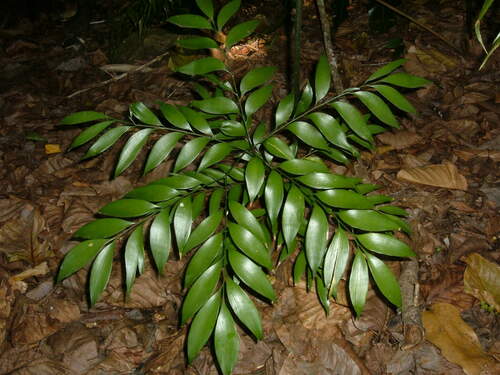
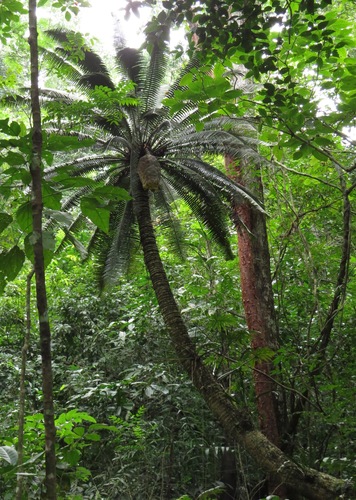
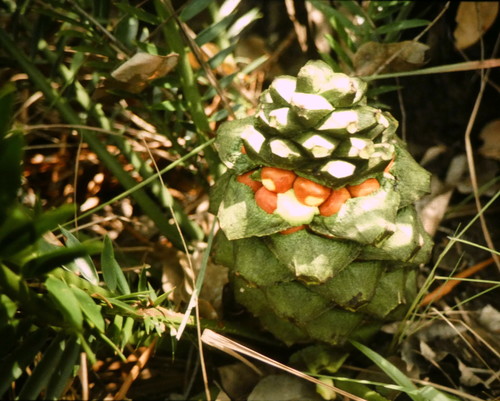
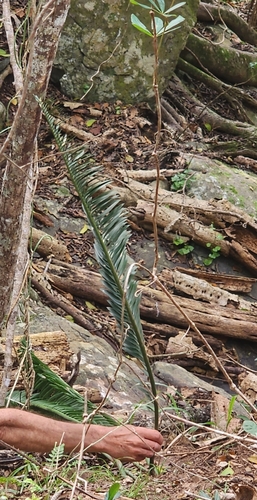
A medium sized cycad. The trunk can be 3 m long. It can be erect or lie over. It is 30 cm across. The leaves are stiff and form an oblique crown. The leaves are 0.7-1.4 m long. They are broadest near the middle and taper to the end. The leaf stalk is 10-15 cm long. It is swollen at the base and lacks prickles. There are 120-160 leaflets in each leaf. The male cone is 20-40 cm long by 6-10 cm wide. It is like a cylinder. The female cones are 20-35 cm long and 12-20 cm wide. They are oval and hairy. The seeds are 2.5-3.5 cm
How to Grow
It can be grown from seed or from offshoots near the base. The seeds need to be stored for 6-8 months before they will germinate.
Propagation: Seed - surface sow on damp sand at a temperature of 24 - 32°c. On emergence of the radicle, pot the seedling into its own pot of a sandy compost and grow on in shaded warm conditions. Avoid any damage to the taproot and coralloid roots when repotting. Repot and feed frequently to encourage development and plant out when whorls of leaves are being produced, which can be 4 - 8 years.
Medicinal Uses
A decoction of the seeds is used to treat neuralgia.
Other Uses
A gum can be obtained from the petiole. No more details.
Wikipedia
Source ↗Dioon edule, the chestnut dioon, is a cycad native to Mexico, also known as palma de la virgen. Cycads are among the oldest seed plants and even pre-date the dinosaurs. It belongs to the Zamiaceae plant family within the order Cycadales. The genus name "Dioon" means "two-egged", referring to the two ovules (see photo below). Two subspecies are known, the nominate subspecies growing in a moister environment than the other: Dioon edule subsp. angustifolium Dioon edule subsp. edule
Notes
There are 10 Dioon species. They occur in Central America.
Names & Synonyms
Chamal, Cica, Palma de teresita, Quiotamal, Sikas palem gadis, Sikas palem meksiko, Tiotamal, Virgin palm
References (15)
- Brouk, B., 1975, Plants Consumed by Man. Academic Press, London. p 229
- Cundall, P., (ed.), 2004, Gardening Australia: flora: the gardener's bible. ABC Books. p 502
- Edward's Bot. Reg. 29: misc. 59. 1843
- Etherington, K., & Imwold, D., (Eds), 2001, Botanica's Trees & Shrubs. The illustrated A-Z of over 8500 trees and shrubs. Random House, Australia. p 263
- GBIF
- Hedrick, U.P., 1919, (Ed.), Sturtevant's edible plants of the world. p 271
- Hibbert, M., 2002, The Aussie Plant Finder 2002, Florilegium. p 87
- Jones, D.L., 2000, Cycads of the world. Reed New Holland. p 166
- Mapes, C. & Basurto, F., 2016, Biodiversity and Edible Plants of Mexico. Chapter 5 in R. Lira, et al. (eds.), Ethnobotany of Mexico, Ethnobiology, Springer. p 91
- Marinelli, J. (Ed), 2004, Plant. DK. p 369
- Menninger, E.A., 1977, Edible Nuts of the World. Horticultural Books. Florida p 163
- Piedra-Malagón, E. M., et al, 2022, Edible native plants of the Gulf of Mexico Province. Biodiversity Data Journal 10: e80565 p 32
- Segura, S., et al, 2018, The edible fruit species in Mexico. Genet Resour Crop Evol (2018) 65:1767–1793
- Sukarya, D. G., (Ed.) 2013, 3,500 Plant Species of the Botanic Gardens of Indonesia. LIPI p 827
- Wickens, G.E., 1995, Edible Nuts. FAO Non-wood forest products. FAO, Rome. p174