Pinus sibirica
Du Tour
Siberian stone pine, Siberian cedar pine

(c) ugraland, some rights reserved (CC BY)

(c) Olga Demina, some rights reserved (CC BY-NC)
What to Eat
Edible parts: Seeds
The highly nutritious seeds (64% fat) are eaten fresh or pressed for cooking oil. The leaves are brewed into tea.
Where to Find It
It is a temperate plant. It grows in mountains usually scattered in ridges and rocks between 1000-1600 m altitude. It is very cold hardy. It suits a continental climate. It needs moist air and good rainfall. It is best in a well-drained, deep loamy soil.
Asia, Australia, Central Asia, China, Europe, Finland, Indochina, Kazakhstan, Mongolia, Russia, Scandinavia, SE Asia, Siberia, Vietnam,
How to Identify
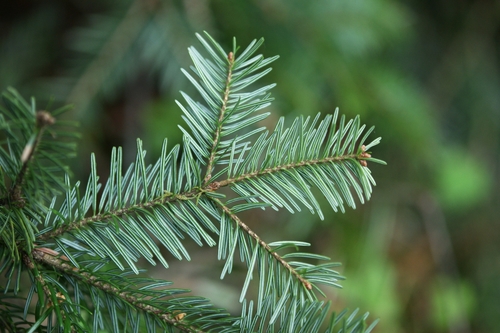
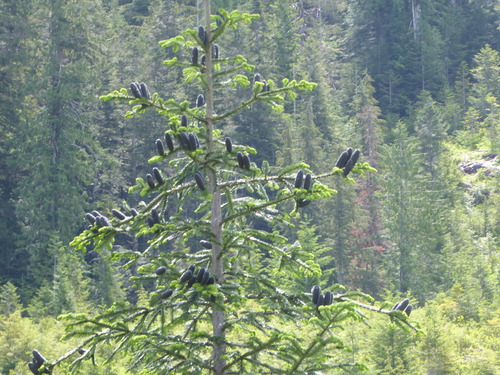
A tree. It grows to 35 m tall. The trunk is 1.8 m across. The bark is pale brown. The small branches are yellow and thick. There are dense pale yellow hairs. There are 5 needles per bundle. They are slightly curved. They are almost triangle shaped in cross section. They are 6-11 cm long by 0.5-1.7 mm wide and stiff. The cones are 6-13 cm long by 5-8 cm wide.
How to Grow
Plants are grown from seed.
Wikipedia
Source ↗Pinus sibirica, or Siberian pine, in the family Pinaceae is a species of pine tree that occurs in Siberia from 58°E in the Ural Mountains east to 126°E in the Stanovoy Range in southern Sakha Republic, and from Igarka at 68°N in the lower Yenisei valley, south to 45°N in central Mongolia.
Production
Trees can live for 500 years. One tree can yield 1,000-1,500 cones in a year. Each cone contains 80-140 seeds. Seeds take 2 years to ripen.
Other Information
It is a cultivated food plant. It is also harvested in large amounts from the wild.
Notes
There are over 100 species of Pinus. The seeds are highly nutritious. They are 64% fat.
Names & Synonyms
Xian bei wu zhen song
References (12)
- Ciesla, W.M., 1998, Non-wood forest products from conifers. Non-wood forest products 12, FAO, Rome, p 72
- Facciola, S., 1998, Cornucopia 2: a Source Book of Edible Plants. Kampong Publications, p 171
- Fu Liguo, Li Nan, Mill, R.R., Pinaceae. Flora of China.
- Glowinski, L., 1999, The Complete Book of Fruit Growing in Australia. Lothian. p 136
- https://en.wikipedia.org/wiki/List of wild edible plants in Mongolian cuisine
- Lyle, S., 2006, Discovering fruit and nuts. Land Links. p 328
- Nouv. Dict. Hist. Nat. 18:18. 1803
- Urgamal, M., et al, 2014, Conspectus of the Vascular Plants of Mongolia. Mongolia Academy of Sciences Institute of Botany and National University of Mongolia Department of Biology. p 35
- Wickens, G.E., 1995, Edible Nuts. FAO Non-wood forest products. FAO, Rome. p178
- Wiersema, J. H. & Leon, B., 2013, World Economic Plants. A Standard Reference CRC Press. 2nd Ed. p 534
- World Checklist of Useful Plant Species 2020. Royal Botanic Gardens, Kew
- www.mobot.org