Asplenium bulbiferum
G. Forst.
Hen and chicken fern, Mother fern

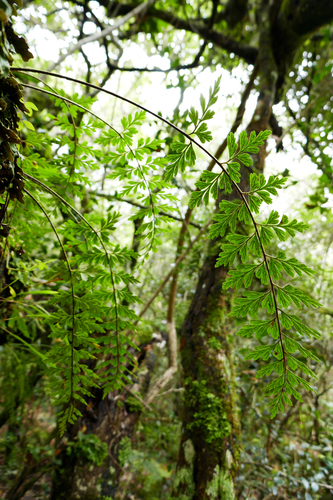
(c) pierre gros, some rights reserved (CC BY-NC-SA)

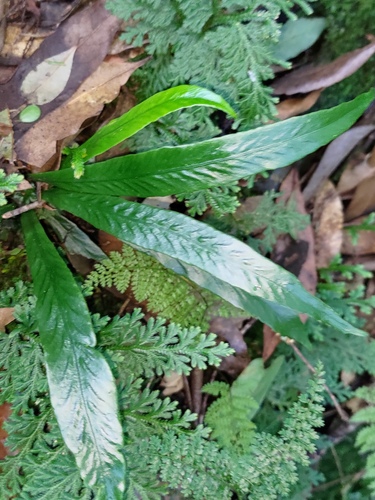
no rights reserved, uploaded by Peter de Lange

(c) Pete McGregor, some rights reserved (CC BY-NC-ND), uploaded by Pete McGregor
What to Eat
Edible parts: Leaves, Root, Fronds
Edible Parts: Leaves Root Edible Uses: Root - cooked. Young fronds - cooked. Used before they uncurl, they taste somewhat like a slightly bitter asparagus.
Known Hazards
Where to Find It
It is a warm temperate to subtropical plant. It grows in bush clearings and lowland forests throughout New Zealand. It does best in damp locations. It grows on logs and the trunks of tree ferns. Possibly on Mt Roland. Hobart Botanical Gardens. It suits hardiness zones 9-11. Tasmania Herbarium. Mt Cootha Botanical Gardens.
Asia, Australia, Fiji, India, New Caledonia, New Zealand, Pacific, Papua New Guinea, PNG, Polynesia, Tasmania,
How to Identify
A small fern. It grows 0.5-1.2 m tall. It forms spreading clumps. It can grow in soils or attached to trees and on rotting logs. The fronds are divided 3 times. The fronds are pale or dark green. They grow 20-150 cm long. Small plants grow in the ends of the leaf divisions. Plants vary considerably. The spore bodies are 2-4 mm long and oblong.
How to Grow
Requires a moist humus-rich soil in semi-shade. Plants are probably not hardy outdoors in Britain but may be worth trying in very sheltered positions. The young growth in spring, even on mature plants, is frost-tender and so it is best to grow the plants in a position sheltered from the early morning sun. Members of this genus are rarely if ever troubled by browsing deer.
Propagation: Spores - best sown as soon as they are ripe on the surface of a humus-rich sterilized soil. Keep the compost moist, preferably by putting a plastic bag over the pot. Germinates in spring. Spring sown spores germinate in 1 - 3 months at 15°c. Pot on small clumps of plantlets as soon as they are large enough to handle and grow them on in light shade in a cold frame or greenhouse. Keep them humid until they are well established. When they are at least 15cm tall, plant them out into their permanent positions in late spring or early summer. This plant can also be propagated by means of small bulblets that form on the sides of leaves in the growing season. Pot these bulblets up when they detach easily from the parent plant and grow on in the greenhouse for at least the first winter.
Medicinal Uses
None known
Other Uses
None known Special Uses
Wikipedia
Source ↗Asplenium bulbiferum, known as mother spleenwort, is a species of fern endemic to New Zealand. It is also called hen and chicken fern and, in the Māori language, pikopiko, mouku or mauku. Its fronds are eaten as a vegetable. It grows small bulbils on top of its fronds. Once grown to about 5 cm (2.0 in), these offspring fall off and, provided the soil they land in is kept moist, develop a root system and grow into new ferns. This additional means of reproduction can be employed with greater ease than propagation by spores. There are a number of similar Southern Hemisphere species which have a similar mode of reproduction, including Asplenium daucifolium. Asplenium bulbiferum commonly grows in most bush areas in New Zealand. It thrives in many situations from shade to partial sunlight.
Notes
There are over 600-700 Asplenium ferns. They are mostly tropical and subtropical. In New Zealand, a species complex with tetraploid and octoploid cytotypes.
Names & Synonyms
Mauka, Mother spleenwort, Mouka, Pikopiko
References (15)
- Andrews, S.B., 1990, Ferns of Queensland. A handbook to the ferns and fern allies. Queensland DPI p 53
- Bodkin, F., 1991, Encyclopedia Botanica. Cornstalk publishing, p 110
- Chaffey, C.H., 1999, Australian Ferns. Growing them successfully. Kangaroo Press. p 90
- Crowe, A., 1997, A Field Guide to the Native Edible Plants of New Zealand. Penguin. p 110
- Cundall, P., (ed.), 2004, Gardening Australia: flora: the gardener's bible. ABC Books. p 198
- Facciola, S., 1998, Cornucopia 2: a Source Book of Edible Plants. Kampong Publications, p 32
- Fl. ins. austr. 80. 1786
- Goudey, C.J., 1988, A Handbook of Ferns for Australia and New Zealand. Lothian. p 58
- Greig, D., 1996, Flowering Natives for Home Gardens. Angus & Robertson. p 57
- Hibbert, M., 2002, The Aussie Plant Finder 2002, Florilegium. p 34
- Lim, T. K., 2015, Edible Medicinal and Non Medicinal Plants. Volume 9, Modified Stems, Roots, Bulbs. Springer p 13
- Plants for a Future database, The Field, Penpol, Lostwithiel, Cornwall, PL22 0NG, UK. http://www.scs.leeds.ac.uk/pfaf/
- Skinner, G. & Brown, C., 1981, Simply Living. A gatherer's guide to New Zealand's fields, forests and shores. Reed. p 34
- Staples, G.W. and Herbst, D.R., 2005, A tropical Garden Flora. Bishop Museum Press, Honolulu, Hawaii. p 28
- Tasmanian Herbarium Vascular Plants list p 95