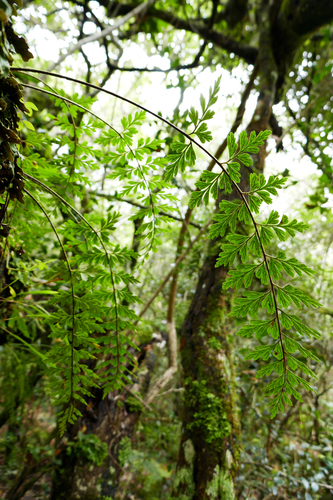
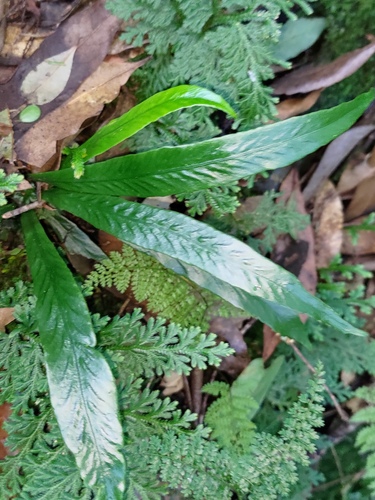
Asplenium acrobryum
Christ
New Guinea salt fern

wikimedia · cc-by
Wikimedia Commons - Barbara Parris
Wikimedia Commons - Barbara Parris

wikimedia · cc-by
Wikimedia Commons - Barbara Parris
Wikimedia Commons - Barbara Parris

gbif · cc0
President and Fellows of Harvard College
President and Fellows of Harvard College
What to Eat
Edible parts: Plant ash - salt
The plant ash is used as a salt substitute.
Where to Find It
It is a tropical plant.
Asia, Indonesia, Papua, Papua New Guinea, PNG, SE Asia,
Countries: United Arab Emirates, Afghanistan, Armenia, Azerbaijan, Bangladesh, Bahrain, Brunei, Bhutan, China, Georgia, Indonesia, Israel, India, Iraq, Iran, Jordan, Japan, Kyrgyzstan, Cambodia, North Korea, South Korea, Kuwait, Kazakhstan, Laos, Lebanon, Sri Lanka, Myanmar, Mongolia, Maldives, Malaysia, Nepal, Oman, Papua New Guinea, Philippines, Pakistan, Qatar, Saudi Arabia, Singapore, Syria, Thailand, Tajikistan, Timor-Leste, Turkmenistan, Turkey, Taiwan, Uzbekistan, Vietnam, Yemen
How to Identify
A tropical fern in the Aspleniaceae family, known as the New Guinea salt fern.
Names & Synonyms
Tamu
References (4)
- Croft, J. R. & Leach. D. N., New guinea salt fern (Asplenium acrobryum complex): Identity, distribution, and chemical composition of its salt. 1985, Economic Botany. 39(2): 139-149
- Hide, R. L., (Ed.) 1984, Research Report of the Simbu Land Use Project. Vol.V1 South Simbu: Studies in Demography, Nutrition, and Subsistence. p 447
- Seidemann J., 2005, World Spice Plants. Economic Usage, Botany, Taxonomy. Springer. p 58
- World Checklist of Useful Plant Species 2020. Royal Botanic Gardens, Kew