Pinus pinceana
Gordon & Glend.
Pinceana pine, Weeping pinyon
PinaceaeSeeds/Nuts

iNaturalist · cc-by-nc
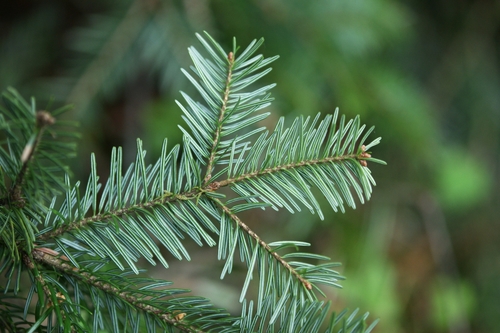
(c) CARLOS VELAZCO, some rights reserved (CC BY-NC), uploaded by CARLOS VELAZCO
(c) CARLOS VELAZCO, some rights reserved (CC BY-NC), uploaded by CARLOS VELAZCO

iNaturalist · cc-by-nc
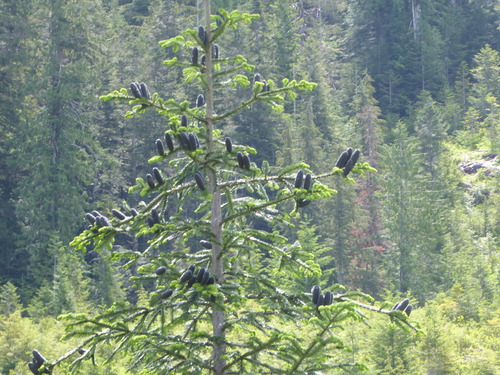
(c) ADOLFO PERALES HUERTA, some rights reserved (CC BY-NC)
(c) ADOLFO PERALES HUERTA, some rights reserved (CC BY-NC)

iNaturalist · cc-by-nc
(c) ADOLFO PERALES HUERTA, some rights reserved (CC BY-NC)
(c) ADOLFO PERALES HUERTA, some rights reserved (CC BY-NC)
What to Eat
Edible parts: Seeds, Nuts
The seeds and nuts are edible and are sold in local markets.
Where to Find It
It is a subtropical plant. It grows between 1,500-2,300 m above sea level.
Australia, Central America, Mexico, North America,
Countries: Antigua & Barbuda, Australia, Barbados, Bahamas, Belize, Canada, Costa Rica, Cuba, Dominica, Dominican Republic, Grenada, Guatemala, Honduras, Haiti, Jamaica, St Kitts & Nevis, St Lucia, Mexico, Nicaragua, Panama, Puerto Rico, El Salvador, Trinidad & Tobago, United States, St Vincent
How to Identify
A subtropical conifer (Pinaceae) growing 5-10 m tall with a trunk about 25 cm across, found at elevations of 1,500-2,300 m. It is a rare and endangered species.
Wikipedia
Source ↗Pinus pinceana, with the common names weeping pinyon and Pince's pinyon pine, is a species of conifer in the family Pinaceae.
Other Information
The seeds or nuts are sold in local markets.
Notes
There are over 100 species of Pinus. It is a rare and endangered species.
Names & Synonyms
Pinonero lloron
Pinus cembroides Gordon non Zucc.Pinus latisquama Emgelm.
References (9)
- Ciesla, W.M., 1998, Non-wood forest products from conifers. Non-wood forest products 12, FAO, Rome, p 73
- Farjon, A., and Styles, B. T., 1997, Pinus (Pinaceae): Flora Neotropica, Vol. 75, pp. 1-291
- Ferns, Useful Temperate Plants.
- Grandtner, M. M., 2008, World Dictionary of Trees. Wood and Forest Science Department. Laval University, Quebec, Qc Canada. (Internet database http://www.wdt.qc.ca)
- Kermath, B. M., et al, 2014, Food Plants in the Americas: A survey of the domesticated, cultivated and wild plants used for Human food in North, Central and South America and the Caribbean. On line draft. p 662
- Mapes, C. & Basurto, F., 2016, Biodiversity and Edible Plants of Mexico. Chapter 5 in R. Lira, et al. (eds.), Ethnobotany of Mexico, Ethnobiology, Springer. p 91
- Piedra-Malagón, E. M., et al, 2022, Edible native plants of the Gulf of Mexico Province. Biodiversity Data Journal 10: e80565 p 27
- Pinetum 204. 1858
- Segura, S., et al, 2018, The edible fruit species in Mexico. Genet Resour Crop Evol (2018) 65:1767–1793