Aster amellus
L.
Italian Aster
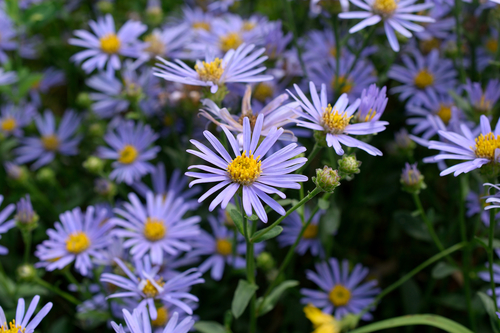
(c) Сергей Шитов, some rights reserved (CC BY-NC), uploaded by Сергей Шитов
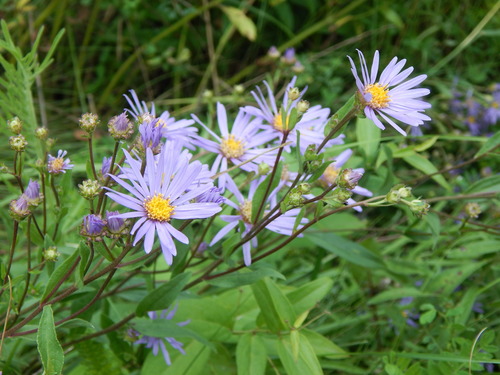
(c) elenasuslova, some rights reserved (CC BY-NC)

(c) Богданович Светлана, some rights reserved (CC BY-NC), uploaded by Богданович Светлана
What to Eat
Edible parts: Leaves
Edible Parts: Leaves Edible Uses: Leaves and young plants - cooked. Only certain varieties (not specified in the report) are used. A nutritional analysis is available. References More on Edible Uses Composition Figures in grams (g) or miligrams (mg) per 100g of food. Leaves (Dry weight) 305 Calories per 100g Water : 0% Protein: 32.8g; Fat: 5.5g; Carbohydrate: 50g; Fibre: 8.6g; Ash: 11.7g; Minerals - Calcium: 328mg; Phosphorus: 594mg; Iron: 31mg; Magnesium: 0mg; Sodium: 0mg; Potassium: 4164mg; Zinc: 0mg; Vitamins - A: 26mg; Thiamine (B1): 1.41mg; Riboflavin (B2): 2.81mg; Niacin: 8.59mg; B6: 0mg; C: 688mg; Reference: Notes:
Where to Find It
It is a temperate plant. It is frost hardy. It is best in well-composted, well-drained soils. It suits an open sunny position. It is damaged by drought. It suits hardiness zones 5-9.
Albania, Asia, Australia, China, Europe, India, Indochina, Laos, Luxembourg, Myanmar, SE Asia, Slovenia, Turkey, Türkiye,
How to Identify
A perennial herb. It grows 30-60 cm high and 35-45 cm wide. The leaves are grey-green. They are rough to the touch. The flower heads are mauve-blue with yellow centres.
Nutrition Score: 35/100
| Part | Moisture | kJ | kcal | Protein | Vit A | Vit C | Iron | Zinc |
|---|---|---|---|---|---|---|---|---|
| Leaves | 87.3 | 163 | 39 | 4.2 | — | — | 4 | — |
How to Grow
Succeeds in most good garden soils, preferring one that is well-drained and moisture retentive. Tolerates poorer soils. Prefers a sunny position but also succeeds in part shade. Plants are hardy to about -25°c. A very ornamental plant, there are some named varieties. A polymorphic species, it hybridizes freely with other members of this genus. Most species in this genus seem to be immune to the predations of rabbits.
Propagation: Seed - surface sow in spring in a cold frame. Do not allow the compost to become dry. Pre-chilling the seed for two weeks can improve germination rates. The seed usually germinates in 2 weeks at 20°c. When large enough to handle, prick the seedlings out into individual pots and plant them out in the summer. Division in spring or autumn.
Medicinal Uses
Antiinflammatory Antitussive Depurative Haemostatic Malaria Pectoral The roots are anti-inflammatory, antitussive, depurative, haemostatic and pectoral.They are used in the treatment of coughs, pulmonary affections and malaria. The root juice is used internally in Nepal to treat indigestion and externally to treat boils.
Other Uses
None known Special Uses
Wikipedia
Source ↗Aster amellus, the European Michaelmas daisy, is a perennial herbaceous plant and the type species of the genus Aster and the family Asteraceae.
Notes
There are about 250 Aster species.
Names & Synonyms
Gorska nebina, Maymyo-pan, Maymyo-pan-yaing
References (9)
- Ambasta S.P. (Ed.), 2000, The Useful Plants of India. CSIR India. p 60
- Bodkin, F., 1991, Encyclopedia Botanica. Cornstalk publishing, p 112
- Brickell, C. (Ed.), 1999, The Royal Horticultural Society A-Z Encyclopedia of Garden Plants. Convent Garden Books. p 148
- Cundall, P., (ed.), 2004, Gardening Australia: flora: the gardener's bible. ABC Books. p 199
- Hibbert, M., 2002, The Aussie Plant Finder 2002, Florilegium. p 34
- Joyce, D., 1998, The Garden Plant Selector. Ryland, Peters and Small. p 208
- Martin, F.W. & Ruberte, R.M., 1979, Edible Leaves of the Tropics. Antillian College Press, Mayaguez, Puerto Rico. p 184
- Plants for a Future database, The Field, Penpol, Lostwithiel, Cornwall, PL22 0NG, UK. http://www.scs.leeds.ac.uk/pfaf/
- Sp. pl. 2:873. 1753