Datura stramonium
L.
Common Thornapple, Jimson Weed

(c) SWoodward, some rights reserved (CC BY-NC), uploaded by SWoodward
(c) Morfhoblue, some rights reserved (CC BY-NC-SA), uploaded by Morfhoblue

(c) xiphactinus, some rights reserved (CC BY-NC), uploaded by xiphactinus
What to Eat
Edible parts: Poisonous! Nectar, Fruit - drink
None known.
Known Hazards
Documented Toxic Effects
Source: Encyclopedia of Life TraitBank. Toxicity often varies by plant part — consult the hazards section above for preparation-specific details.
Where to Find It
It is a warm temperate to subtropical plant. It suits hardiness zones 7-11.
Afghanistan, Africa, Albania, Algeria, Angola, Argentina, Australia, Austria, Bahamas, Bangladesh, Belarus, Belgium, Belize, Benin, Bermuda, Bolivia, Botswana, Brazil, Britain, Bulgaria, Burundi, Cameroon, Canary Is., Caucasus,Central Africa, Central African Republic, CAR, Central America, Central Asia, Chad, Chile, China, Colombia, Congo DR, Congo R, Costa Rica, Crete, Cuba, Cyprus, Czech Republic, Denmark, Dominican Republic, East Africa, Egypt, El Salvador, Equatorial Guinea, Eritrea, Eswatini, Ethiopia, Europe, Fiji, France, Gambia, Germany, Greece, Guniea, Guatemala, French Guiana, Haiti, Hawaii, Himalayas, Honduras, Hungary, India, Indochina, Indonesia, Iran, Iraq, Ireland, Italy, Ivory Coast, Jamaica, Japan, Kazakhstan, Kyrgyzstan, Korea, Laos, Lebanon, Leeward Is., Lesotho, Libya, Madagascar, Malaysia, Malawi, Mali, Manchuria, auritania, Mauritius, Mexico, Mongolia, Morocco, Mozambique, Myanmar, Namibia, Nepal, Netherlands, New Zealand, Nicaragua, Niger, Nigeria, Norfolk Island, North America, Northeastern India, Norway, Pakistan, Palestine, Panama, Peru, Poland, Portugal, Puerto Rico, Reunion, Romania, Rwanda, Russia, Saudi Arabia, SE Asia, Siberia, Sicily, Somalia, South Africa, Southern Africa, Spain, Sri Lanka, Sudan, Swaziland, Sweden, Switzerland, Syria, Taiwan, Tajikistan, Tanzania, Tasmania, Tibet, Togo, Tonga, Trinidad-Tobago, Tunisia, Turkey, Türkiye, Turkmenistan, Uganda, Ukraine, USA, Uzbekistan, Venezuela, Vietnam, Yemen, Yugoslavia, Zambia, Zimbabwe,
How to Identify
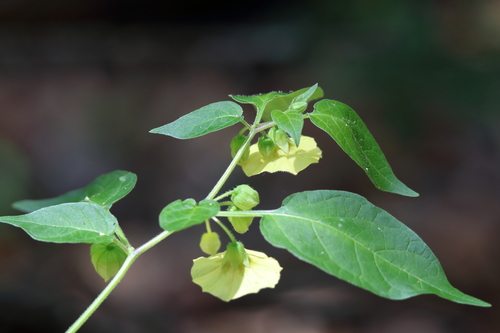
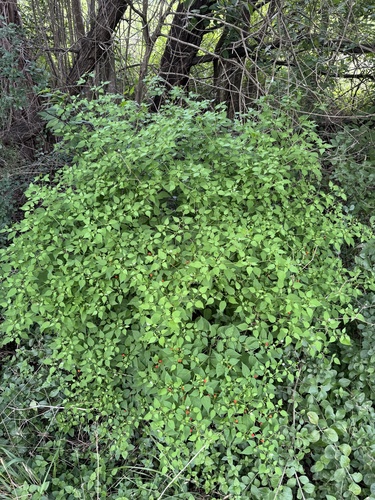
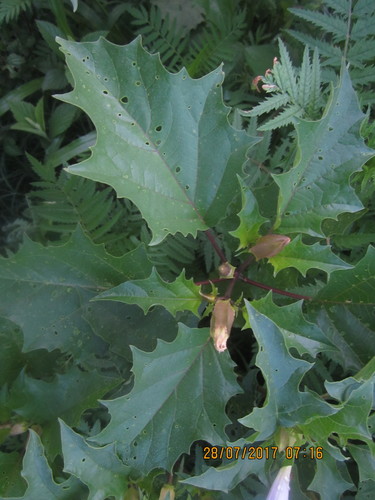
A stout herb or shrub. It has a rotten smell. it is an annual plant. It is branched and erect and grows 1 m tall. It can have a few hairs. The leaves are deeply lobed. The leaf blade is angular but oval. It is 5-36 cm long by 2-20 cm wide. The lobes have coarse, irregular teeth. The flowers occur singly. They have a stout stalk. It is 0.5-2 cm long. The flower is funnel shaped and white. The tube is 6-8 cm long. There are 5 lobes. The fruit is an oval capsule. It is 3-5 cm long. It has several sharp spines. It opens by 4 valves. The seeds are 2.5-3.5 mm long and black. They have coarse pits. POISONOUS.
How to Grow
Succeeds in most moderately good soils but prefers a rich light sandy soil or a calcareous loam, and an open sunny position. Plants often self-sow when well sited. The thornapple is cultivated commercially as a medicinal plant. It can become a weed in suitable conditions and is subject to statutory control in some countries. This species is extremely susceptible to the various viruses that afflict the potato family (Solanaceae), it can act as a centre of infection so should not be grown near potatoes or tomatoes. Grows well with pumpkins. The whole plant gives off a nauseating stench.
Propagation: Sow seed in individual pots in early spring in a greenhouse, placing 3 or 4 seeds per pot and thinning to the strongest plant if needed. Seed usually germinates in 3–6 weeks at 15°C. Plant out in late spring or early summer after the last expected frosts. In areas with hot summers, an outdoor sowing in situ in mid to late spring is also worth trying.
Medicinal Uses
Thornapple is a bitter narcotic plant that relieves pain and promotes healing, with a long history of herbal use, though it is very poisonous and must be handled with extreme caution. The leaves, flowering tops, and seeds are anodyne, antiasthmatic, antispasmodic, hallucinogenic, hypnotic, mydriatic, and narcotic, with the seeds being the most medicinally active. Internally it is used in the treatment of asthma and Parkinson's disease; excess causes giddiness, dry mouth, hallucinations, and coma. Externally it is applied as a poultice or wash to treat fistulas, abscesses, wounds, and severe neuralgia. Leaves should be harvested when the plant is in full flower and dried for later use. They contain hyoscyamine and atropine, with traces of scopolamine — a potent cholinergic-blocking hallucinogen used to calm schizoid patients. Atropine dilates the pupils and is used in eye surgery. Smoking the leaves as an antispasmodic for asthma has been practised but is considered extremely dangerous. In Tibetan medicine the seeds are considered to have a bitter, acrid taste with a cooling and very poisonous potency; used as analgesic, anthelmintic, and anti-inflammatory in the treatment of stomach and intestinal pain from worm infestation, toothache, and fever from inflammations. The juice of the fruit is applied to the scalp to treat dandruff. Use of this plant is subject to legal restrictions in some countries and should only be undertaken under supervision of a qualified practitioner, as all parts are very poisonous and the margin between medicinal and toxic doses is very narrow.
Other Uses
The growing plant is said to protect neighbouring plants from insects. The juice of the fruits is applied to the scalp to treat dandruff and hair loss. Extracts of Datura species have attracted considerable interest as botanical pesticides; D. metel in particular appears to suppress several economically important nematode species.
Wikipedia
Source ↗Datura stramonium, known by the common names thornapple, jimsonweed (jimson weed), or devil's trumpet, is a poisonous flowering plant in the Daturae tribe of the nightshade family Solanaceae. Its likely origin was in Central America, and it has been introduced in many world regions. It is an aggressive invasive weed in temperate climates and tropical climates across the world. D. stramonium has frequently been employed in traditional medicine to treat a variety of ailments. It has also been used as a hallucinogen (of the anticholinergic/antimuscarinic, deliriant type), taken entheogenically to cause intense, sacred or occult visions. It is unlikely ever to become a major drug of abuse owing to effects upon both mind and body frequently perceived as being highly unpleasant, giving rise to a state of profound and long-lasting disorientation or delirium (anticholinergic syndrome) with a potentially fatal outcome. It contains tropane alkaloids which are responsible for the psychoactive effects, and may be severely toxic.
Notes
There are 10 Datura species.
Names & Synonyms
Astenagir, Baanje, Dhatura
References (20)
- Agarwal, R. & Chandra, V., 2019, Diversity of wild edible plants in the Mandal-Chopta forest, Uttarakhand. Journal of Medicinal Plants Studies 2019; 7(1): 89-92
- Alemneh, D., 2020, Ethnobotany of wild edible plants in Yilmana Densa and Quarit Districts of West Gojjam Zone, Amhara Region, Ethiopia. Ethnobotany Research & Applications. 20:47
- Ambasta, S.P. (Ed.), 2000, The Useful Plants of India. CSIR India. p 163
- Blamey, M and Grey-Wilson, C., 2005, Wild flowers of the Mediterranean. A & C Black London. p 406
- Bremness, L., 1994, Herbs. Collins Eyewitness Handbooks. Harper Collins. p 246
- Burkill, H. M., 1985, The useful plants of west tropical Africa, Vol. 5. Kew.
- Burkill, I.H., 1966, A Dictionary of the Economic Products of the Malay Peninsula. Ministry of Agriculture and Cooperatives, Kuala Lumpur, Malaysia. Vol 1 (A-H) p 779
- Cundall, P., (ed.), 2004, Gardening Australia: flora: the gardener's bible. ABC Books. p 476
- Dashorst, G.R.M., and Jessop, J.P., 1998, Plants of the Adelaide Plains & Hills. Botanic Gardens of Adelaide and State Herbarium. p 128
- Flora of Australia Volume 49, Oceanic Islands 1, Australian Government Publishing Service, Canberra. (1994) p 305
- Fowler, D. G., 2007, Zambian Plants: Their Vernacular Names and Uses. Kew. p 61
- Hussey, B.M.J., Keighery, G.J., Cousens, R.D., Dodd, J., Lloyd, S.G., 1997, Western Weeds. A guide to the weeds of Western Australia. Plant Protection Society of Western Australia. p 218
- Jackes, B.R., 2001, Plants of the Tropics. Rainforest to Heath. An Identification Guide. James Cook University. p 83
- Kebebew, M. & Leta, G., 2016, Wild Edible Plant Bio-diversity and Utilization System in Nech Sar National Park, Ethiopia. International Journal of Bio-resource and Stress Management 2016, 7(4):885-896
- Kew Plants of the World Online
- Lulekal, E., et al, 2011, Wild edible plants in Ethiopia: a review on their potential to combat food insecurity. Afrika Focus - Vol. 24, No 2. pp 71-121
- Molla, A., Ethiopian Plant Names. http://www.ethiopic.com/aplants.htm
- Paczkowska, G . & Chapman, A.R., 2000, The Western Australian Flora. A Descriptive Calatogue. Western Australian Herbarium. p 535
- Sina, B. & Degu, H. D., 2015, Knowledge and use of Wild Edible Plants in the Hula District of the Sidama Zone. International Journal of Bio-resource and Stress Management 6(3):352-365
- World Checklist of Useful Plant Species 2020. Royal Botanic Gardens, Kew