Aster tataricus
L. f.
Tatarian aster
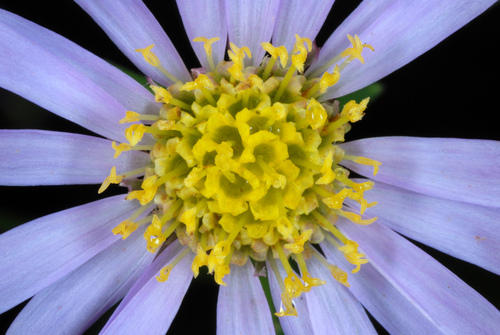
(c) Douglas Goldman, some rights reserved (CC BY-SA), uploaded by Douglas Goldman
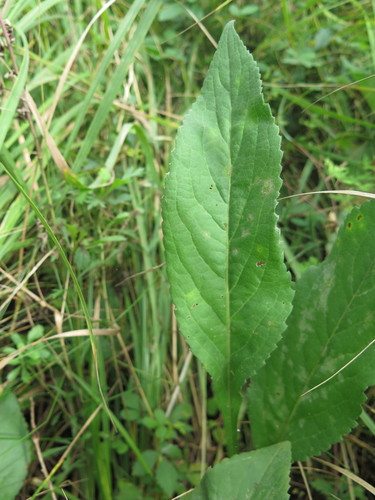
(c) sergeyprokopenko, some rights reserved (CC BY-NC), uploaded by sergeyprokopenko
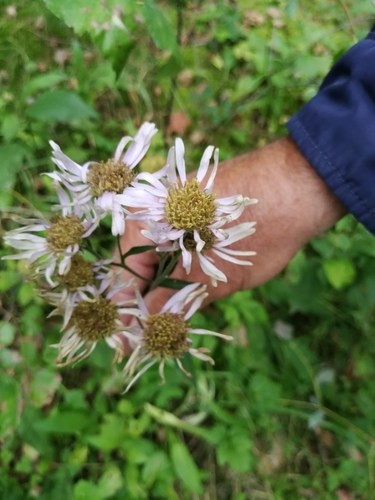
(c) Наталья Фомина, some rights reserved (CC BY-NC), uploaded by Наталья Фомина
What to Eat
Edible parts: Leaves
Edible Parts: Leaves Edible Uses: Young plant. No more details are given.
Where to Find It
A temperate plant. It is hardy to frost. In north China it grows on damp riverbanks between 400-3,300 m above sea level. In Sichuan.
Asia, Australia, China, Japan, Korea, Mongolia, North America, Russia, Siberia, Tasmania, USA,
How to Identify
A tall herb. It keeps growing from year to year. It is 1.5-2 m tall and spreads 1-1.2 m wide. The stem has a thickened base. The leaves have long stalks. They are rough and hairy. They are narrowly oval and 40 cm long. There are teeth around the edge. The daisy like flowers are in flat topped arrangements. They are purple to blue.
How to Grow
Succeeds in most good garden soils, preferring one that is well-drained and moisture retentive. Prefers a sunny position, but also succeeds in partial shade. Plants are hardy to at least -15°c. Plants can suffer from mildew when growing in dry conditions. This species is cultivated in China as a medicinal herb. Most species in this genus seem to be immune to the predations of rabbits. Hybridizes freely with other members of this genus.
Propagation: Seed - surface sow in spring in a cold frame. Do not allow the compost to become dry. Pre-chilling the seed for two weeks can improve germination rates. Germination usually takes place within 2 weeks at 20°c. When large enough to handle, prick the seedlings out into individual pots and plant them out in the summer. Basal cuttings in the spring. Harvest the shoots when they are about 10 - 15cm long with plenty of underground stem. Pot them up into individual pots and keep them in light shade in a cold frame or greenhouse until they are rooting well. Plant them out in the summer. Division in spring or autumn. Very easy, larger divisions can be planted straight into their permanent positions whist smaller clumps are best potted up and kept in a cold frame until they are growing away well.
Medicinal Uses
Antibacterial Antifungal Antitussive Cancer Expectorant This species has been used for at least 2,000 years in traditional Chinese medicine. The root contains triterpenes and triterpene saponins, and is a stimulant expectorant herb for the bronchial system, helping to clear infections. It is antibacterial, antifungal, antitussive, expectorant and stimulant. It has an antibacterial action, inhibiting the growth of Staphylococcus aureus, E. coli, Bacillus dysenteriae, B. typhi, Pseudomonas and Vibrio Proteus. The root is taken internally in the treatment of chronic bronchitis and tuberculosis and is often used raw with honey in order to increase the expectorant effect. The root is harvested in the autumn and can be dried for later use. The plant contains the triterpene epifriedelinol, which has shown anticancer activity, and is used as a folk cure for cancer.
Other Uses
None known Special Uses
Wikipedia
Source ↗Aster tataricus, also called Tatarian aster and Tatarinow's aster, is a member of the Aster genus of flowering plants.
Notes
There are about 250 Aster species.
References (6)
- Brown, D., 2002, The Royal Horticultural Society encyclopedia of Herbs and their uses. DK Books. p 136
- Hibbert, M., 2002, The Aussie Plant Finder 2002, Florilegium. p 35
- Pemberton, R. W. & Lee, N. S., 1996, Wild Food Plants in South Korea: Market Presence, New Crops, and Exports to the United States. Economic Botany, Vol. 50, No. 1, pp. 57-70
- Plants for a Future database, The Field, Penpol, Lostwithiel, Cornwall, PL22 0NG, UK. http://www.scs.leeds.ac.uk/pfaf/
- Suppl. pl. 373. 1782 ("1781")
- Urgamal, M., Oyuntsetseg, B., Nyambayar, D. & Dulamsuren, Ch. 2014. Conspectus of the vascular plants of Mongolia. (Editors: Sanchir, Ch. & Jamsran, Ts.). Ulaanbaatar, Mongolia. “Admon“ Press. 334pp. (p. 199-230).