Bidens schimperi
Walp.
Munondo bur-marigold

(c) Wilderness Safaris Botswana - Conservation Team, some rights reserved (CC BY), uploaded by Wilderness Safaris Botswana - Conservation Team
(c) Robert Taylor, some rights reserved (CC BY), uploaded by Robert Taylor
What to Eat
Edible parts: Leaves, Vegetable
The leaves are bitter but are occasionally cooked and eaten as a leafy vegetable, typically chopped and mixed with other greens. It is used as a famine food.
Known Hazards
Where to Find It
A tropical plant. It grows on arable land. It is also in woodland and on flood plains. It grows between 300-950 m above sea level. It can grow in arid places. In Tanzania it grows from sea level to 2,400 m above sea level.
Africa, Angola, Botswana, Burundi, Central Africa, East Africa, Ethiopia, Kenya, Malawi, Mozambique, Namibia, Somalia, South Africa, Southern Africa, Tanzania, Uganda, Zambia, Zimbabwe,
How to Identify
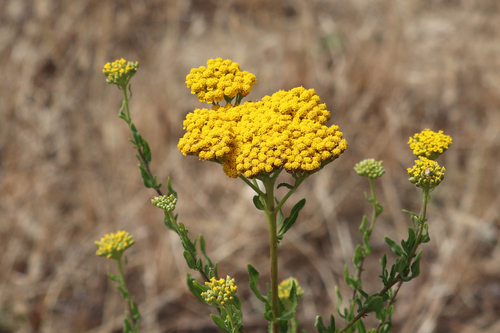
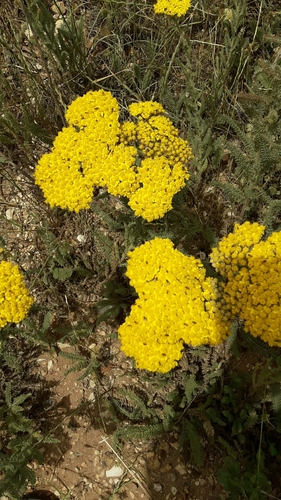
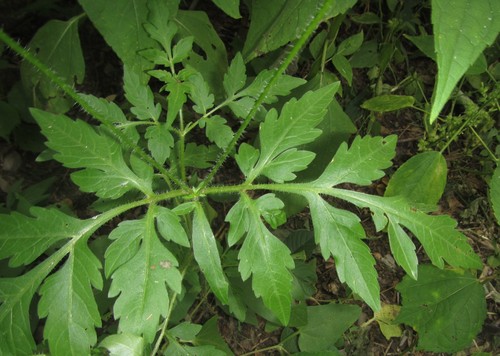
A herb. It grows 1.8 , tall. The leaves are roughly hairy. They are usually deeply divided into 3. The edges of the leaves are marked by a line of black dots. The flowers are yellow and larger than Bidens pilosa. The fruit have 2 hooked bristles.
Medicinal Uses
The roots are used to treat coughs and colds.
Production
Leaves are collected at the beginning of the rainy season.
Other Information
It is a famine food. Because it is bitter it is not liked.
Notes
There are about 200 Bidens species. Most are in North America.
Names & Synonyms
Kishonanguo, Lihna, Lizumba, Masanjala, Mbilidzongwe, Mosimama, Nacadadoli, Nyatwanga, Nyaweza
References (14)
- Allen, D. J., 2007, Wildflowers and Common Trees of East Africa. Camerapix Publishers p 106
- FAO, 1988, Traditional Food Plants, FAO Food and Nutrition Paper 42. FAO Rome p 106
- Fowler, D. G., 2007, Zambian Plants: Their Vernacular Names and Uses. Kew. p 12
- Grubben, G. J. H. and Denton, O. A. (eds), 2004, Plant Resources of Tropical Africa 2. Vegetables. PROTA, Wageningen, Netherlands. p 118
- Lyimo, M., et al, 2003, Identification and nutrient composition of indigenous vegetables of Tanzania. Plant Foods for Human Nutrition. 58: 85-92
- Msola, D. K., 2007, The role of Wild Foods in Household Income and Food Security in Mufundi District, Tanzania. Morogoro, Tanzania. p 46
- Msuya, T. S., et al, 2010, Availability, Preference and Consumption of Indigenous Foods in the Eastern Arc Mountains, Tanzania, Ecology of Food and Nutrition, 49:3, 208-227
- Peters, C. R., O'Brien, E. M., and Drummond, R.B., 1992, Edible Wild plants of Sub-saharan Africa. Kew. p 88
- Roodt, V., 1998, Common Wild Flowers of the Okavango Delta. Medicinal Uses and Nutritional value. The Shell Field Guide Series: Part 2. Shell Botswana. p 43
- Royal Botanic Gardens, Kew (1999). Survey of Economic Plants for Arid and Semi-Arid Lands (SEPASAL) database. Published on the Internet; http://www.rbgkew.org.uk/ceb/sepasal/internet [Accessed 11th April 2011]
- Ruffo, C. K., Birnie, A. & Tengnas, B., 2002, Edible Wild Plants of Tanzania. RELMA p 164
- Vernon, R., 1983, Field Guide to Important Arable Weeds of Zambia. Dept of Agriculture, Chilanga, Zambia. p 82
- Williamson, J., 2005, Useful Plants of Malawi. 3rd. Edition. Mdadzi Book Trust. p 37
- World Checklist of Useful Plant Species 2020. Royal Botanic Gardens, Kew