Aster tripolium
L.
Sea Aster
(c) Attila Steiner, some rights reserved (CC BY-NC)

(c) itsben, some rights reserved (CC BY-NC)
(c) Johan Devos, some rights reserved (CC BY-NC)
What to Eat
Edible parts: Leaves, Shoots
Edible Parts: Leaves Edible Uses: Leaves and stems - the somewhat fleshy leaves are used to make pickles or are cooked. A sweet taste. The stem contains about 8.4% ash, whilst the leaf is 9% ash - this is mainly sodium chloride.
Where to Find It
It is a Mediterranean climate plant. It grows in coastal habitats in the Mediterranean. It can be in salty locations.
Africa, Asia, Britain, China, Europe, France, Greece, India, Ireland, Italy, Korea, Mediterranean, North Africa, Norway, Portugal, Scandinavia, Spain, Sweden, Turkey, Türkiye,
How to Identify
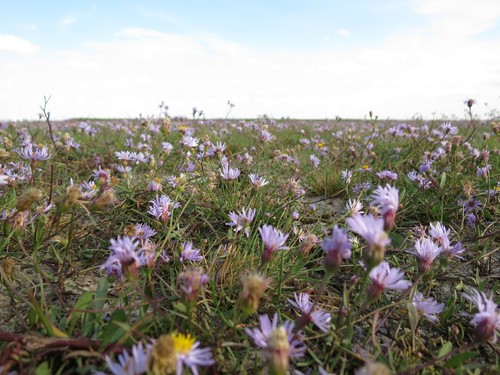
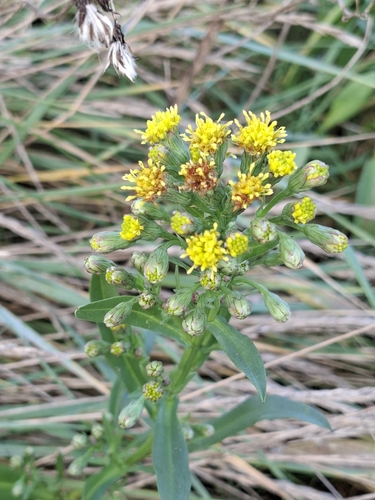
A short annual herb. It does not have hairs. It may live for a few years. The stems are erect and reddish. The leaves are fleshy and narrow or sword shaped. They are rounded in cross section. They half clasp the stem. The upper leaves do not have stalks. The flower heads have bright blue or purple rays. The disk is yellow. The flowers are 8-20 mm across. They are in large flat topped panicles.
How to Grow
Succeeds in most good garden soils, preferring one that is well-drained and moisture retentive. Prefers a sunny position. This species tends to be a short-lived perennial. Most species in this genus seem to be immune to the predations of rabbits. Hybridizes freely with other members of this genus.
Propagation: Seed - surface sow in spring in a cold frame. Do not allow the compost to become dry. Pre-chilling the seed for two weeks can improve germination rates. Germination usually takes place within 2 weeks at 20°c. When large enough to handle, prick the seedlings out into individual pots and plant them out in the summer.
Medicinal Uses
Ophthalmic Ophthalmic.
Other Uses
None known Special Uses
Wikipedia
Source ↗A perennial reaching 0.9 m in height with a compact growth habit. Produces flowers from July to October. Hermaphroditic and self-fertile, pollinated by bees, flies, beetles, and Lepidoptera. Accommodates light sandy, medium loamy, and heavy clay soils with good drainage and can tolerate saline conditions. Adapts to mildly acidic, neutral, and basic soils. Requires full sun and moist soil. Hardy to UK zone 6.
Notes
There are about 250 Aster species. Chemical composition (stem): Ash = 8.4%; (leaf) = 9.0% (chiefly sodium chloride).
Names & Synonyms
References (8)
- Blamey, M and Grey-Wilson, C., 2005, Wild flowers of the Mediterranean. A & C Black London. p 434
- Centofanti, T. & Banuelos, G., 2019, Practical uses of Halophytic Plants as Sources of Food and Fodder. CAB International. p 331
- Hedrick, U.P., 1919, (Ed.), Sturtevant's edible plants of the world. p 82
- http://nordicfood lab/org/blog/2102/9/wild-edible-plants-an-overview
- Irving, M., 2009, The Forager Handbook, A Guide to the Edible Plants of Britain. Ebury Press p 143
- Joshi, A., et al, 2018, Halophytes of Thar Desert: Potential source of nutrition and feedstuff. International Journal of Bioassays 8.1 (2018) pp. 5674-5683
- READ
- Sp. pl. 2:872. 1753