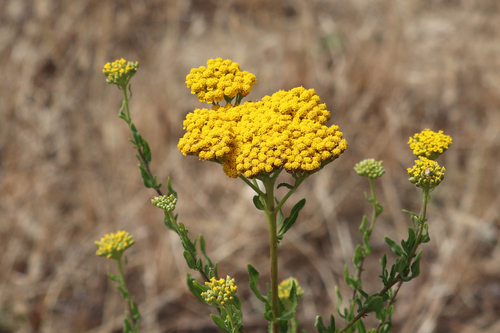
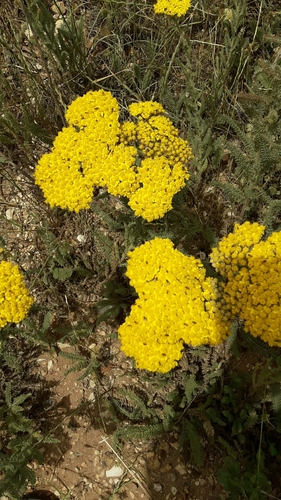
Aster yomena
(Kitam.) Honda.
Yomena

(c) Sen Itto, some rights reserved (CC BY-SA)

(c) ashitaka, some rights reserved (CC BY-NC-SA)

(c) Sen Itto, some rights reserved (CC BY-SA)
What to Eat
Edible parts: Leaves
Edible Parts: Leaves Edible Uses: Leaves and young plants - cooked.
Where to Find It
It is a temperate plant. It grows in moist lowlands in Japan. It can grow in cool climates to hardiness zone 5-9.
Asia, China, Japan, Korea,
How to Identify
A perennial growing to 1.5 m in height. Flowers from August to October with simultaneous seed ripening during the same period. Hermaphroditic and self-fertile with flowers pollinated by bees, flies, beetles, and Lepidoptera. Thrives in light sandy, medium loamy, and heavy clay soils with good drainage. Tolerates mildly acidic, neutral, and basic soil pH. Requires full sun and moist soil conditions. Hardy to UK zone 6.
Nutrition Score: 40/100
| Part | Moisture | kJ | kcal | Protein | Vit A | Vit C | Iron | Zinc |
|---|---|---|---|---|---|---|---|---|
| Leaves | 90.2 | 121 | 29 | 2.2 | — | 42 | 4 | 0.7 |
How to Grow
Propagation: Seed - surface sow in spring in a cold frame. Do not allow the compost to become dry. Pre-chilling the seed for two weeks can improve germination rates. Germination usually takes place within 2 weeks at 20°c. When large enough to handle, prick the seedlings out into individual pots and plant them out in the summer. Division in spring or autumn. Very easy, larger divisions can be planted straight into their permanent positions whist smaller clumps are best potted up and kept in a cold frame until they are growing away well.
Medicinal Uses
None known
Other Uses
None known Special Uses
Wikipedia
Source ↗Aster yomena (syn. Kalimeris yomena), the kalimeris or Japanese aster, is a species of flowering plant in the family Asteraceae, native to Korea and Japan. Locals occasionally collect its young leaves and cook them as a leaf vegetable. A perennial reaching 1.5 ft (45 cm) high, and hardy in USDA zones 5 through 8, it is considered an easy plant for beginning gardeners, and can be grown "without fear of failure". There are a number of ornamental cultivars under its synonym Kalimeris yomena, with the variegated 'Shogun' being widely commercially available.
Notes
There are about 250 Aster species.
Names & Synonyms
Ssukpujaengi
References (7)
- Chen, B. & Qiu, Z., Consumer's Attitudes towards Edible Wild Plants, Ishikawa Prefecture, Japan. p 22 www.hindawi.com/journals/ijfr/aip/872413.pdf
- Cultivated vegetables of the world: a multilingual anomasticon. 2011, Springer (As Kalimeris yomena)
- Food Composition Tables for use in East Asia FAO http://www.fao.org/infoods/directory No. 567 (As Kalimeris yomena)
- Kim, H. & Song, M., 2013, Ethnobotanical analysis for traditional knowledge of wild edible plants in North Jeolla Province (Korea). Genetic. Resour. Crop Evol. (2013) 60:1571-1585
- Pemberton, R. W. & Lee, N. S., 1996, Wild Food Plants in South Korea: Market Presence, New Crops, and Exports to the United States. Economic Botany, Vol. 50, No. 1, pp. 57-70
- Plants for a Future database, The Field, Penpol, Lostwithiel, Cornwall, PL22 0NG, UK. http://www.scs.leeds.ac.uk/pfaf/
- Siebold Kenkyu 586. 1938