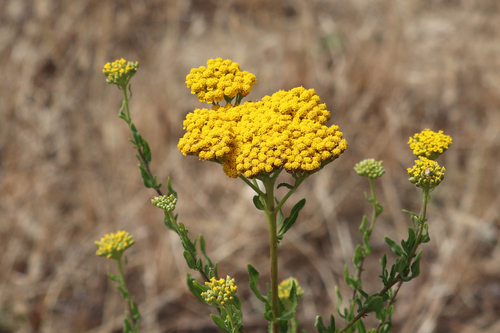
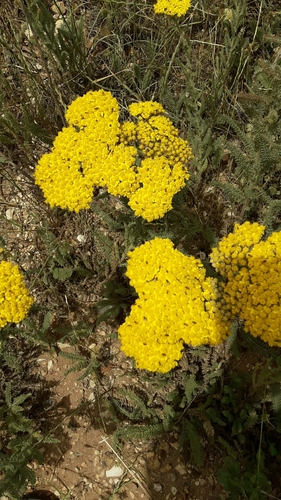
Baccharis viminea
DC.
Mule's fat

(c) Ron Vanderhoff, some rights reserved (CC BY-NC)

(c) Ron Vanderhoff, some rights reserved (CC BY-NC)

(c) Ron Vanderhoff, some rights reserved (CC BY-NC)
What to Eat
Edible parts: Leaves
Edible Parts: Leaves Shoots Edible Uses: Young shoots - cooked. Roasted and eaten as a famine food when little else is available. Seepwillow baccharis has little value as food. The shoots and leaves are acrid and unpleasant, containing sesquiterpene lactones and baccharis oils that can’t be removed by cooking. Native Americans along the lower Colorado and Gila rivers reportedly ate the young shoots and leaves only in times of famine, and also used the leaves medicinally[2-3]. Food Potential: Shoots and leaves: Bitter, resinous, adhesive-like flavor. Even young leaves taste unpleasant. Cooking doesn’t improve them. Small amounts may be tolerated, but larger servings can irritate the throat. Historical use: Emergency famine food and for medicine, not a regular dietary resource [2-3]. Foraging Notes: While easy to gather, seepwillow baccharis should be considered a last-resort wild food due to its acrid taste and irritant compounds. It’s best left alone unless no other options are available [2-3].
Where to Find It
It is a tropical plant.
Central America, Mexico, North America, USA,
How to Identify
Baccharis viminea is an evergreen shrub growing to 4 m in height. It flowers from May to July and is hermaphroditic, insect-pollinated. The plant adapts to light sandy, medium loamy, and heavy clay soils with good drainage and tolerates nutritionally poor soil. It suits mildly acidic to basic soils, requires full sun, and accommodates both dry and moist conditions. Hardy to UK zone 8.
How to Grow
Succeeds in almost any soil, from heavy clays to pure sands, if it is growing in a sunny position. Very tolerant of poor dry soils. This species is not hardy in the colder areas of the country, it requires an almost frost-free climate and tolerates temperatures down to between -5 and -10°c. Plants respond well to trimming. Dioecious. Male and female plants must be grown if seed is required. Habitat & Range: Seepwillow baccharis is abundant along streams, rivers, and other wet areas in the southwestern U.S. and northern Mexico. New leaves and shoots are available from late winter through early summer. USDA Hardiness Zone: 7–10. Weed Potential: Moderate – thrives along waterways, sometimes forming dense stands, but usually restricted to riparian zones.
Propagation: Seed - no pre-treatment is required. Surface sow in pots a cold frame in the spring, do not let the compost dry out. Germination usually takes place within 1 - 2 weeks. When they are large enough to handle, prick the seedlings out into individual pots and grow them on in the cold frame for at least their first winter. Plant them out into their permanent positions in late spring or early summer, after the last expected frosts. Cuttings of half-ripe wood, July/August in a frame. Very easy. Cuttings of mature wood of the current seasons growth, November in a frame. Easy.
Medicinal Uses
Ophthalmic Skin Stings A decoction of the leaves and stems has been used as a female hygienic agent. An infusion of the leaves has been used as an eyewash and has also been applied to bruises, wounds or insect stings.
Other Uses
Hair Soil stabilization An effective ground-cover plant for sunny banks. The plant has an extensive root system and is very useful for stabilizing sand dunes etc. The leaves have been used as a tonic wash for the scalp and hair to prevent baldness. A charcoal made from the stems has been used to make gunpowder. Special Uses Ground cover
Wikipedia
Source ↗Baccharis viminea is an evergreen shrub growing to 4 m in height. It flowers from May to July and is hermaphroditic, insect-pollinated. The plant adapts to light sandy, medium loamy, and heavy clay soils with good drainage and tolerates nutritionally poor soil. It suits mildly acidic to basic soils, requires full sun, and accommodates both dry and moist conditions. Hardy to UK zone 8.
Notes
There are about 250-350 Baccharis species. There are 300-430 Baccharis species in the neotropics.
Names & Synonyms
Seepwillow Baccharis / Batamote (Baccharis salicifolia (Ruiz & Pav.) Pers.)
References (1)
- Plants for a Future database, The Field, Penpol, Lostwithiel, Cornwall, PL22 0NG, UK. http://www.scs.leeds.ac.uk/pfaf/