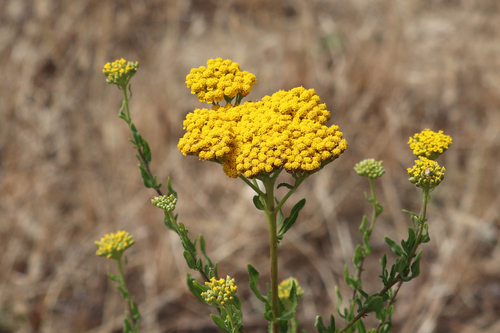
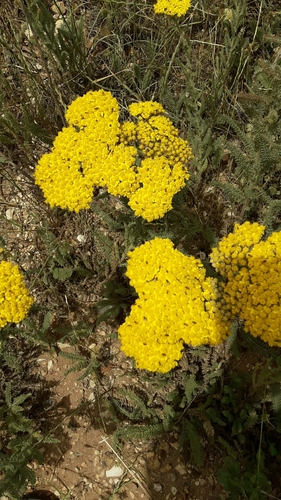
Cirsium wallichii
DC.
East Indian thistle, Wallich's thistle
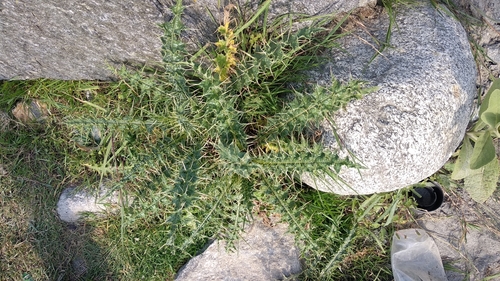
(c) Subhajit Das, some rights reserved (CC BY-NC), uploaded by Subhajit Das
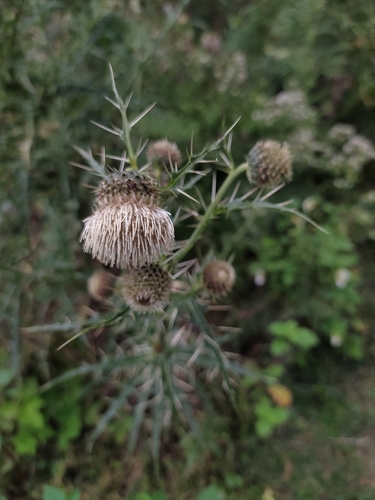
(c) PRIYA RAUTELA, some rights reserved (CC BY)
What to Eat
Edible parts: Stem, Tubers, Root, Flowers, Shoots
The pith of the stem is eaten, and the tuberous roots are consumed raw after peeling or boiled as a vegetable. The fresh flowers are eaten by children.
Where to Find It
It is a temperate plant. It grows in sub-Himalayan regions in India. It grows between 1500-3000 m altitude in Uttar Pradesh.
Afghanistan, Asia, China, Himalayas, India, Nepal,
How to Identify
A spiny herb. It is a thistle. It is erect and robust. It grows 1-3 m high. It has spreading branches. The leaves are alternate and clasp the stem without leaf stalks. The flower heads are dull yellow. They can occur singly or in clusters. They are 2-4 cm across.
Other Information
The fresh flowers are eaten by children.
Notes
There are about 150-250 Cirsium species. They grow in temperate regions.
Names & Synonyms
Bhruce, Bungsee, Bursa, Kandara, Kandayya, Kandelya, Sungur kande, Thakal kanta
References (7)
- Dangol, D. R. et al, 2017, Wild Edible Plants in Nepal. Proceedings of 2nd National Workshop on CUAOGR, 2017.
- Gautam, R. S., et al, 2022, Ethnobotanical Review of Wild Edible Plants of Nepal. Journal of Natural History Museum Volume 32, 2021-22 p 106
- Joshi, N., et al, 2007, Traditional neglected vegetables of Nepal: Their sustainable utilization for meeting human needs. Tropentag 2007. Conference on International Agricultural Research for Development.
- Malhotra, C.L.., et al, 1985, Additional Notes on the wild edible plants of India J. Econ. Tax. Bot. Vol 6. No.2 pp 481-482
- Negi, K.S., 1988, Some little known wild edible plants of U.P. Hills. J. Econ. Tax. Bot. Vol. 12 No. 2 pp 345-360
- Thakur, D., et al, 2017, Why they eat, what they eat: patterns of wild edible plants consumption in a tribal area of Western Himalaya. Journal of Ethnobiology and Ethnomedicine (2017) 13:70
- Wild edible plants of Himachal Pradesh