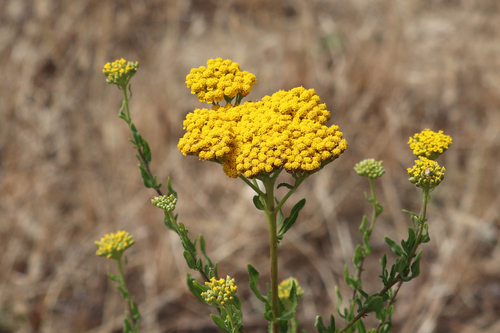
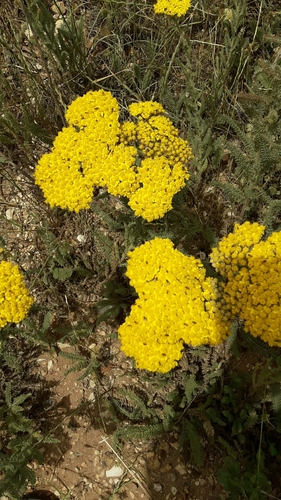
Lactuca dissecta
D. Don
Split-leaf lettuce
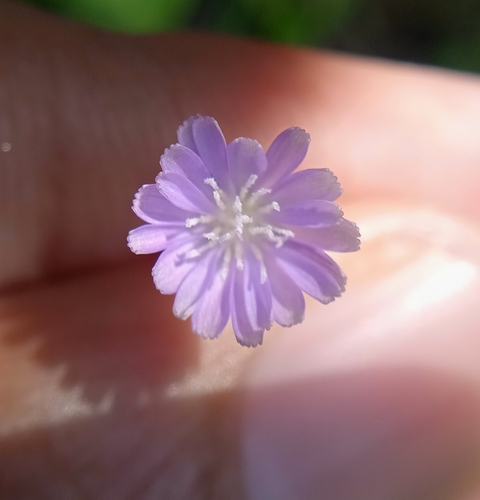
(с) Azan Khan, некоторые права защищены (CC BY-NC), загрузил Azan Khan
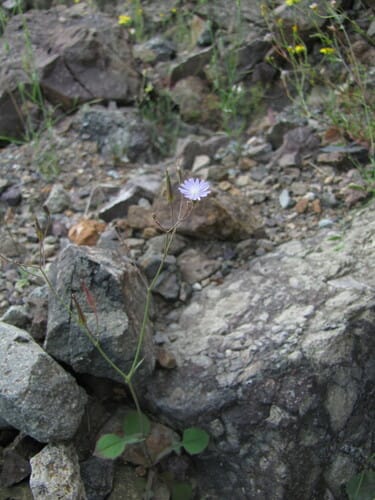
(c) Moslem Doostmohammadi, some rights reserved (CC BY-NC)
What to Eat
Edible parts: Leaves
The leaves are eaten as a vegetable, particularly by children.
Where to Find It
It is a temperate plant. It grows on waste areas near fields during winter. In western China it grows in grassland at about 2,000 m above sea level.
Afghanistan, Asia, Bhutan, Central Asia, China, Himalayas, India, Kazakhstan, Kyrgyzstan, Nepal, Northeastern India, Pakistan, Sikkim, Tajikistan,
How to Identify
An annual herb. It grows 20 cm tall. It has a single stem with slender branches. The leaves clasp the stem at the base. The leaves are spoon shaped or narrow and 3-7 cm long by 1-4 cm wide. They are divided along the stalk.
Wikipedia
Source ↗Lactuca dissecta, the split-leaf lettuce, is an Asian species of plant in the tribe Cichorieae within the family Asteraceae. It is native to Central Asia, western China (Xinjiang, Tibet), the Himalayas, and southwest Asia as far west as Turkey. Lactuca dissecta' is an annual herb, growing to 40 cm tall. Stems are solitary, erect, branching from the base, branches slender, hairless. Middle and lower part of the whole leaf is inverted-lance-shaped, deeply lobed or pinnately cut, 3–7 cm long, 1–3.5 cm wide, lateral lobes 3-6 pairs, diamond- or fan-shaped, round or toothed comb. Flowers are borne in clusters at the top and then leaves smaller, lanceolate or linear-lanceolate. All leaves are hairless, base stalkless, ear-shaped, arrow-shaped or semi-stem-clasping. Blue flower-heads are bore on top of the stem and branches arranged in loose corymbose inflorescence, each flower head containing ray flowers but no disc flowers. Achenes light brown, oblanceolate, long 2.3 mm, width of 1 mm. Pappus white, thin, hairy, 3 mm long.
Other Information
The leaves are eaten especially by children.
Notes
There are about 20 Lactuca species.
Names & Synonyms
Churhia, Paywerka, Poi boti, Zarkboti
References (4)
- Ahmad, K. & Pieroni, A., 2016, Folk knowledge of wild food plants among the tribal communities of Thakht-e-Sulaiman Hills, North-West Pakistan. Journal of Ethnobiology and Ethnomedicine, 12:17
- Malhotra, C.L.., et al, 1985, Additional Notes on the wild edible plants of India J. Econ. Tax. Bot. Vol 6. No.2 pp 481-482
- Prodr. fl. nepal. 164. 1825
- Tareen, N. M., et al, 2016, Ethnomedicinal Utilization of Wild Edible Vegetables in District Harnai of Balochistan Province - Pakistan. Pakistan Journal of Botany 48(3): 1159-1171