Solanum pubescens
Willd.
Vusti
(c) Ansil B.R., some rights reserved (CC BY), uploaded by Ansil B.R.
(c) Balakrishnan Ram, some rights reserved (CC BY-NC), uploaded by Balakrishnan Ram
(c) Paulmathi Vinod, some rights reserved (CC BY), uploaded by Paulmathi Vinod
What to Eat
Edible parts: Fruit
The greenish berries are used as a vegetable and have a bitter taste. The unripe fruit are slightly crushed to remove seeds, then dried and used in cooking.
Where to Find It
It is a tropical plant.
Asia, India, Sri Lanka,
How to Identify
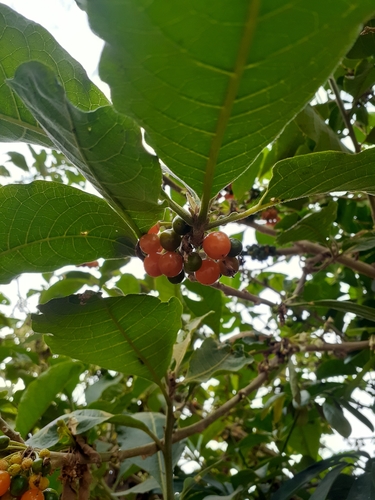
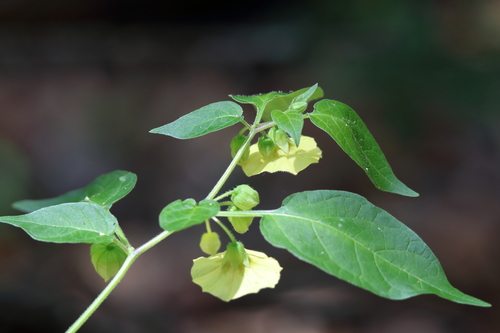
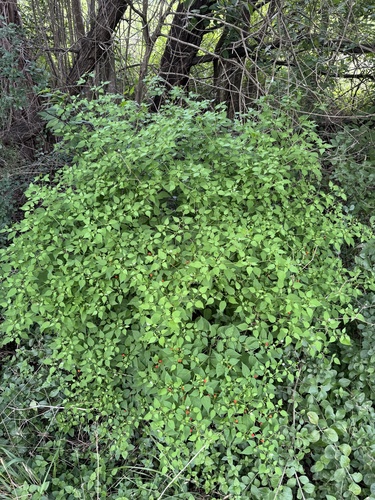
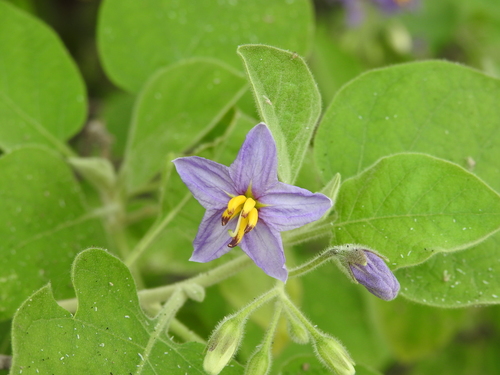
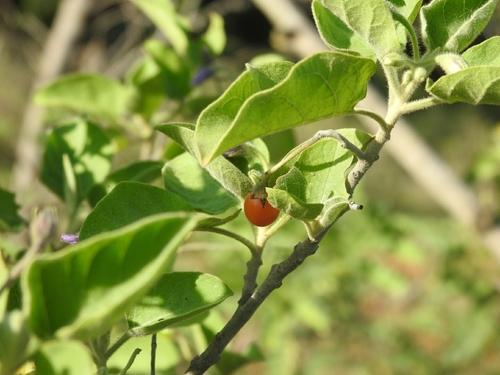
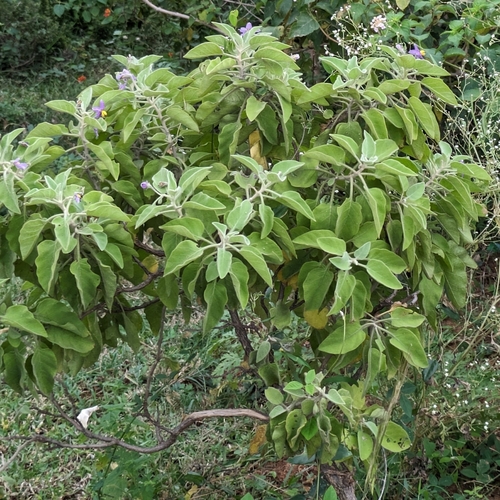
A shrub. The leaves have small sticky hairs. Flowers are purple to violet. The fruit are about 1.2 cm across. They are green but can become orange when ripe.
Medicinal Uses
The foliage is used as green manure for paddy cultivation. Immature fruits are very bitter to taste, it is consumed just like bitter guard. It helps to heal bowel complains and joint pains. Unripe fruits are slightly crushed in order to remove the seeds and then dried. Dried fruits are used in cooking. It is of more economic importance. Several ton dried fruits are coming to the market every year. Local inhabitants able to get some revenue out of it. Solanum torvum is also used for the same purpose, but it is not bitter to taste.
Wikipedia
Source ↗Solanum pubescens is a wild shrub found in the foot hill areas of southern India. It is very closely related to the Turkey berry (Solanum torvum). This shrub does not have spines; leaves are smaller in size covered with dense sticky hairs. Flowers are larger, purple to violet, the flowering and fruiting is seasonal in S. pubescens. Flowering will occur from August to December. The fruits are around 1.2 cm diameter and is more bitter. Matured fruits change in color to orange. It can be found in peninsular India and Sri Lanka.
Other Information
It is a significant local food.
Names & Synonyms
Kattusundai, Usthi kaai
References (3)
- Arinathan, V., et al, 2007, Wild edibles used by Palliyars of the western Ghats, Tamil Nadu. Indian Journal of Traditional Knowledge. 6(1) pp 163-168
- Ramachandran, V. S., 2007, Wild edible plants of the Anamalais, Coimbatore district, western Ghats, Tamil Nadu. Indian Journal or Traditional Knowledge. 6(1) pp 173-176
- Reddy, K.R., 1989, Additional Notes on the Wild Edible Plants of India. J. Econ. Tax. Bot. Vol. 13 No. 1 pp 125-127