Sphaeranthus indicus
Linn.
Indian globe flower
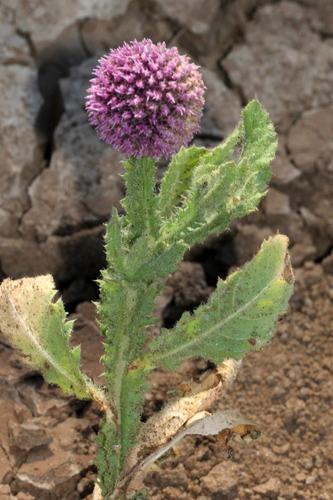
(c) Pete Woodall, some rights reserved (CC BY-NC), uploaded by Pete Woodall
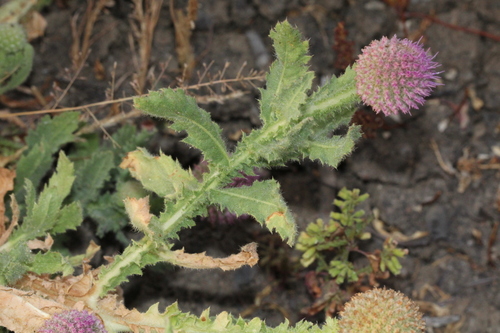
(c) Pete Woodall, some rights reserved (CC BY-NC), uploaded by Pete Woodall
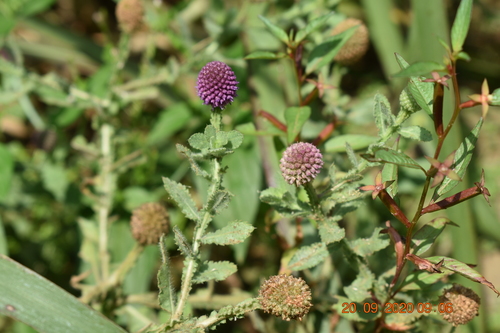
(c) Lukito H. K. Hadi, some rights reserved (CC BY-NC), uploaded by Lukito H. K. Hadi
What to Eat
Edible parts: Leaves
The leaves are cooked and eaten.
Where to Find It
A tropical plant. It grows on clays and seasonally flooded areas. It grows in rice fields. In southern China it grows along sandy banks along rivers between 700-1,000 m above sea level. In Yunnan.
Africa, Asia, Australia, Bhutan, Cambodia, Himalayas, India, Indochina, Laos, Malaysia, Myanmar, Nepal, Northeastern India, SE Asia, Thailand, Vietnam,
How to Identify
An annual herb. It grows erect and has an aroma. It has 4 irregular and sharply toothed wings. It grows 50 cm high. The leaves are long sword shaped or spoon shaped and 3-6 cm long by 1-3 cm wide. There are irregular double teeth along the edge. The flowers are purple, pink and white.
Wikipedia
Source ↗Sphaeranthus indicus, the East Indian globe thistle, is a flowering plant of the genus Sphaeranthus. It is distributed from Northern Australia throughout Indomalaya. The plant has been studied for its potential health-promoting properties, primarily as an anti-inflammatory. Sphaeranthus indicus Linn. (Asteraceae) is widely used in the Ayurvedic system of medicine in various conditions like epilepsy, mental illness, hemicrania, jaundice, hepatopathy, diabetes, leprosy, fever, pectoralgia, cough, gastropathy, hernia, hemorrhoids, helminthiasis, dyspepsia and skin diseases. In different parts of its range Sphaeranthus indicus is known by different common names.
Names & Synonyms
Adakkamaniyan, Belaunja, Boddasoramu, Boddatarupu, Bokashungi, Bothada, Buikadamba, Da-naung, Danr pudina, Ghundi, Gorakh mundi, Hapusa, Kadu, Khamadrus, Kottakaranthai, Mahamundi, Mirangani, Mon-di, Mundi, Murisa, Puru tasad, Tonka pudina
References (8)
- Ambasta, S.P. (Ed.), 2000, The Useful Plants of India. CSIR India. p 591
- Dey, A. & Mukhererjee, A., 2015, Living and Survival Amidst Hunger: Wild Edible Botanicals as a Prime Forest Productivity in the Rural Purulia District, West Bengal, India from Colonial to Present. Research Journal of Forestry 9(3): 71-86
- Dobriyal, M. J. R. & Dobriyal, R., 2014, Non Wood Forest Produce an Option for Ethnic Food and Nutritional Security in India. Int. J. of Usuf. Mngt. 15(1):17-37
- Kuvar, S. D. & Shinde, R. D., 2019, Wild Edible Plants used by Kokni Tribe of Nasik District, Maharashtra. Journal of Global Biosciences. Volume 8, Number 2, 2019, pp. 5936-5945
- Marandi, R. R. & Britto, S. J., 2015, Medicinal Properties of Edible Weeds of Crop Fields and Wild plants Eaten by Oraon Tribals of Latehar District, Jharkhand. International Journal of Life Science and Pharma Research. Vo. 5. (2) April 2015 (As Sphaeranthus hirtus)
- Paczkowska, G. & Chapman, A.R., 2000, The Western Australian Flora. A Descriptive Catalogue. Western Australian Herbarium. p 176
- Sp. pl. 2:1314. 1753
- Swapna, M. M. et al, 2011, A review on the medicinal and edible aspects of aquatic and wetland plants of India. J. Med. Plants Res. 5 (33) pp. 7163-7176