Trema politoria
(Planch.) Blume
CannabaceaeFruit

gbif · cc0
President and Fellows of Harvard College
President and Fellows of Harvard College

gbif · cc0
President and Fellows of Harvard College
President and Fellows of Harvard College
What to Eat
Edible parts: Fruit
The fruit is made into jam.
Where to Find It
It is a temperate plant. In Pakistan it grows up to 900 m altitude. In the Indian Himalayas it grows in exposed places between 600-1,400 m above sea level.
Asia, Bhutan, China, Himalayas, India, Myanmar, Nepal, Pakistan, SE Asia,
Countries: United Arab Emirates, Afghanistan, Armenia, Azerbaijan, Bangladesh, Bahrain, Brunei, Bhutan, China, Georgia, Indonesia, Israel, India, Iraq, Iran, Jordan, Japan, Kyrgyzstan, Cambodia, North Korea, South Korea, Kuwait, Kazakhstan, Laos, Lebanon, Sri Lanka, Myanmar, Mongolia, Maldives, Malaysia, Nepal, Oman, Philippines, Pakistan, Qatar, Saudi Arabia, Singapore, Syria, Thailand, Tajikistan, Timor-Leste, Turkmenistan, Turkey, Taiwan, Uzbekistan, Vietnam, Yemen
How to Identify
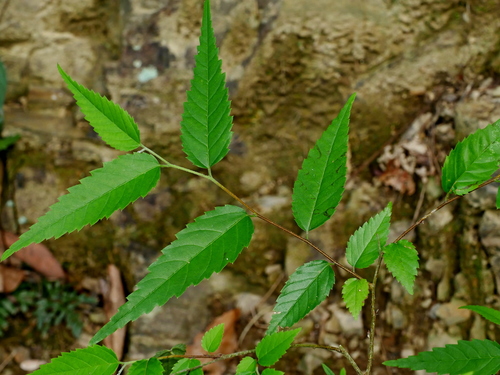
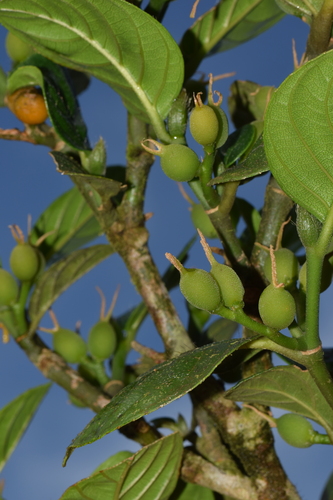
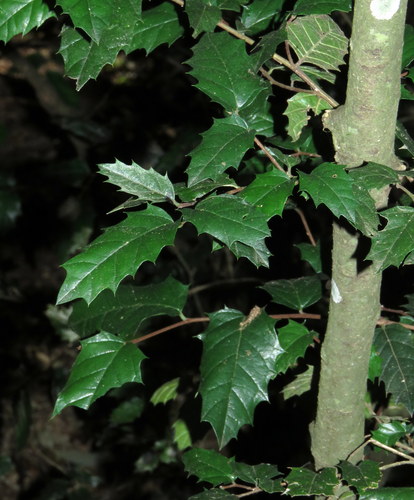
A shrub or small tree. It grows 5 m tall. The leaves are 7-10 cm long by 2-4 cm wide. The leaves are broadly sword shaped and taper to the tip. The flowers are small and greenish in dense clusters in the axils of leaves. The fruit is small and oval. They are black.
Notes
Also put in the family Ulmaceae.
Names & Synonyms
Banharria, Jivan, Khagshi, Khardol, Kharkas, Kuri, Petsat, Tila
Celtis politoria Wall.Sponia politoria Planch.
References (4)
- Ambasta, S.P. (Ed.), 2000, The Useful Plants of India. CSIR India. p 646
- Flora of Pakistan. www.eFloras.org
- Upreti, K., et al, 2010, Diversity and Distribution of Wild Edible Fruit Plants of Uttarakhand. Bioversity Potentials of the Himalaya. p 192
- Wild edible plants of Himachal Pradesh